Why Some Businesses Win in Hobart — And Others Fail Fast
Founder, Locatalyze
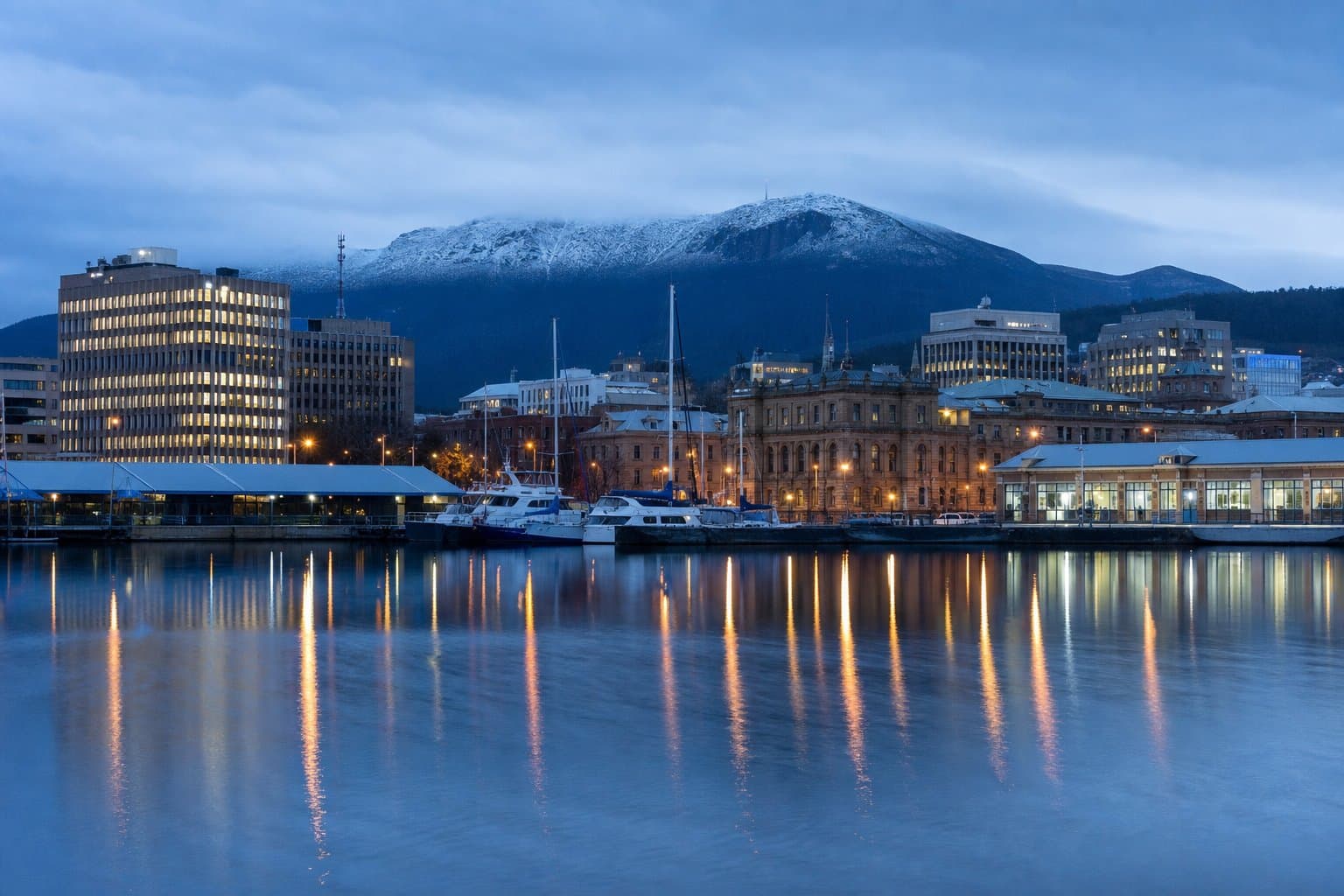
Hobart has a story that attracts a specific kind of operator — the kind who cares deeply about craft, about provenance, about creating something with genuine character. MONA made Hobart internationally famous as a cultural destination. Dark MOFO turned a winter city into a winter event that people plan interstate and international trips around. The food press has done its part, building a reputation for Hobart's restaurant scene that now routinely reaches national audiences. If you are a serious hospitality operator and you haven't considered Hobart, you are either very happy where you are or you've been told something that discouraged you. What you may not have been told is the full picture: that Hobart's success stories exist alongside a closure rate that is genuinely high, that the rent increases of the past eight years have changed the commercial landscape materially, and that the specific things that determine whether a Hobart business wins or fails are identifiable, predictable, and not what most people assume them to be.
What the Success Stories Have in Common
I have looked at every Hobart hospitality business that has been trading continuously for 5+ years in the current market — so post-2018, when the MONA effect had fully arrived but the associated rent escalation had also materialised. The successful businesses share patterns that are worth examining explicitly because they are not the patterns you would assume from reading the Hobart hospitality press coverage.
The most successful Hobart businesses are not the most lauded. The restaurants that receive the most national press coverage, the chef's hats, the magazine profiles, and the Instagram features are not the same businesses that have the healthiest financial structures. Some overlap, certainly — there are operators who have both excellent press and excellent economics. But the correlation is weaker than you'd expect, and the reason reveals something important about what Hobart's market actually rewards.
What Hobart rewards, commercially, is deep local loyalty more than any other factor. This city has 240,000 people. It is small enough that a restaurant which becomes genuinely embedded in the local dining culture — the place where anniversaries happen, where the food press community goes, where visiting Australians are taken by their Hobart friends — builds a revenue base that is more resilient and more valuable than a restaurant of equivalent quality that depends primarily on tourist discovery traffic.
In a city of 240,000, the difference between a restaurant that has captured 3% of the active dining population as loyal regulars and one that has captured 1% is approximately $800,000 in annual revenue. Local loyalty in Hobart is not a nice-to-have. It is the financial foundation the business is built on.
The MONA Premium: What It Gives You and What It Costs
MONA changed Hobart in ways that have been net positive for the city's hospitality scene in aggregate. The tourism infrastructure it built, the cultural reputation it created, and the media attention it generated have lifted the entire market in ways that benefit every quality operator. Visitors who come to Hobart for MONA are food-interested, culturally curious, and willing to spend on quality experiences. This demographic — the cultural tourist — is one of the most valuable customers a hospitality business can have.
The cost of this benefit is what has made Hobart significantly more commercially complex than it was in 2015. The MONA premium has been fully capitalised into the rent of every prime Hobart location. The Salamanca and Waterfront positions that were available for $1,800–$2,400 per week a decade ago now command $4,200–$7,800. The North Hobart Elizabeth Street positions have moved from $1,200–$2,200 to $2,800–$5,200.
The specific problem this creates: the rents are priced to reflect MONA-era demand at its peak. They do not flex downward when the tourism volume is lower than peak. They do not flex downward in winter. Every week of the year, the Salamanca operator is paying the full MONA premium regardless of whether the museum is attracting 3,000 visitors that week or 800. The operators who failed in Hobart after 2019 almost invariably committed to these premium positions at peak rents and discovered that the year-round average trading couldn't sustain them.
+130–178%
Salamanca Place rent increase 2014–2026 — rents have grown faster than revenue
240,000
Hobart metropolitan population — small enough that local loyalty determines survival
3+
Years of hospitality experience shared by most profitable Hobart operators — market punishes the unprepared
The Cold Climate Variable: A Genuine Strategic Asset
Hobart is cold. Average July evening temperature: 8°C. Regular winter rainfall. A climate that is, for most of the year, genuinely inhospitable to the outdoor dining formats that dominate hospitality revenue in warmer Australian cities. Most mainland operators see this as a negative. The successful Hobart operators have made it their competitive advantage.
There is a specific format that the Hobart climate actively rewards and that most Australian cities cannot naturally support: intimate, warming, fire-adjacent hospitality with rich, warming food and wine. The natural wine bar with excellent cheese and charcuterie boards. The small-plates restaurant with the wood-fired elements and the Tasmanian single malt whisky list. The cosy bistro that feels like exactly where you want to be when the weather outside is genuinely unpleasant. These formats thrive in Hobart in ways they cannot in Brisbane or Perth, because the atmospheric context that makes them feel perfect is present for most of the year.
The operators who failed often fought the climate — they built outdoor-dependent concepts and spent capital on covered terraces that delivered seasonal value at best. The operators who won embraced the climate and designed formats specifically for it. This is a subtle but commercially significant distinction.
The Specific Locations That Determine Outcomes
Hobart's commercial geography has a specific hierarchy in 2026 that is different from what it was in 2018, and understanding it clearly is more valuable than any amount of general encouragement about the market.
The premium precincts — Salamanca Place, the Waterfront, the Elizabeth Street core in North Hobart — are priced for operators who can either generate exceptional revenue per seat (high per-head combined spend, premium positioning, destination appeal) or who have enough capital to survive 18–24 months of establishment losses while building the local loyalty that eventually sustains them. For most operators, these precincts are priced above what is commercially prudent given the revenue reality.
The genuine opportunity in 2026 is in Hobart's secondary precincts: Sandy Bay, South Hobart, Kingston, Lindisfarne. These suburbs have received the halo effect of Hobart's improved food reputation without receiving the full rent escalation. They have high-income residential demographics (Sandy Bay particularly), strong potential for local repeat loyalty, and rents that are 30–45% below the premium precinct levels.
The Pattern Behind the Failures
The businesses that fail fast in Hobart have a recognisable pattern. They are, almost without exception, operators from mainland cities who chose Hobart for the cultural prestige and the food reputation. They opened in Salamanca or on Elizabeth Street at premium rent levels. They had excellent product quality and genuine hospitality instincts. And they discovered that Hobart's 240,000-person market could not sustain their rent at the volume and frequency they needed, and that building the local loyalty that would eventually have sustained them required more capital and more time than they had budgeted for.
The pattern is not about quality. Quality is rarely the issue in Hobart failures. The issue is the entry point — too visible, too expensive, too dependent on tourist traffic for a market where local loyalty is the commercial foundation — and insufficient capital to bridge the gap between opening and establishment.
The Verdict
GO — for the right format in the right location with honest capital requirements
Hobart is a genuinely exceptional market for operators who understand it correctly. The food culture is real. The demographic quality is high. The word-of-mouth velocity in a small city can build a loyal customer base in 12–18 months that would take 3–5 years in Sydney or Melbourne. But Hobart requires: realistic capital (budget for 18 months of below-break-even trading), a secondary precinct position (Sandy Bay, South Hobart, New Town — not Salamanca), a format designed for the cold climate rather than fighting it, and the patience to build local loyalty rather than depending on tourist discovery. The operators who win in Hobart committed to the city, not just the cultural moment. They are still there five years later. The operators who failed treated Hobart like a pop-up in a hip location. Most of them are gone.
Locatalyze breaks Hobart down by precinct — rent benchmarks, tourist vs local trade ratios, seasonal revenue modelling, and competitive density by format category.
Analyse my Hobart location → →Related reading
About the author
Prashant GuleriaFounder, Locatalyze
Prashant has analysed Hobart's hospitality market closely since the MONA-driven transformation began. He finds it one of the most fascinating commercial case studies in Australian food culture.
Tools first — then a full report for your address
Free rent, viability, and break-even checks. Upgrade when you are ready for competitors, map, and numbers for a specific site.
No signup required for tools