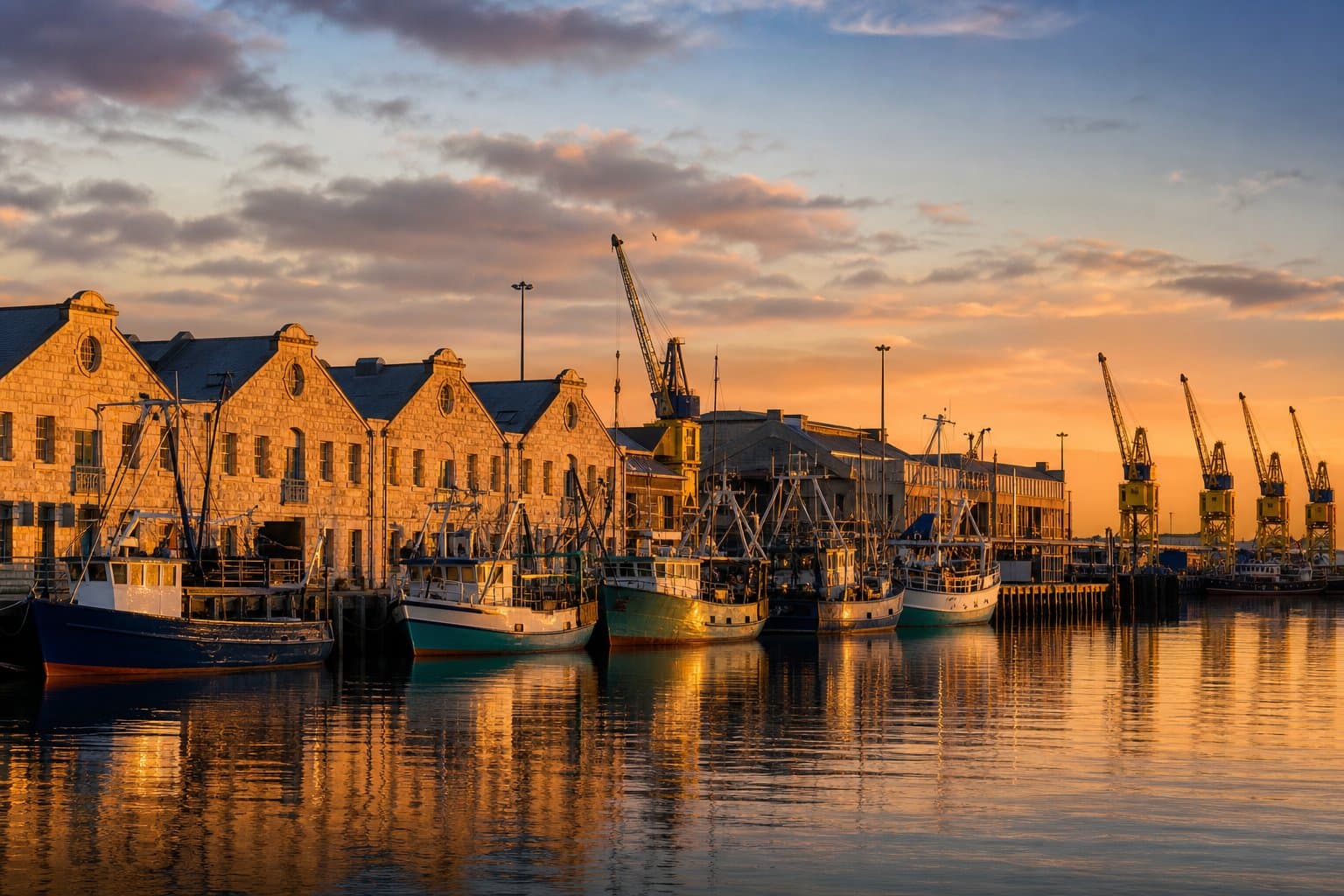
Why Port Lincoln Might Be Australia's Most Underrated Food Business Market in 2026
Founder, Locatalyze
Port Lincoln is the tuna capital of Australia. It produces approximately 20,000 tonnes of Southern Bluefin Tuna per year, making it one of the world's most significant tuna fisheries. Oysters from Coffin Bay — a 30-minute drive away — are recognised internationally as among the finest in the world. Spencer Gulf King Prawns, abalone, local wild-caught snapper and garfish round out a seafood provenance that most regional Australian towns can't claim. Then you look at Port Lincoln's restaurant and café scene and find that this extraordinary produce story has been systematically underexploited by its local hospitality market. There are two quality seafood restaurants in a town with world-class fisheries and a growing tourism industry. The gap between what Port Lincoln has and what it is offering visitors and residents is, from a food business perspective, one of the most compelling underutilised market positions in Australia.
The Produce Opportunity No One Has Properly Captured
Port Lincoln's produce story is genuinely extraordinary in the context of Australian food and beverage markets. Within a 30–60 minute drive of the town centre, you have access to Southern Bluefin Tuna (at wholesale prices that give a restaurant operator price advantages unimaginable to a Melbourne or Sydney equivalent), Coffin Bay oysters (one of Australia's most celebrated bivalves), Spencer Gulf King Prawns, local wild catch, and premium farmed abalone.
The international food media has covered Coffin Bay oysters and Port Lincoln's seafood credentials extensively. The town's reputation as a food destination is building nationally. And the local food scene has not kept pace with that building reputation. Visitors who arrive in Port Lincoln expecting a seafood experience commensurate with its credentials consistently find a modest offering that disappoints relative to expectation. This is commercially significant: it is the definition of unsatisfied demand.
20,000t
Annual Southern Bluefin Tuna production — Port Lincoln is Australia's tuna capital
2
Quality sit-down seafood restaurants in Port Lincoln for a market with 16,000+ residents and growing tourism
$900–$2,000
All-in weekly rent for food and beverage tenancies — among SA's lowest commercial markets
The Market Size Constraint: The Variable That Requires Honesty
Port Lincoln's permanent population is approximately 16,000 people. This is a small market. It is sufficient to sustain a handful of quality hospitality operators — it is not sufficient to sustain a large number simultaneously. The tourism supplement is real and growing (approximately 200,000 annual visitors according to recent Eyre Peninsula tourism data) but is concentrated in the October–April period and is primarily day-visitors and short-stay tourists rather than the overnight high-spend visitors who most benefit food business economics.
The business model that works in Port Lincoln is a small-format concept with low rent exposure, high-quality execution around the local produce story, and a split strategy that serves both the local permanent population and the tourist market without depending on either exclusively.
The Remote Location Reality
Port Lincoln is 660km from Adelaide. Access is primarily by road (7+ hours) or light aircraft. This isolation creates the same supply chain dynamics that apply to other remote South Australian markets: higher food costs for non-local ingredients, less frequent fresh produce delivery, equipment service challenges. The local produce advantage partially offsets this — building a menu anchored in Port Lincoln's local seafood and regional produce means the supply chain is shorter and more reliable for the core of the menu than it would be for a concept dependent on metropolitan supply.
The Format That Captures the Opportunity
The highest-probability success format in Port Lincoln is a quality seafood-focused restaurant or café that specifically and authentically celebrates the local produce. Not generic Australian seafood — Port Lincoln tuna, Coffin Bay oysters, Spencer Gulf prawns, local catch. A menu built around the produce story that has generated national media coverage but has no local restaurant equivalent worthy of the coverage.
The pricing this format can sustain: $38–$58 mains for a sit-down dinner concept, $26–$38 for a quality lunch format. These price points are appropriate for the tourist demographic (who have come specifically for the seafood experience and are prepared to pay for quality) and aspirational for the permanent resident population (who will come for special occasions and when they want to showcase Port Lincoln to visiting friends and family).
VERDICT: GO — for a specific, focused format with genuine produce credentials
**GO for:** A 35–50 seat quality seafood-focused restaurant or café that authentically celebrates local produce. The produce story is world-class. The market gap is real. The rent economics are among the most favourable of any Australian food market. **Key requirements:** Deep supplier relationships with local fishers and the Coffin Bay oyster producers before opening, not after. The authenticity of the produce sourcing is the entire differentiation. **Volume reality:** Port Lincoln is a small permanent market (16,000) with growing tourist supplement. Format must be calibrated for local patronage as the base and tourist premium as the upside.
Locatalyze covers Port Lincoln with produce supply chain analysis, tourist demand modelling, and rent benchmarking against comparable Eyre Peninsula markets.
Free location score, map, data confidence and PROCEED / VERIFY / AVOID recommendation. Modelled financials stay optional.
Analyse my Port Lincoln locationRelated reading
About the author
Prashant GuleriaFounder, Locatalyze
Prashant built Locatalyze to find and quantify commercial opportunities that market narratives either miss or overstate.
Tools first — then a full report for your address
Free rent, viability, and break-even checks. Upgrade when you are ready for competitors, map, and numbers for a specific site.
No signup required for tools