Looks Like Opportunity. Acts Like Risk. Opening a Business in Esperance Explained.
Founder, Locatalyze
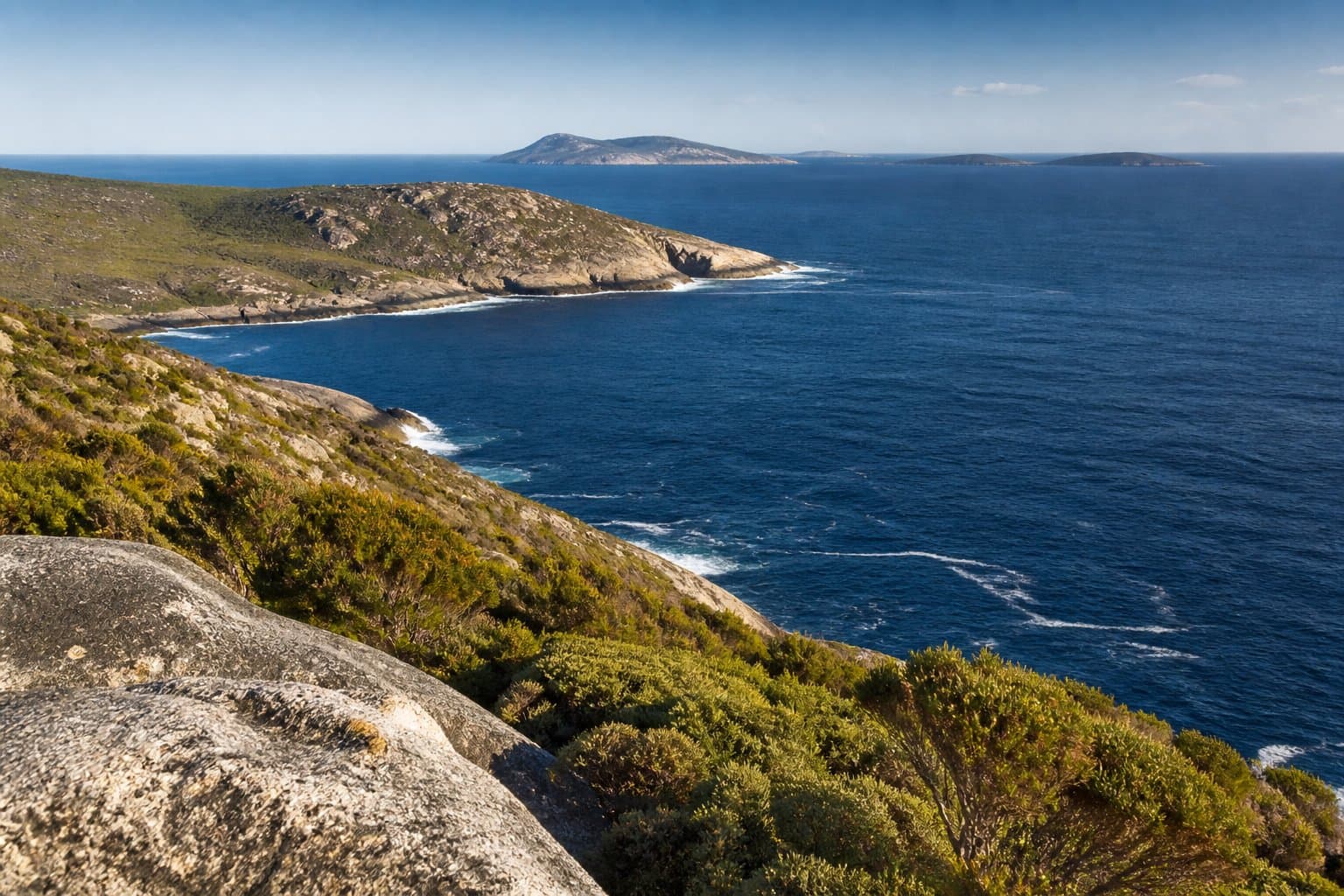
Lucky Bay has the whitest sand of any beach in Australia — measured, not claimed. Cape Le Grand National Park is getting national media coverage at a rate that has been accelerating for five years. The Pink Lake is a natural phenomenon that generates 50,000 Instagram posts a year. And Esperance — the town that serves as the base for all of this natural spectacle — has a food and beverage scene that, by objective measure, dramatically underdelivers on the expectations that its tourism credentials have built. Visitors arrive expecting to eat well. Many of them find adequate. A few find good. Almost none find exceptional. That gap — between what the market promises and what it currently delivers — is the surface of the Esperance opportunity. The depth of it is more complicated. The 14,000 permanent residents. The 720km of road to Perth. The seasonal trading pattern that makes June look like a ghost town and January look like a different planet. The supply chain that adds a cost floor to operations that many operators never modelled. This is the article that gives you the complete picture before you decide whether Esperance is an opportunity you should take or one you should admire from a distance.
The Surface: Why Esperance Looks Like Opportunity
Let me describe the Esperance opportunity as it appears on the surface, because it is genuinely compelling and I do not want to dismiss it before I have described it properly.
Tourist visitation to the Esperance region has been growing at approximately 15–18% per year for the past five years. This is extraordinary growth driven by the national and international media coverage of the beaches, the national park, and the pink lake — none of which require any marketing investment from local businesses and all of which drive visitors directly through Esperance's commercial centre. The quality of the natural assets is world-class and growing in recognition. The visitor demographic skews toward the kind of traveller who spends on quality experiences — not the backpacker on a budget, but the domestic cultural tourist, the interstate fly-drive visitor, the international eco-tourist. People who have specifically planned a trip to see something extraordinary and who are fully prepared to pay for a good meal on the way.
Against this visitor growth, the competitive landscape is genuinely thin. There are, at current count, eleven food and beverage operators in Esperance of any quality description. Two are good by objective measure. The rest range from adequate to poor. The gap between what visitors expect based on Esperance's natural reputation and what they actually find in the restaurant scene is visible in the online reviews for every trip-planning platform. "Beautiful beaches, shame about the food." "Stunning location, we ate at the caravan park because nothing else appealed." This is not criticism — it is market research. It is confirmation that genuine demand exists and is going unmet.
Then there are the rents. Esperance's commercial rents for food and beverage tenancies on Dempster Street and Andrew Street sit at $800–$2,000 per week all-in. For context: a comparable position in Fremantle would cost $3,600–$6,200. In Surry Hills: $5,200–$9,400. The rent headroom in Esperance is extraordinary relative to the visitor demographic's demonstrated willingness to spend.
The Depth: Why Esperance Acts Like Risk
Here is where the honesty needs to arrive. The opportunity described above is real. The risks below are equally real, and underweighting them is precisely what has ended previous Esperance operator attempts.
Risk 1: The Permanent Population Is 14,000 People
Fourteen thousand people. This is the permanent resident base of the business. This is the customer pool that sustains the business during the May–September off-season when the tourist flow reduces to a trickle. 14,000 people, across all age groups and income levels, is a small market for a café or restaurant with fixed costs. The tourist supplement during peak season is extraordinary. The tourist supplement during mid-winter is effectively zero.
What 14,000 people generates in café revenue: the permanent resident population has approximately 5,000–6,000 adults who are regular café customers (the rest being children, elderly residents with limited mobility, and adults who simply don't patronise cafés regularly). At an average visit frequency of 1.2 times per week and a $12 average transaction, the total weekly café revenue available from the permanent population across all operators is approximately $72,000–$86,400. There are 11 food and beverage operators in Esperance. Even if your café captures 15% of this total — an excellent market position — that is $10,800–$12,960 per week in off-season revenue from locals.
Run that against a $1,400/week rent. Revenue-to-rent ratio: $10,800–$12,960 divided by $1,400 = 7.7–9.3 times revenue. Rent as percentage of off-season revenue: 10.8–12.9%. This is survivable — but only just, and only if there are no unexpected cost increases, no bad weeks, no equipment failures during the winter period. The margin for error in Esperance's off-season is genuinely thin.
14,000
Permanent Esperance population — the off-season revenue base
+15–18%
Annual tourist visitation growth rate — the opportunity driver
720km
Distance to Perth — the supply chain reality that adds $40,000–$60,000 in annual costs
Risk 2: The Supply Chain Is Not a Detail — It's a Cost Structure
Every ingredient that doesn't come from Esperance's local catchment travels 720km from Perth or further. This has specific consequences that operators who have never run a remote-location business consistently underestimate.
Fresh produce deliveries happen two to three times per week rather than daily. The lead time and the delivery frequency mean you carry more stock, waste more, and make menu decisions based on what's available rather than what's optimal. Specialty ingredients — the good olive oil, the specialty grains, the premium proteins that come from urban supplier networks — cost more and arrive less reliably than in any capital city.
Equipment maintenance is the hidden killer. When your commercial refrigeration unit fails in a Perth suburb, a qualified technician is there within 2–4 hours. When it fails in Esperance, you are looking at a potential wait of 2–5 days for parts to be freighted, during which time you are operating a food business in a hot climate with compromised cold storage. Every serious Esperance operator I have spoken to carries at least one backup refrigeration unit for this reason. That capital cost is mandatory, not optional.
The total structural annual cost premium for operating a comparable food business in Esperance versus Perth sits at $40,000–$60,000 per year. This is the freight, the elevated food costs, the equipment resilience buffer, and the premium labour costs of a market where hospitality professionals are scarce. Budget for it from day one. It will arrive regardless of whether you budgeted for it.
Risk 3: The Seasonal Extreme Is More Severe Than Operators Expect
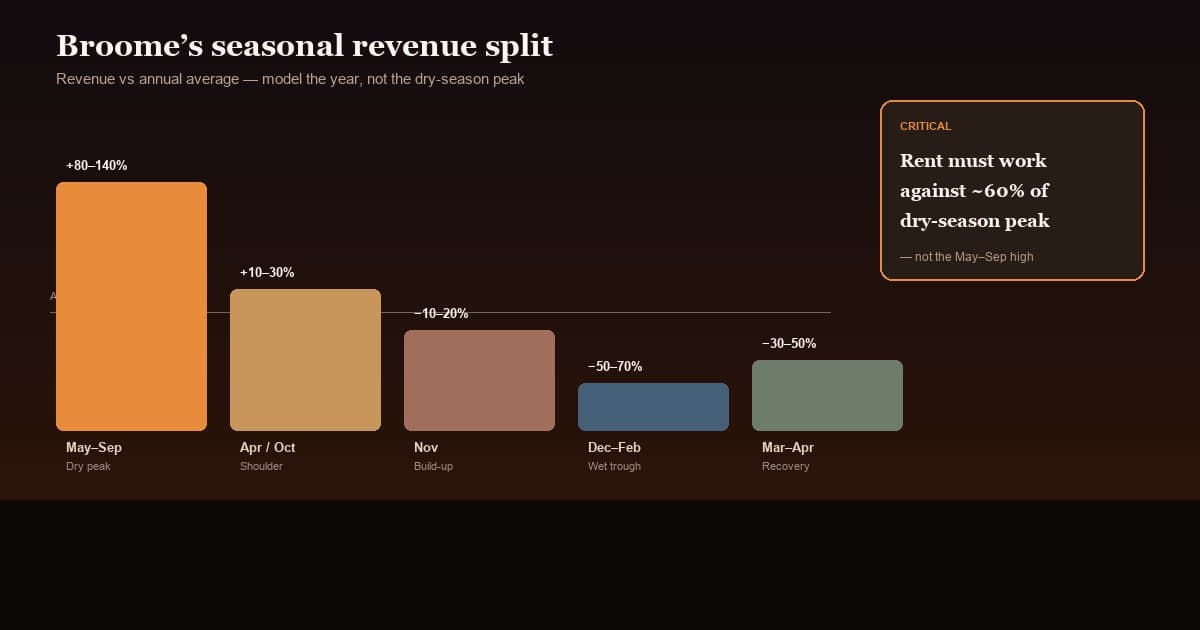
Esperance gets approximately 80% of its tourist trade in approximately half the year — October through April. The other half of the year, the tourist economy largely evaporates and the permanent 14,000 residents are your market. For a business with a cost structure calibrated to tourist-season volume, this is not a seasonal variation. It is a structural bifurcation between a viable business and a non-viable one that alternates every six months.
The Specific Format That Resolves the Tension
The tension in Esperance is between a peak season that creates compelling revenue and an off-season that creates survival pressure. The format that resolves this tension is one that is specifically designed for both halves of the year rather than optimised for one.
A café or casual restaurant built around Esperance's local produce story — fresh local seafood, regional WA ingredients, a menu that celebrates what makes Esperance food-specific rather than what makes it comparable to Perth — has a specific commercial advantage. The local produce is better sourced (shorter supply chain, fresher), cheaper at the source (direct from fishers rather than through Perth wholesale markets), and more compelling to both tourists (who came for the natural experience and want food to match) and locals (who have pride in the regional identity).
This format can operate at a price point ($22–$38 per head) that works for the tourist market's quality expectations AND for the local permanent resident at habitual-visit frequency. It is not trying to be a premium fine dining destination (wrong market) or a cheap takeaway (leaves the quality gap unfilled and the tourist opportunity uncaptured). It is exactly the thing that Esperance's market gap actually represents.
The Verdict: Is It Opportunity or Risk?
It is both. The honest answer is that Esperance is simultaneously a genuine commercial opportunity and a genuine commercial risk, and the factor that determines which one predominates for any specific operator is not the market — it is the operator's preparation.
VERDICT: GO with specific conditions — or stay away
Esperance is the right market for you if: • Your rent is below $1,600/week all-in • Your format's fixed costs are survivable on off-season local patronage alone ($6,000–$9,000 weekly revenue) • You have a local produce sourcing story that differentiates you from the existing operators • You have 8–10 months of operating capital reserves before you open • You have explicitly budgeted the $40,000–$60,000 annual supply chain premium Esperance is the wrong market for you if: • Your business model requires tourist volume to cover fixed costs • You visited in January, fell in love with the energy, and are projecting that energy across 12 months • You have less than 12 months of reserves • Your format requires urban supply chains for specialty ingredients The gap between "GO" and "don't go" in Esperance is not about the market. It's about whether you're prepared for the specific conditions the market imposes.
The operators who have built lasting businesses in Esperance — and there are some genuinely impressive ones if you look at the market carefully — didn't go there with rose-tinted glasses. They went with specific plans for the off-season, specific local supplier relationships, and specific financial structures that made the winter survivable rather than dependent on summer surpluses. That level of preparation is not glamorous. It is the work that makes the opportunity real rather than theoretical.
Locatalyze models Esperance specifically — tourist season vs off-season revenue, supply chain cost premiums, local population spend capacity, and format viability at different rent levels.
Free location score, map, data confidence and PROCEED / VERIFY / AVOID recommendation. Modelled financials stay optional.
Model my Esperance locationRelated reading
About the author
Prashant GuleriaFounder, Locatalyze
Prashant built Locatalyze specifically to give operators in remote and regional markets the analytical rigour that their locations deserve and that they rarely receive from generic hospitality advice.
Tools first — then a full report for your address
Free rent, viability, and break-even checks. Upgrade when you are ready for competitors, map, and numbers for a specific site.
No signup required for tools