Gym Location Analysis Australia: How to Read Competition and Catchment Before You Lease
Founder, Locatalyze
Gym and fitness tenancies compete for the same drive-by and walk-up catchments as every other large-floor retail use — often with longer leases and heavier fit-out. Before you commit to hundreds of square metres, read competition, residential catchment and rent the same way you would for a café or restaurant: who trains where, at what hours, and what occupancy the membership base can carry. This guide is LOCATALYZE ANALYSIS and labelled MODELS — not an ABS gyms-per-capita ranking.
Evidence standard
No ABS ‘gyms per capita by suburb’ series is cited in this article. Competitive density, catchment and rent guidance are LOCATALYZE ANALYSIS / operator practice. Membership and break-even examples are MODELS. For lease structure, use [before you sign](/blog/before-you-sign-that-lease-checklist-restaurant). Address-level reads: /analyse/{city}/gym where available.
2–3 km
LOCATALYZE ANALYSIS: typical competitive / travel radius to map for suburban gyms (wider than café 500 m)
MODEL
Membership × price − rent must clear before fit-out romance — worked maths below
Lease
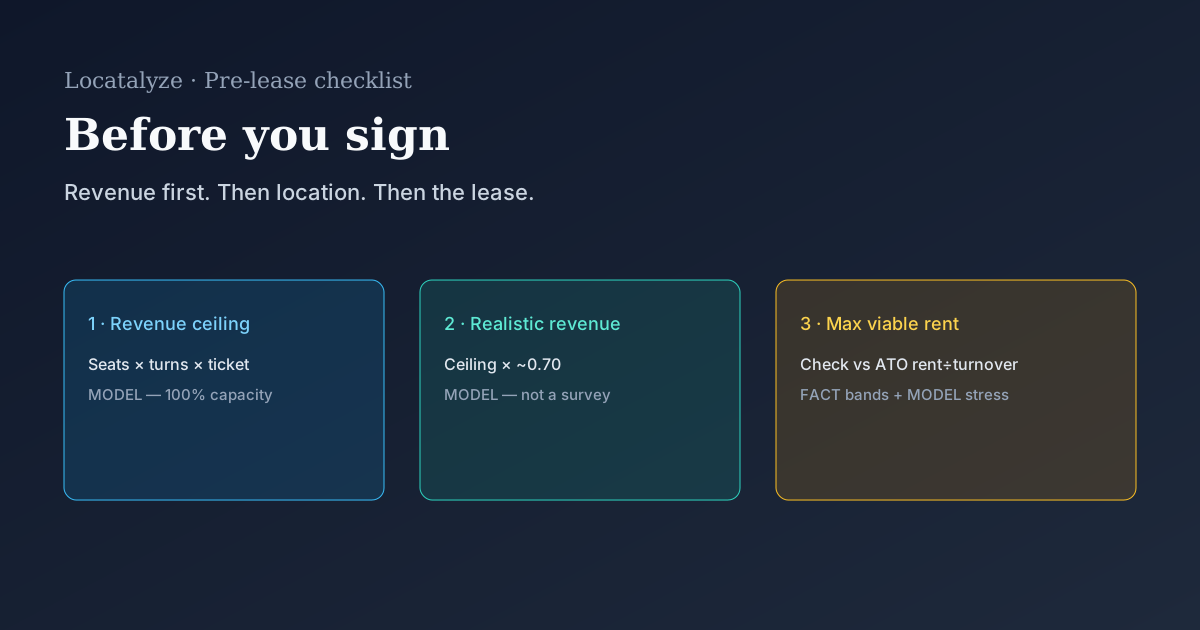
Use the national before-you-sign checklist for term, outgoings and make-good
The saturation problem you cannot ignore
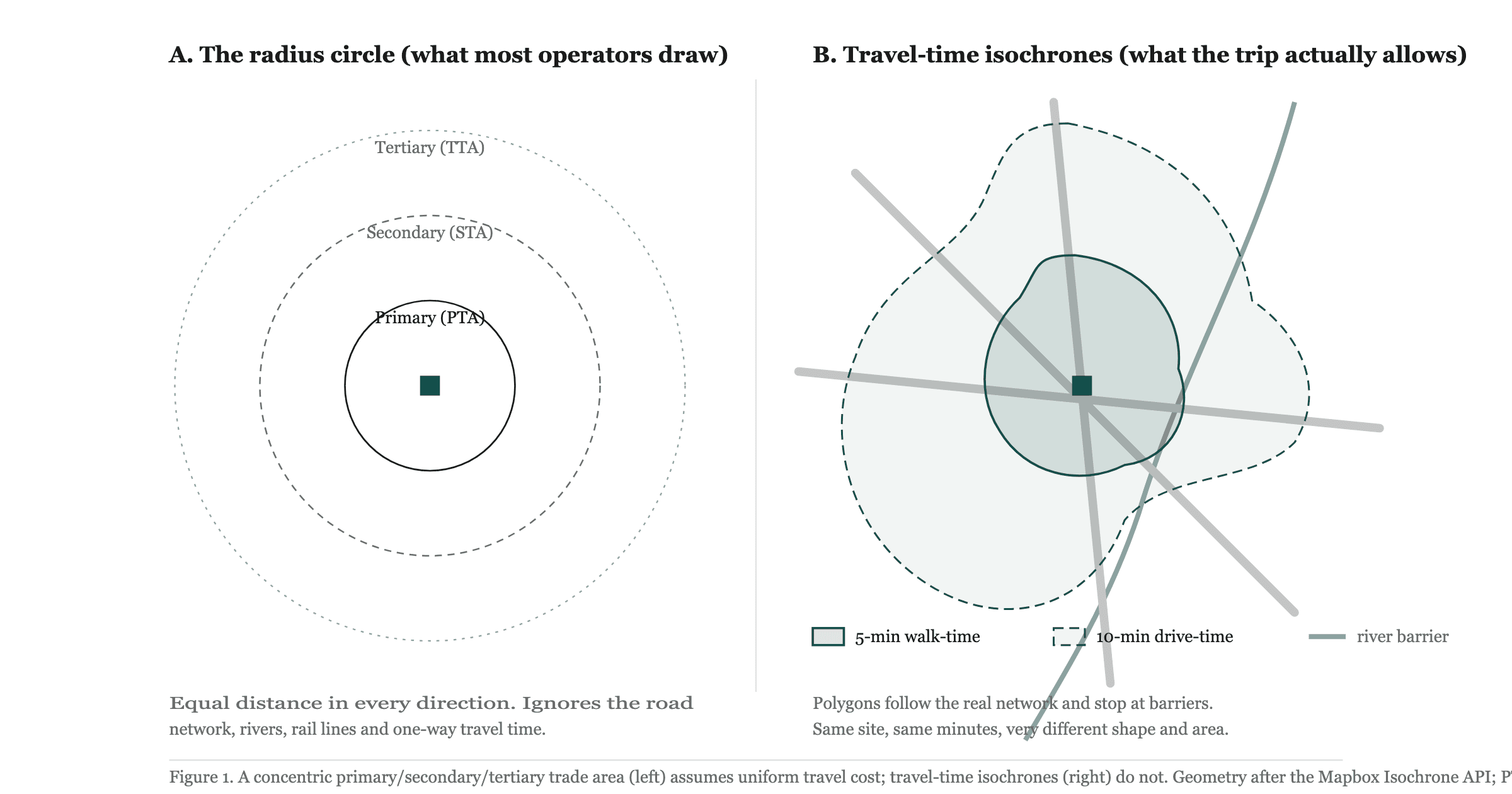
Finding a suburb without a gym was easy a decade ago. Today it is the challenge. National 24/7 and boutique chains are dense in most Australian capitals — treat any “hundreds of stores” figure as secondary brand reporting unless you open a current store-count filing. Before doing anything else, map every gym, yoga studio, pilates studio and CrossFit box within 2km of your target location — not 500m. For gyms, the competitive radius is wider.
Residential catchment: the most important variable for gyms
Unlike cafes, gyms are destination businesses. Members research, try a class and commit. The data that matters is whether enough of the right people live within a distance they will actually travel. For most members, that is 2–3km by car or 1–1.5km on foot.
Catchment screens (LOCATALYZE ANALYSIS — not ABS thresholds)
There is no official ABS ‘minimum households for a gym’ series. Use these as screening questions, then verify with QuickStats and a membership model: • General fitness (large floor): is the 2–3 km catchment dense enough with adults 20–49, and is there already a same-format 24/7 within that ring? • Boutique / class studio: is income or apartment density high enough to support premium tickets, and is the format differentiated from pilates/yoga already on the strip? • Budget 24/7: does another budget chain already own the price anchor within ~3 km? Pull ABS QuickStats (median household income, age bands, dwelling structure) for the SA2 — FACT with census year labelled.
Map competitors before you fall in love with a floor plate
Count every fitness business within 2km — big-box gyms, 24/7 franchises, yoga, pilates, CrossFit, F45-style studios, hotel gyms, and council leisure centres. Geoapify or Google Maps exports are enough for a first pass; your feasibility model needs both a number and a quality read (ratings, tenure, pricing).
The floor plate and rent maths
MODEL (illustrative arithmetic, not a Colliers gym rent series): suppose 300 m² at an all-in $80/m²/year → $24,000/year (~$2,000/month) rent alone. At $60/week membership (~$260/month), you need about 8 members just to cover that rent line — and dozens more before labour, equipment finance and churn. At 150 active members paying $260/month ($39,000 revenue), $2,000 rent is ~5% of revenue; at weaker membership the same rent becomes crushing. The point is sensitivity, not a universal $/m² quote — verify the listing.
Rent brackets
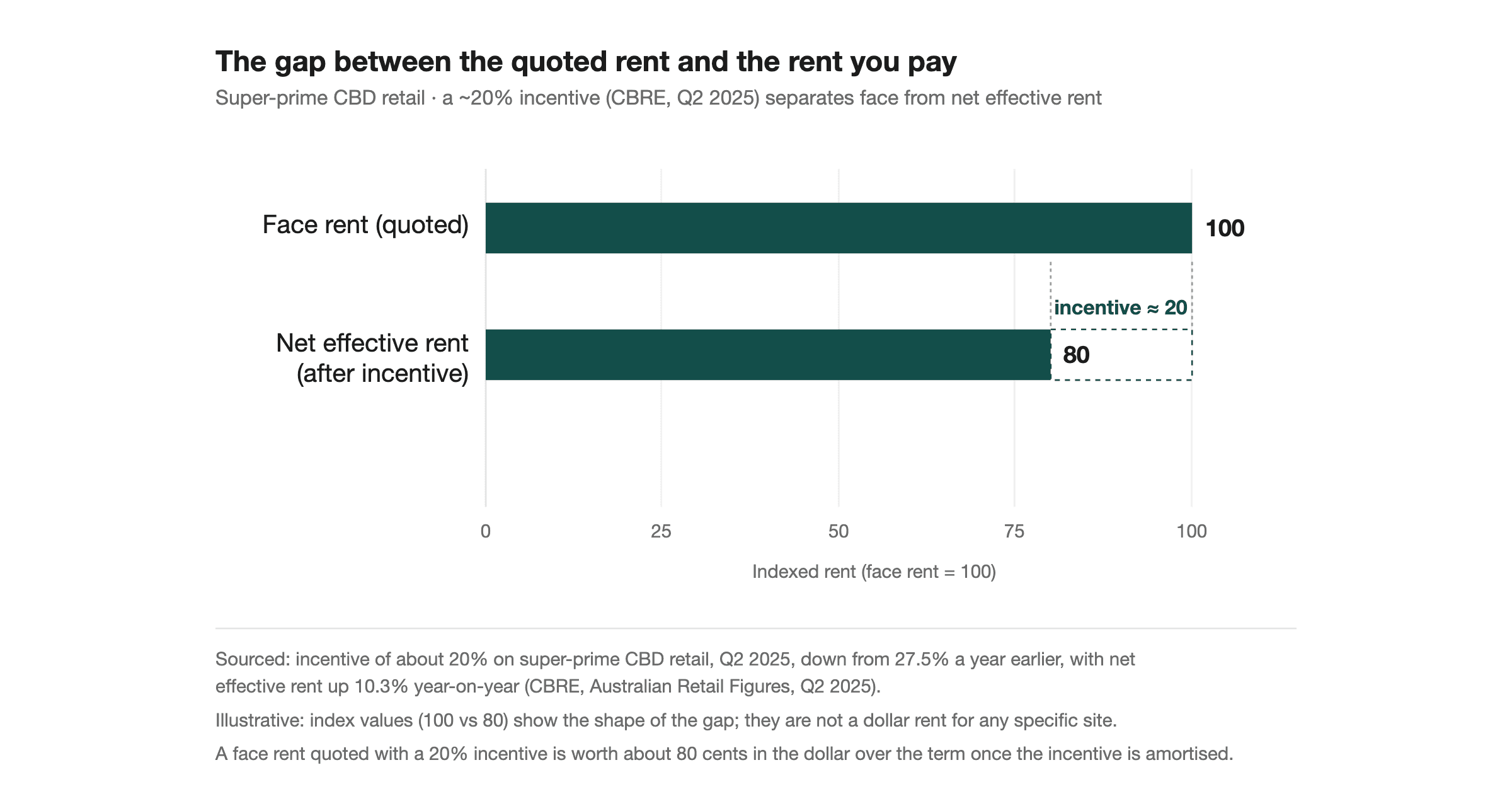
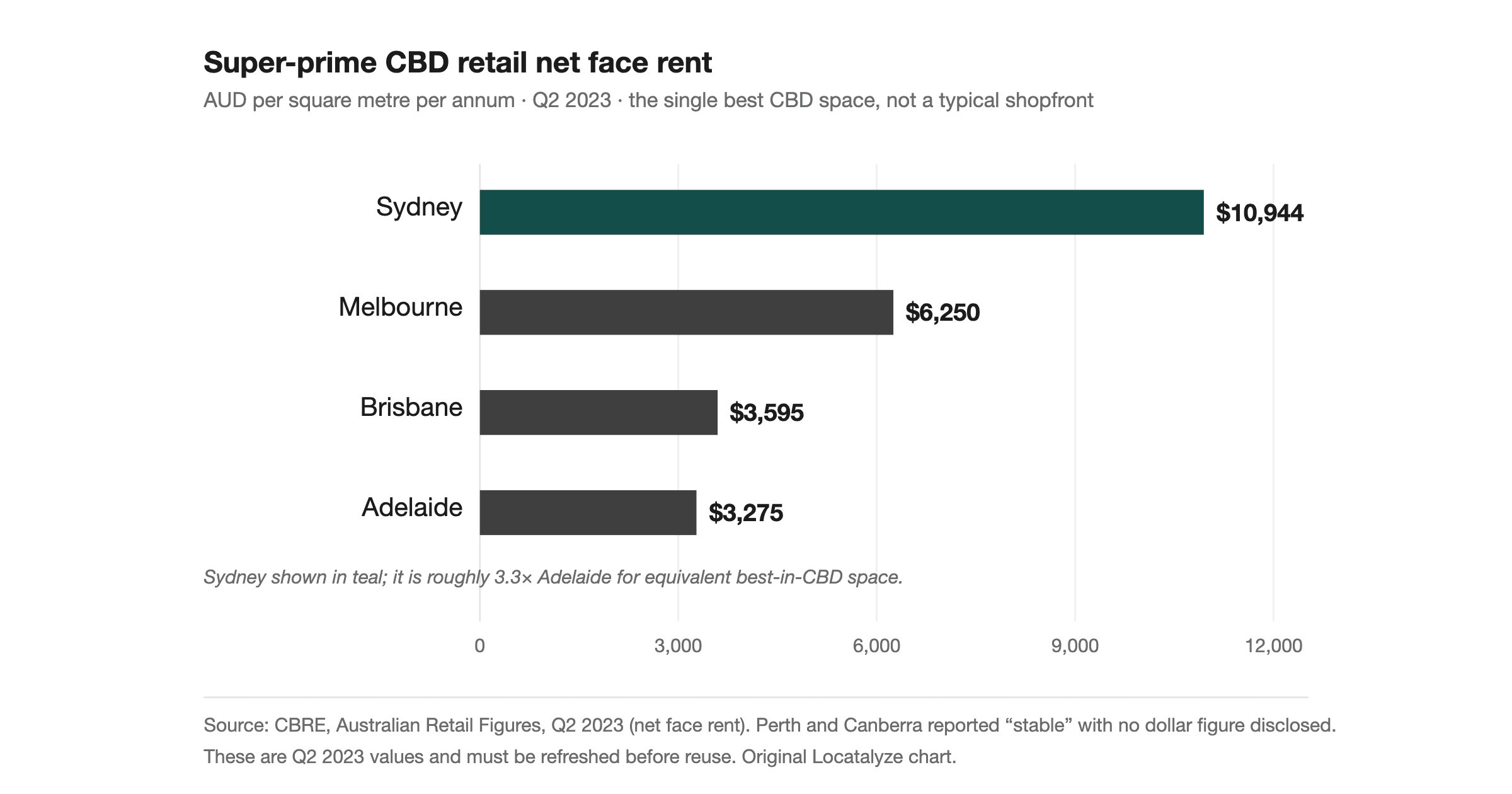
ESTIMATE: gym and warehouse-style rents vary too widely by city, floor plate and outgoings to publish a national table here without a primary series. Use current listings, agent quotes and the [commercial rent per sqm](/blog/commercial-rent-per-sqm-australia) public anchors for context — then run membership maths on the all-in ask.
How Locatalyze scores a gym (Scoring v2.1)
Same public weights as every other category: Rent Affordability 20%, Competition 25%, Market Demand 20%, Profitability 25%, Location Quality 10%. For gyms, Market Demand emphasises residential catchment and income; Competition picks up every studio within the mapped radius; Profitability tests membership economics against your rent envelope. Run your exact address — the report breaks each factor with competitor maps, not suburb generalities.
PROCEED / VERIFY / AVOID
PROCEED (provisionally): mapped competition leaves a clear format gap, QuickStats support the membership story, and rent clears at a conservative active-member count. VERIFY: gap exists but another chain is rumoured, or parking/access is unproven at peak. AVOID: three same-format operators already inside 2 km and your model needs heroic retention to pay rent.
Have a shortlist of warehouse or retail shells? Drop in the address for a gym-format report in under two minutes.
Free location score, map, data confidence and PROCEED / VERIFY / AVOID recommendation. Modelled financials stay optional.
Analyse a gym siteDemographics: the numbers landlords never show you
FACT method: pull ABS Census QuickStats for the SA2 around your site — median household income, age 25–44 share, apartment vs separate-house mix. LOCATALYZE ANALYSIS: boutique / premium class formats usually need either higher local incomes or very dense young-adult apartments with limited same-format supply; budget 24/7 formats compete on price and access more than prestige. Do not treat any single income cut-off as a law — model membership yield against rent.
Membership MODEL before you love the shell
MODEL: monthly membership price × active members = membership revenue (ignore retail/PT add-ons until base clears). Required members ≈ all-in monthly rent ÷ (price × target rent share). Example: $4,000/month rent, $55/week (~$238/month) membership, target rent share 12% → need revenue ≈ $33,300/month → ≈ 140 active members. If your sales plan only reaches 90 members in month six, the lease is early — or the price/format is wrong.
Cross-check catchment: can 140 actives come from the 2–3 km ring after competition share? Use ABS adult population in the SA2s you intersect, then apply a realistic penetration rate (MODEL — often low single digits for general fitness). If the maths needs heroic penetration, AVOID.
Physical requirements and access
Finding the market gap in 2026
The gaps that still exist in the Australian gym market: group training studios in suburbs where only 24/7 chains operate; reformer pilates and functional training in high-income suburbs still served only by budget chains; sport-specific martial arts and skills training in residential growth corridors. If you find one of these gaps backed by strong demographics, the location opportunity is real.
Sources & verification
Related reading
About the author
Prashant GuleriaFounder, Locatalyze
Prashant builds address-level location reports for Australian operators — including gym and fitness formats where catchment and competition dominate.
Tools first — then a full report for your address
Free rent, viability, and break-even checks. Upgrade when you are ready for competitors, map, and numbers for a specific site.
No signup required for tools