Best Suburbs to Open a Gym in Australia (2026 Data Analysis)
Locatalyze Research Team
Finding a viable gym location in 2026 requires more than instinct. With 24/7 chains saturating most major suburbs, opportunity lies in the gaps — and the data shows where those gaps still exist.
The gap market: where opportunities still exist
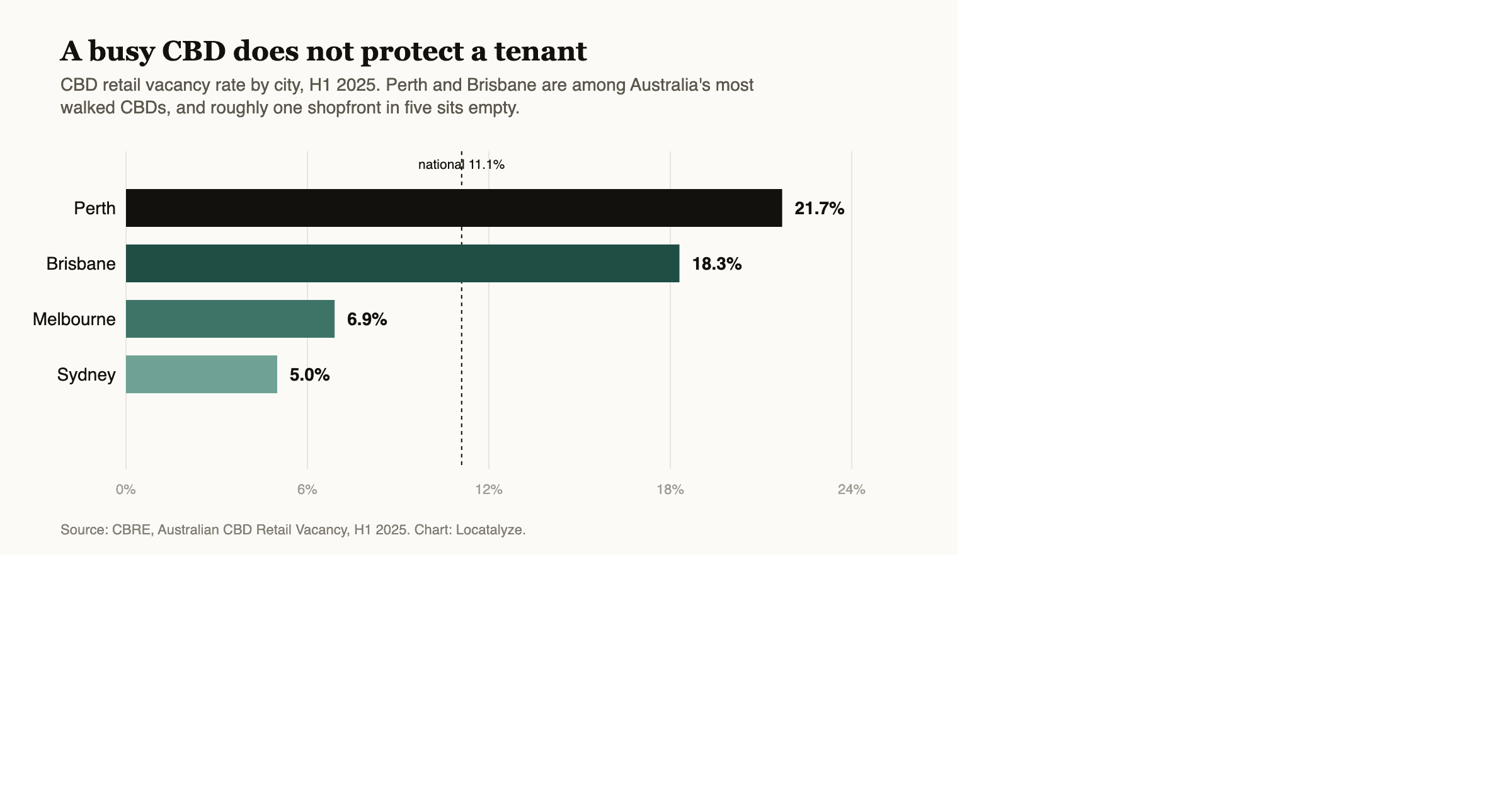
The general-fitness, budget-24/7 gym market is largely saturated in most Australian capital cities. The remaining opportunities are specific: boutique formats (reformer pilates, functional training, martial arts), premium positioning in affluent suburbs where chains have not competed, and growth corridor suburbs with strong population influx but limited fitness infrastructure.
8–12%
Annual revenue growth, boutique fitness sector 2022–24 (IBISWorld: Gym, Pilates & Yoga)
38%
Of Australians who exercise regularly use a gym or studio (AusPlay Survey 2024, Australian Sports Commission)
$2,400–$4,800
Typical annual spend per member, boutique studio (operator quoting guides / IBISWorld studio segment — illustrative)
Characteristics of high-potential gym suburbs
Sydney: apartment density without studio supply
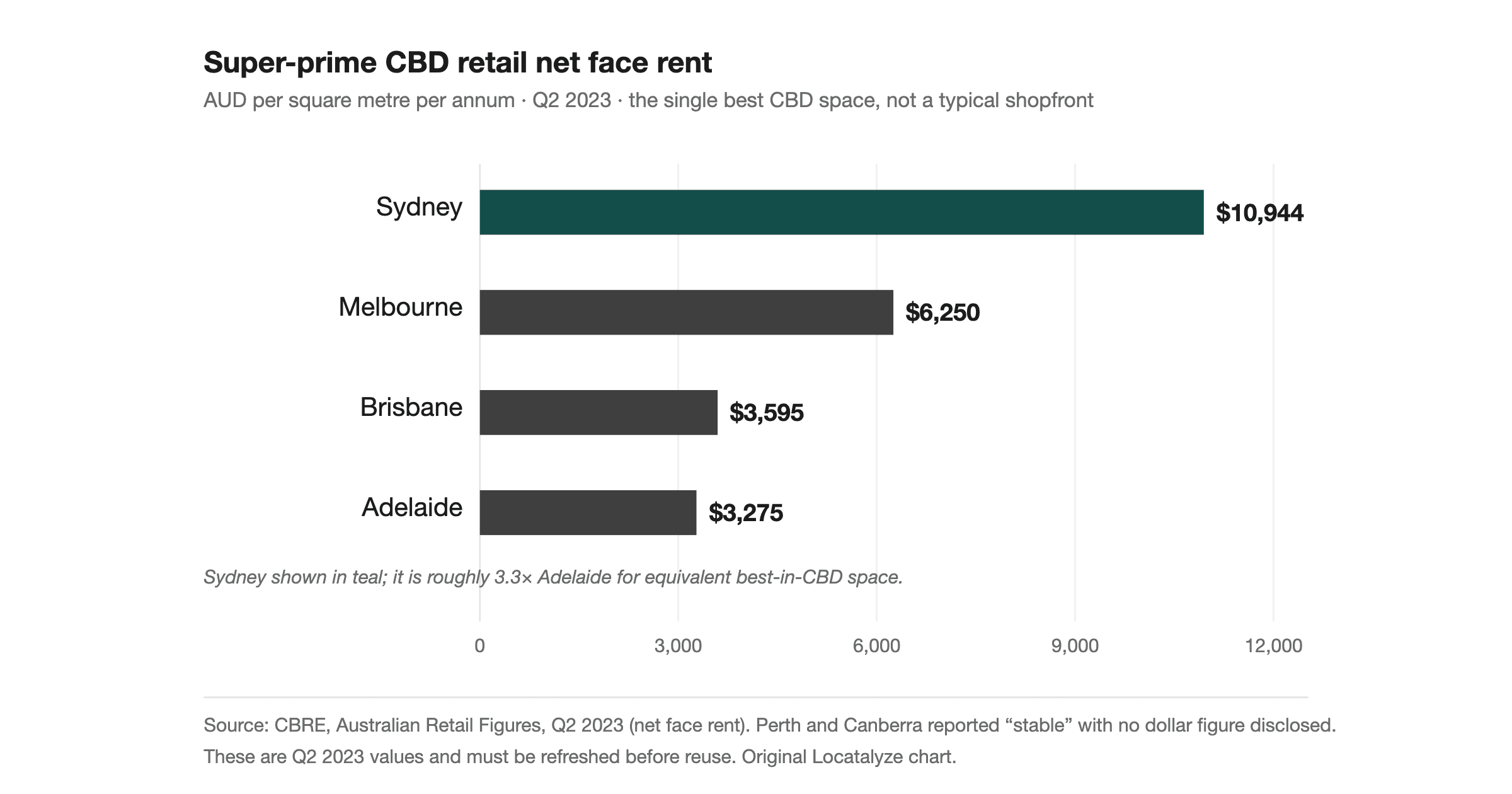
Sydney's apartment construction boom has created pockets of high household density without matching boutique fitness infrastructure. The most compelling opportunities are in suburbs where population has arrived faster than retail supply — specifically Waterloo and Zetland in the inner south, St Leonards on the lower north shore, and Brookvale on the northern beaches. Waterloo and Zetland alone have seen over 15,000 new apartments built in the Green Square urban renewal zone since 2018, yet boutique studio count per capita remains well below the inner-west average.
Melbourne: where population is outpacing supply
Melbourne's greenfield growth corridors — Tarneit, Wyndham Vale, Donnybrook and Clyde North — are adding thousands of households annually with almost no boutique fitness infrastructure to match. Commercial rent in these corridors runs $1,500–$2,200/month for a 200sqm space, compared with $4,500–$6,000 for an equivalent site in South Yarra or Richmond. Median household incomes are in the $85,000–$100,000 range — more than sufficient to support functional training at $80–$120/month memberships. The break-even calculation is materially better: a studio in Tarneit that needs 75 members to cover costs would require 150+ members at a South Yarra rent.
Tarneit / Wyndham Vale snapshot
New dwelling completions: 4,500+/year (fastest-growing corridor in Victoria) Median household income: ~$88,000 Boutique studios within 3km: 0–2 Commercial rent (200sqm): $1,500–$2,200/month Estimated break-even: 70–90 members at $90/month
Perth: the boutique fitness gap
Perth's boutique fitness gap is most visible in Claremont and Nedlands. Both suburbs have median household incomes above $120,000, a 30–50 age bracket skew, and limited reformer pilates or high-end strength training options despite clear demand signals. A 200sqm studio in Claremont commands $3,200–$3,800/month — roughly 40% below an equivalent site in South Yarra, Melbourne. The membership economics are compelling: at $180/month per member, you need just 55 members to cover rent, compared with 80–100 at an inner Melbourne site.
Nedlands adds the University of Western Australia medical cluster — a high-income, fitness-conscious professional demographic with very limited boutique options within walking distance. Cottesloe and Dalkeith extend the opportunity further west: high owner-occupier income, strong lifestyle affinity, and commercial rents ($2,500–$3,200/month) that produce favourable unit economics for a premium studio operator.
$120K+
Median household income, Claremont & Nedlands SA2s (ABS Census 2021)
55 members
Illustrative rent cover at $180/mo & modelled rent (Locatalyze maths — not a guarantee)
0–3
Boutique studios across Claremont, Nedlands, Cottesloe and Dalkeith combined (Geoapify/Google Maps competitor count, 2025 — re-verify before signing)
How to find your gap using data
Step 1: Map all gyms, yoga, pilates and CrossFit within 2km of target suburb. Step 2: Check ABS data — households within 2km aged 22–45. Step 3: Check income data — households above $85K/year. Step 4: Model your membership economics at 100, 150 and 200 members. Step 5: Is there a gap between demand and existing supply?
Related reading
Tools first — then a full report for your address
Free rent, viability, and break-even checks. Upgrade when you are ready for competitors, map, and numbers for a specific site.
No signup required for tools