Best Suburbs in Wollongong to Open a Restaurant in 2026: Data-Backed Foot Traffic, Rent, and GO/CAUTION Verdicts
Founder, Locatalyze
"Wollongong" is one of those words that functions as a full answer to the question "where should I open?" — when actually it's only the beginning of the question. Wollongong is a city of 300,000+ people spread across a 50km coastal corridor. It has a dense student precinct. It has a growing remote-worker population in the northern suburbs. It has working-class and family-dominated southern suburbs. It has the city centre. It has Thirroul to the north and Shellharbour to the south. The commercial characteristics of these areas are as different from each other as Newtown is from Penrith. An operator who says "I want to open in Wollongong" has answered approximately 20% of the location question. This guide answers the rest — with specific data on foot traffic, rent benchmarks, demographic spend capacity, and a GO/CAUTION verdict for each key precinct based on what the numbers actually show.
How We Assessed Each Precinct
For each Wollongong precinct, we assessed five variables: all-in weekly rent range for a standard 60–120sqm food and beverage tenancy; estimated daily foot traffic during primary trading periods (weekday lunch and weekday morning); the demographic composition and natural spend ceiling of the immediate catchment; the competitive density in the quality mid-range dining segment; and the specific trading risks that apply to that location type (seasonal variation, university calendar effects, tourism dependency).
The verdicts are not about which precinct is "best" in absolute terms — they're about which precinct best matches specific format profiles. A café that's a strong GO in Thirroul is not necessarily the right answer for a mid-range dinner restaurant. We call this out explicitly in each assessment.
Precinct 1: Crown Street CBD Core (Crown/Keira to Crown/Church)
Crown Street's CBD core is Wollongong's highest foot traffic corridor and its most competitive food and beverage environment. The pedestrian counts are genuine — this is a functioning city centre with university, hospital, and commercial building density pushing consistent daily movement. The rent range reflects this: at $3,800 per week all-in, a standard casual dining concept needs $38,000 per week in revenue at a 10% ratio, which requires very strong covers performance to justify.
The demographic limitation is real. Crown Street's daytime footfall is heavily influenced by the student and working-class populations that dominate Wollongong's core. Average comfortable spend for casual lunch in this corridor sits at $22–$28. Operators who open at $35+ average lunch spend on Crown Street consistently find the volume insufficient to support the rent. The dinner market is more forgiving — $34–$48 — but the evening foot traffic is significantly lower than the lunchtime volume.
Crown Street CBD Core: CAUTION for most formats
**GO if:** You are a high-volume fast casual or QSR at $14–$24 average spend. The foot traffic volume at lower price points generates sufficient covers to support Crown Street rent levels. **CAUTION if:** You are a quality mid-range dinner concept at $38+ average mains. The rent level requires exceptional weekday evening volume that Crown Street's current demographic does not reliably generate. **Avoid if:** You have a premium concept at $55+ average spend. The demographic depth for this price tier in Wollongong's CBD core is insufficient.
Precinct 2: Wollongong Harbour and North Beach Strip
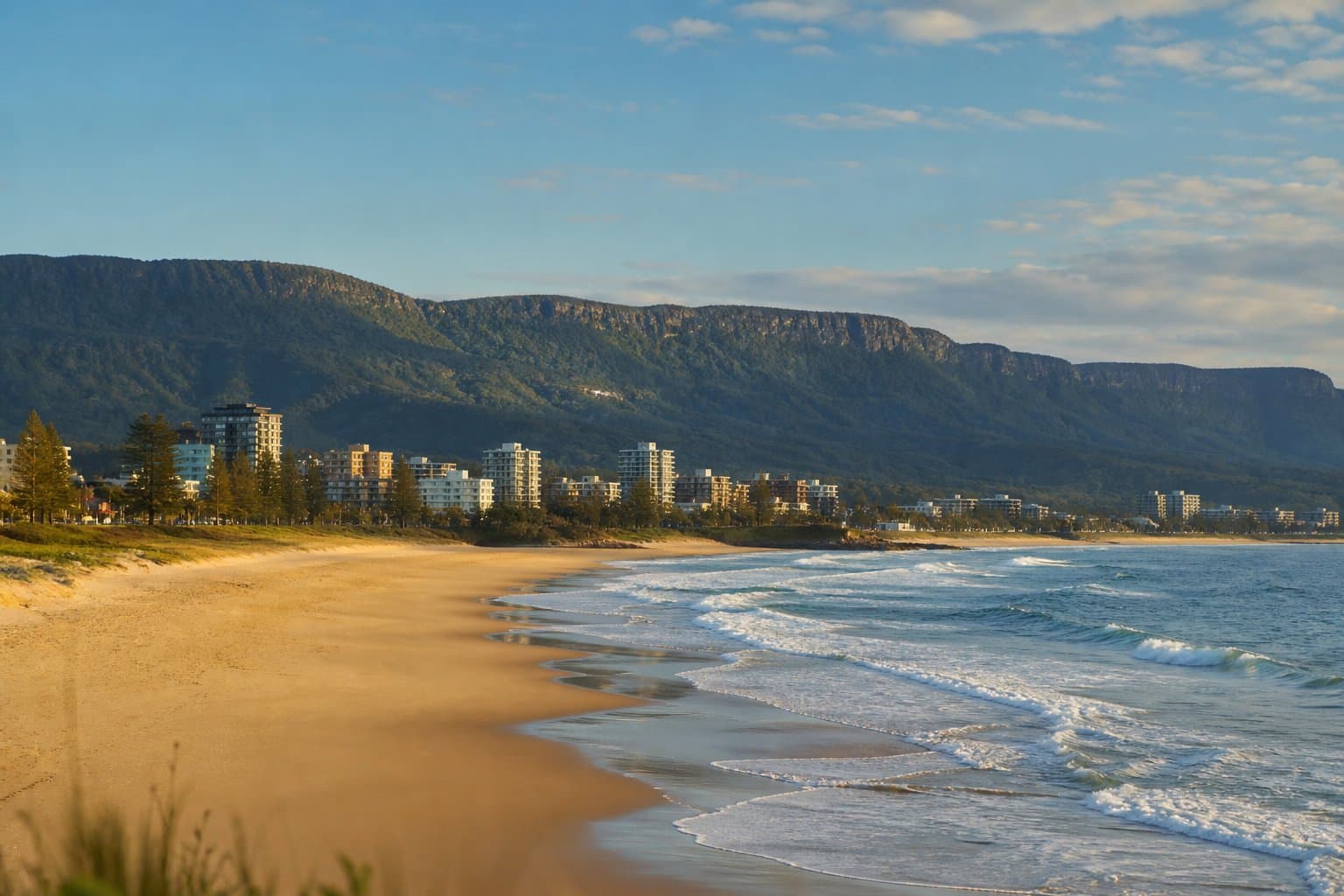
The Wollongong Harbour precinct — Harbour Street, the lighthouse area, and the adjacent coastal strip — represents the most interesting commercial opportunity in Wollongong for quality mid-range and above concepts. The foot traffic volume is lower than Crown Street, but the profile is dramatically better for premium positioning: coastal visitors, beach-goers, and the Sydney overflow migrant demographic that has established itself in North Wollongong specifically.
The competitive density is thin. There are only 6–9 quality mid-range operators in this precinct for what is essentially the best-positioned food and beverage location in the city for premium tourism and lifestyle dining. The rents are materially lower than Crown Street despite the demographic quality advantage. This is the anomaly that creates the most compelling opportunity in Wollongong right now.
Wollongong Harbour: GO for mid-range and quality formats
**GO for:** Quality mid-range dinner at $38–$55 mains, all-day café with coastal aesthetic, wine-focused casual dining. The demographic supports it, competition is thin, and weekend coastal tourism provides volume upside. **Key risk:** Weekday lunch volume is significantly lower than Crown Street. If your model depends on consistent weekday lunch trade, the volume isn't there. Harbour works for weekend and evening-anchored concepts. **Rent sweet spot:** $2,400–$3,200/week. Above $3,600, the weekday volume gap creates fragility in the annual average.
Precinct 3: Thirroul Village
Thirroul is the most underappreciated opportunity in the Wollongong region. It has the highest income demographic of any Wollongong suburb — a concentrated mix of Sydney commuters who chose Thirroul specifically for its coastal village character, creative professionals, and established families with above-average household incomes. It has genuine community identity, which generates the kind of loyal local repeat patronage that is far more commercially valuable than tourist foot traffic.
The competitive landscape has 3–5 quality operators — not saturated. The rent is the lowest of any viable Wollongong precinct. And the demographic would comfortably support 2–3 more quality operators at $38–$52 price points. The only constraint: Thirroul is a small village with a corresponding catchment size. Volume ceilings are lower than Crown Street or the Harbour. But the rent-to-revenue ratio is the most favourable in Wollongong.
Thirroul: STRONG GO for neighbourhood restaurant or quality café
**GO for:** Quality neighbourhood restaurant, specialty café, wine-led casual dining. The demographic is excellent, rents are the most forgiving in the Wollongong region, and the community loyalty effect is real and durable. **Volume constraint:** You are serving a village catchment. Seat count should be 30–50 — not 80. The opportunity is margin quality, not volume quantity. **Best prospect:** A 40-seat neighbourhood restaurant at $44 average mains running 8–10 quality services per week generates approximately $14,000–$18,000 per week against $2,000/week rent. Rent ratio: 11–14%. The maths works better here than anywhere else in the Wollongong region.
Precinct 4: Corrimal Street / Wollongong North
Corrimal Street: CAUTION — format-specific only
**GO if:** Your format is value-focused casual at $16–$28 and your model is built on volume and frequency from the local working-family demographic. Good rents, decent foot traffic, loyal local customer base. **CAUTION if:** You are a quality mid-range or premium concept. The demographic spend ceiling is approximately $32–$38 for dinner — insufficient for mid-premium formats at standard rent ratios. **Not recommended for:** Sydney operators who want to replicate an inner-city concept in a "lower rent" environment. This demographic is different from the Harbour or Thirroul catchment.
Precinct 5: University Area (Crown/Squires Way Precinct)
The University of Wollongong precinct — the commercial strips immediately surrounding the campus on Innovation Campus and the nearby food outlets — has characteristics that make it highly format-specific.
Volume exists: 38,000 students, staff, and campus visitors generate genuine foot traffic during semester. The spend ceiling is extremely compressed: the student demographic has a natural price point of $12–$18 for lunch. Academic and professional staff push this to $20–$26 but don't represent enough volume to sustain quality mid-range formats. The university calendar effect — 8–10 weeks of significantly reduced volume during summer break and inter-semester periods — creates the cash flow volatility that has ended several operators who didn't model it explicitly.
University Precinct: CAUTION for most formats / GO for volume fast casual only
**GO if:** Fast casual or QSR at $12–$18. Volume exists, price point matches, competition from chains is present but independent operators who execute well on quality and speed can compete effectively. **CAUTION for all other formats:** The price ceiling, the calendar volatility, and the demographic homogeneity make quality mid-range formats difficult to sustain profitably. **Critical:** Model 10 weeks per year at 35% of semester revenue. If the business model can't survive 10 weeks of deep-low trading, the university precinct is the wrong location.
The Summary: Wollongong Precinct Rankings for 2026
Get a precise location score for any Wollongong address — foot traffic data, demographic spend profiling, and competitive density mapping by precinct.
Analyse my Wollongong location → →Related reading
About the author
Prashant GuleriaFounder, Locatalyze
Prashant built Locatalyze to replace vague location intuition with specific, data-backed commercial intelligence.
Tools first — then a full report for your address
Free rent, viability, and break-even checks. Upgrade when you are ready for competitors, map, and numbers for a specific site.
No signup required for tools