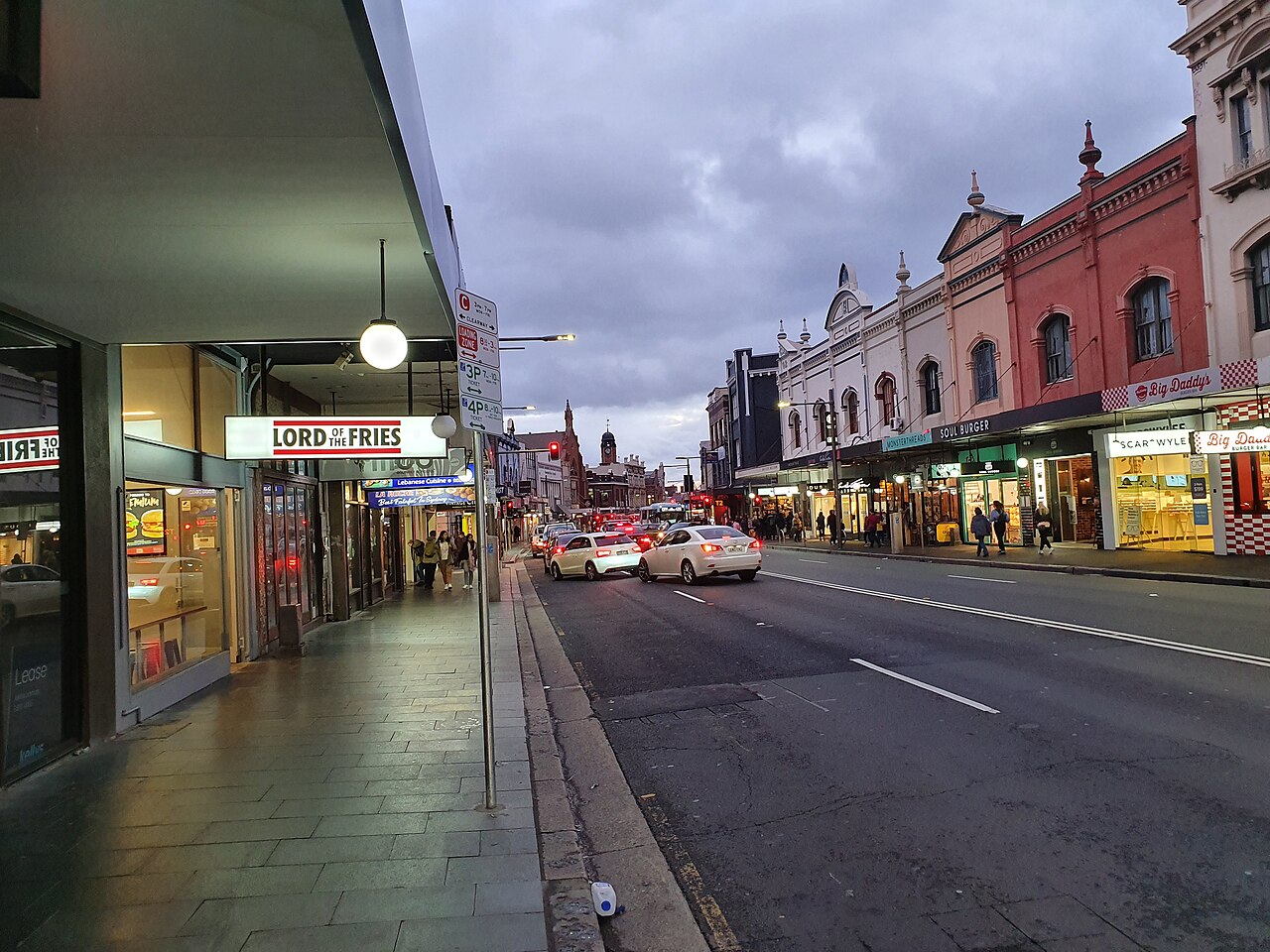
Newtown insights are suburb-level. Your free score checks a specific address — competitors, rent pressure, and a Proceed / Verify / Avoid recommendation.
Location score
73
out of 100
Recommendation
PROCEED
Promising fit, subject to normal due diligence
BEST FIT
78
Café
7.8/10 category
72
Restaurant
68
Retail
Businesses analysed30
Cache updated27 June 2026
Enginev7.4.0
Medium confidence
30 businesses sampled near Newtown centre (last refreshed 27 June 2026); suburb scores use Locatalyze engine v7.4.0. Suburb-centre snapshots for Newtown — validate at your lease address before signing.
Café is the strongest scored format at 78/100, 10 points above retail at 68/100. The suburb verdict is PROCEED at 73/100.
No factor is in a tight band. Demand is 10/10, rent pressure 5/10, competition 6/10, and seasonality 2/10. The verdict comes from the weighted blend, not from one red flag.
Camperdown is the nearest scored suburb, about 0.7 km away. Demand 10/10 versus 8/10. Both figures are suburb scores, not a walk between the two shopfronts.
A cited count is on this page. It is a suburb baseline, not a forecast and not a rent quote.
This is a reading of the five factors and three format scores on this page. It is not a rent quote, a competitor count, or a reason to sign a lease.
How to read these scores
Composite 73/100; Café 78/100. Use this as an early location verdict before lease diligence.
Source
Locatalyze engine v7.4.0 plus cached local competitor evidence
Freshness
Competitor cache refreshed 27 June 2026
Confidence
Medium - 30 businesses sampled
Limitation
Newtown scores screen the suburb, not the lease. The paid report tests frontage, rent, nearest competitors, and break-even at your exact address.
Evidence freshness
Scores
Engine v7.4.0; suburb-level model
Competition
Google Places cache refreshed 27 June 2026
Rent
No sourced asking-rent series — obtain current listings
Demographics
ABS Census 2021 is cited only where this page states a count. A score is not a census figure.
Mini location report — Newtown
Café opportunity snapshot
PROCEED band for café operators in Newtown.
Also scored: Restaurant 72 · Retail 68
Café opportunity score
78/100
Demand strength
10/10
Rent pressure
Moderate (5/10)
Competition density
6/10
Financial model — unlock at your address
Suburb-level estimates only. Your full report models P&L from your lease address, rent, and format.
🔒Est. monthly revenue range
Modelled at your address from rent, ticket and demand — not a suburb average
🔒Break-even customers per day
Calculated from your rent, staffing, and average ticket at your exact address
🔒Payback period on fit-out
Months to recover setup costs at base-case revenue
🔒Rent-to-revenue ratio
Whether the lease is sustainable at modelled trade levels
See if the numbers work at your rent
Run a free analysis at your Newtown address. Unlock modelled P&L, break-even, and scenarios from $29.
Demand, rent, competition, seasonality, and tourism — scored and weighted for Australian commercial operators.
10/10
Demand
5/10
Rent cost
6/10
Competition
2/10
Seasonality
4/10
Tourism dep
Business-Type Scores
How each format performs
Café / Specialty Coffee78
Full-Service Restaurant72
Independent Retail68
Scores use engine-derived weights: cafés weight demand and rent most heavily; restaurants factor tourism; retail factors tourism and demand equally.
Analyst Notes — Newtown
What the data says about this location
1
Demand 10/10: King Street delivers unmatched independent hospitality foot traffic with a loyal, high-frequency local demographic.
2
Rent 5/10: moderate for inner-city — accessible compared to Surry Hills or the CBD.
Decision tree
Newtown is the inner-west's highest-frequency independent hospitality strip. King Street draws workers, residents, students, and a discretionary weekend crowd from across the inner-west and the eastern suburbs, and demand on the strip outpaces any reasonable supply at most positions. Rent is moderate by inner-Sydney standards, but the cost is paid in competition density and format-fit discipline. The right call depends on what an operator is actually planning to build, and where on King Street they plan to build it.
Newtown stretches roughly from Macdonaldtown station in the north to St Peters in the south, with King Street as the commercial spine and Enmore Road branching west. The two ends of King Street operate as different precincts — north of Newtown station leans student-and-resident heavy with a younger profile, south of the station leans toward established residents and weekend destination trade.
This guide is structured as a decision tree. The question is not 'is Newtown viable' — for almost any retail or hospitality format, Newtown supports demand. The real question is 'which format fits which King Street position at which rent envelope, and how does the operator avoid being one of the four-or-five-per-year venues that close inside 18 months'. The tree branches by format type because the right answer for a specialty café is materially different from the right answer for a full-service restaurant, a specialty retailer, or a late-night venue.
Whether the format is a specialty coffee program or a broader cafe-and-food operation. Newtown carries approximately 40–55 café operators within a ten-minute walk of Newtown station, and specialty coffee is at saturation. New entrants competing on coffee quality alone face an environment where loyalty is established by individual barista, not by venue, and price competition has compressed margin.
The second question is position. King Street north of the station (toward Macdonaldtown) supports morning-loaded student-and-resident trade and runs at $500–$650/m². King Street south of the station (toward St Peters) carries the strongest weekend-brunch traffic and runs at $650–$800/m². Enmore Road sits between the two on rhythm and rent, with a stronger evening crossover.
The third question is whether the model assumes all-day trade or morning-only. Morning-loaded operators with tight overhead and a strong product clear margin reliably. All-day operators need evening conversion that King Street supports in some positions but not all — the south-end strip and Enmore Road carry stronger evening flow than the north-end student stretch.
Decision: morning-loaded specialty café on King Street north or a side-street position at $480–$600/m² is the cleanest entry. South-end King Street works for operators with strong brand and weekend-peak capacity. Generic café formats without product differentiation should not enter Newtown at any position.
If you are considering a full-service restaurant
The key format question in Newtown is whether the format targets the weekend-destination crowd, the weekday-local crowd, or both. Newtown supports all three rhythms but with different position requirements.
Weekend-destination formats need throughput capacity for the Friday-to-Sunday peak, which can deliver 50–60% of total weekly revenue for the right concept. Capacity-constrained venues on King Street south consistently under-deliver on the peak. The south-end strip between the station and Erskineville Road is the right position for this format.
Weekday-local formats target the resident catchment in the apartment buildings and terraces off King Street. The rhythm is evening-loaded Tuesday-to-Thursday with a softer Saturday, and positions on Enmore Road or the King Street north stretch work because they sit inside walking distance of the residential blocks without paying south-end visitor-frontage rent.
Decision: format-position match matters more than absolute rent. A 30-seat fine-casual venue on south King Street fails the weekend peak; a 90-seat venue on Enmore Road can fail the discovery test if the concept is not strong enough to pull deliberate visits. Anchor the decision to the customer profile and the operating rhythm, not the foot-traffic count.
If you are considering specialty retail
The first question is whether the retail format is destination-led or browse-led. Newtown supports both, but at different positions and at different rent envelopes.
Destination-led retail — vintage and independent fashion, bookshops, record stores, specialty homewares — has long defined the strip's identity. The customer is travelling deliberately to Newtown for these categories, often after lunch or before dinner. King Street south and the cross-streets near Newtown station carry the discovery flow.
Decision: destination-led formats with strong identity absorb south King Street rent. Browse-led formats should sit on lower-rent positions and rely on the discretionary weekend flow. The Enmore Road position is consistently underrated for independent retail.
If you are considering a late-night or bar format
The Newtown bar and venue decision turns on whether the format is a wine-and-small-plates venue, a craft-beer operation, or a late-trading cocktail or live-music venue. Newtown supports all three at varying density.
Wine-and-small-plates fits the weeknight Tuesday-to-Thursday rhythm best, absorbing post-work resident trade across 18:00–21:00 and converting to discretionary spending across 21:00–23:00 on weekends. Both King Street south and Enmore Road work for this format.
Craft-beer and cocktail formats are weekend-loaded, with Friday and Saturday delivering 55–65% of weekly trade. Operating discipline must clear margin on the peak. The Enmore Road corridor and the King Street stretch near the station carry the strongest late-night flow.
Live-music and late-trading venues face a more regulated environment than the strip's reputation suggests. Operators planning concepts trading past 23:00 should validate the licensing position on the specific tenancy before committing.
Decision: wine-and-small-plates is the cleanest evening entry. Late-trading formats work for operators with strong brand identity, weekend-loaded operating discipline, and a clear-eyed read on the licensing envelope.
If you are considering quick-service or fast-casual
For Newtown quick-service, the critical question is whether the format is differentiated from the dense quick-service offering already present on King Street. Generic fast-casual loses on volume against the established operators and on price against Marrickville and Petersham.
What works is fast-casual with a clear product identity — a specific cuisine the strip does not already saturate, a specific dietary positioning, or a quality tier that earns a $16–$24 lunch price-point. The Newtown customer pays for differentiation; the same customer will not pay $16 for a format they can find elsewhere at higher volume and lower price.
Decision: fast-casual works in Newtown only with clear differentiation and a defensible category position. Operators considering generic concept imports tend to underperform.
Reading the King Street north-versus-south signal
The two halves of King Street operate as distinct sub-precincts. North of Newtown station, the customer skews younger and more student-dominated, the rhythm is morning-and-lunch-loaded, and the price-point ceiling is lower. South of the station toward Erskineville Road, the customer is older on average, the rhythm is weekend-destination-heavy, and the price-point envelope is wider.
The implication: operators should not treat King Street as a homogenous strip. The format that fits the north end does not automatically work at the south end, and vice versa. A common failure pattern is operators committing to a south-end address with a north-end-rhythm concept, then under-delivering on the weekend peak that justifies the rent.
Zone-by-zone breakdown
King Street north (Macdonaldtown to Newtown station)
Younger, student-and-resident-leaning rhythm. Morning and lunch trade dominates; evening softer than the south end. Best for morning-loaded specialty cafés, fast-casual with differentiation, and browse-led retail at accessible price points.
King Street south (Newtown station to St Peters)
Weekend-destination heart of the strip. Highest weekend foot traffic, strongest discretionary spend, oldest skew. Best for full-service dining with weekend capacity, destination retail with strong brand, and wine-led evening formats.
Enmore Road
The quieter west-branching corridor with a stronger evening crossover and a more resident-led catchment. Best for mid-tier dining, wine-and-small-plates, late-trading venues, and independent retail not requiring King Street visibility.
Operator Intelligence
10 dimensions — what matters most here
Scored 1–10 from an operator perspective: higher always means better. Each dimension includes the reasoning behind the score.
Foot TrafficCritical
King Street generates among the highest independent-hospitality foot traffic in inner Sydney; reliable across all seven days with strong weekend peaks on the south end.
8/10
Hospitality DensityCritical
One of the most saturated independent hospitality strips in Sydney; 40–55 cafés and a dense restaurant and bar layer within a ten-minute walk of the station.
9/10
Retail ViabilityImportant
Strong for destination specialty retail with identity — vintage, bookshops, records, independent fashion; weaker for generic or convenience retail competing against the density.
7/10
DemographicsImportant
Student, creative, LGBTQ+, and professional resident mix with moderate income and high hospitality-spend allocation; strong loyalty to established independents.
7/10
Repeat CustomImportant
Strip regulars visit multiple times per week; loyalty to established venues is strong, but dislodging incumbents requires clear quality differentiation rather than novelty alone.
7/10
Ease of EntryCritical
High existing competition, rising rents on the south end, and established venue loyalty create a genuinely difficult entry environment for undifferentiated formats.
3/10
AccessibilitySupporting
Newtown station on the Inner West Line provides strong rail access; bus connectivity is broad; cycling infrastructure well-established in the catchment.
8/10
Tourism DrawSupporting
Newtown is a destination for visitors from across Sydney and interstate; the strip identity, vintage retail, and restaurant culture generate material visitor flow.
6/10
Growth TrajectoryImportant
Established mature precinct; rising rents are squeezing independent operators over time but the King Street identity remains the strongest independent hospitality brand in the inner west.
5/10
When Newtown trades
Peak and off-peak trading periods
Strong
Saturday–Sunday 10:00–15:00
Weekend destination peak on King Street south; the single highest-volume window for the strip, delivering 50–60% of weekly revenue for the right restaurant format.
Strong
Friday–Saturday evening 18:00–23:00
Restaurant and bar evening trade; south end and Enmore Road carry the strongest concentration; late-night operates in some venues subject to licensing.
Moderate
Weekday 07:00–10:00
Morning café trade on King Street north; student and resident commuter base with lower ticket size than weekend trade.
Moderate
Weekday 12:00–14:00
Resident and local-worker lunch trade; steady but not a high-density office catchment; fast-casual and café formats perform best.
Moderate
Tuesday–Thursday evening
Resident weeknight dining trade; more reliable on Enmore Road and the south-end strip than on King Street north.
Operator fit warning
Who should not open in Newtown
✕
Generic café operators competing on coffee quality alone in a market where loyalty is attached to individual baristas and venues, not general quality claims.
✕
Capacity-constrained restaurant operators on King Street south who cannot clear the weekend peak that justifies the rent.
✕
Operators planning post-23:00 trading without first validating the licensing position on the specific tenancy; the strip's late-night reputation exceeds the average tenancy licence.
✕
Operators importing Marrickville-style price points into the south-end King Street envelope; the rents require a wider margin than the Marrickville model supports.
Best business formats for Newtown
Wine-and-small-plates on Enmore Road
Evening-loaded format absorbing the post-work resident trade and the late-night discretionary flow. Strong fit for the corridor rhythm.
What would make this fail: Fails if the concept depends on King Street walk-in discovery, cannot earn repeat locals, or the licence and neighbours restrict the evening trade that carries the model.
Full-service weekend-destination dining on King Street south
A capacity-adequate restaurant calibrated to the Friday-to-Sunday peak that delivers 50–60% of weekly revenue for the right concept.
What would make this fail: Fails if seating capacity, kitchen speed, or labour coverage cannot monetise Friday-to-Sunday peaks; south-end rent is unforgiving when weekend throughput is capped.
Destination specialty retail in the King Street south discovery zone
Independent fashion, vintage, books, or record retail capturing the deliberate-visit flow that anchors the strip identity.
What would make this fail: Fails if the product is not distinctive enough to justify a deliberate visit, or if the lease relies on everyday convenience traffic instead of destination browsing.
Differentiated fast-casual at $16–$24 price point
Format with clear product identity capturing the resident lunch trade and the weekday student crowd.
What would make this fail: Fails if food cost, speed, or repeat frequency cannot support the accessible ticket; Newtown will not rescue a mid-market offer with weak product identity.
Late-trading cocktail or wine bar on the station-adjacent stretch
An evening-only operator with strong brand identity absorbing the Friday-and-Saturday peak. Capital and concept discipline required.
What would make this fail: Fails if late-trade permission, acoustic conditions, security cost, or working capital are not solved before signing; the upside is concentrated and compliance-sensitive.
Risks specific to Newtown
Café-density saturation
40–55 café operators within a ten-minute walk of Newtown station. Generic formats competing on coffee alone face established loyalty and compressed margin.
Format-position mismatch across the King Street north-south split
Operators treating King Street as homogenous routinely commit to south-end rent with north-end-rhythm concepts. The weekend peak that justifies the south-end envelope does not materialise.
Weekend-peak capacity constraint
For weekend-destination formats on King Street south, 50–60% of weekly revenue concentrates in 24 hours. Capacity-constrained venues fail the model.
Late-trade licensing variability
The strip carries late-night reputation but tenancy-specific licensing is more constrained than the perception suggests. Operators planning post-23:00 trade should validate the specific position before signing.
Common mistakes
How operators get Newtown wrong
Treating King Street as a homogenous strip
The north-end student rhythm and the south-end weekend-destination reality are materially different operating environments; operators who commit to a south-end address with a north-end-rhythm concept consistently under-deliver on the peak that justifies the rent.
Entering with a café format that cannot differentiate from 40–55 existing operators
The saturation is real; new entrants who rely on the strip foot traffic rather than their own positioning spend the first twelve months being looked past rather than being discovered.
Planning for weekend-peak revenue without the throughput capacity to deliver it
A 30-seat venue on King Street south that cannot clear 4–5 turns on a Saturday is a volume problem, not a concept problem; capacity planning at the format-design stage matters more than in any other Sydney precinct.
Underrated signals
Hidden advantages in Newtown
Strongest independent hospitality identity in inner-west Sydney
The King Street brand draws visitors from across Sydney who specifically seek independent, non-chain formats; an operator with strong identity benefits from this visitor pull without paying CBD rent.
Enmore Road as an underrated position for evening-led operators
Lower rent than King Street south, a stronger evening crossover, and a more resident-led catchment make Enmore Road the precinct's best-value position for wine bars and mid-tier dining with late-week focus.
LGBTQ+ community loyalty creating a specific high-spend customer segment
Newtown's LGBTQ+ identity generates a community-loyal customer segment that actively supports aligned operators and generates word-of-mouth traction faster than in precincts without the same community anchor.
Rent viability bands for Newtown
Only figures that remain after the unsupported-claim check are shown. A blank table means this page is not quoting rent.
No source date is attached to these rowsValidate against the exact lease before signing
Marrickville has less competition for independents
Marrickville has better rent-to-foot-traffic ratios, stronger specialty food identity, and materially lower competitive density. Newtown has higher absolute foot traffic, stronger weekend destination pull, and a broader late-night scene. Marrickville is recommended for operators who want less competition.
Glebe is a quieter, more residential inner-west precinct with lower foot traffic and lower rent. Newtown has far more strip character, higher foot traffic, and stronger destination pull across all format categories.
Decision framework
Newtown's decision is format-position match against the King Street north-south split. The strip supports a wide format range, but each format has a position that fits and positions that do not. The dominant failure pattern is operators selecting on rent or address aesthetic rather than catchment-format fit.
Operators with clear format differentiation, honest weekday-versus-weekend revenue modelling, and capital adequate for the rent envelope find Newtown highly productive. Operators arriving with generic formats or capacity-constrained venues on south King Street tend to underperform the rent.
Newtown's suburb-level scoring tells you the precinct is dense, discretionary-trade-active, and operator-relevant across seven days. It does not tell you whether the specific tenancy sits on the King Street south destination flow, the north-end student rhythm, or the Enmore Road evening corridor — three materially different operating environments. Locatalyze runs the address-level analysis surfacing the actual customer profile and volume envelope at the position you are evaluating.
Newtown insights are suburb-level. Your free score checks a specific address — competitors, rent pressure, and a Proceed / Verify / Avoid recommendation.
More questions about opening in Newtown
Is Newtown a good location for a café or restaurant in Sydney?
Newtown supports strong foot traffic and independent hospitality demand across seven days, but success depends on format fit and King Street position — not the suburb name alone. Generic cafés face saturation; differentiated operators with clear positioning can work on King Street north, south, or Enmore Road when rent and capacity match the trading rhythm.
How different are King Street north and King Street south as operating environments?
Materially different. North leans student-and-resident with morning-and-lunch dominance and a lower price-point ceiling. South is the weekend-destination heart of the strip, with older customer skew, stronger discretionary spend, and a wider price-point envelope. Format choice should follow the sub-precinct.
Which part of King Street is best for a restaurant versus a café?
Morning-loaded cafés usually fit King Street north or lower-rent side streets. Weekend-destination and full-service restaurants typically need King Street south throughput and evening flow. Wine bars and mid-tier evening dining often match Enmore Road’s resident-led crossover. Pick the block that matches your daypart, not just the highest foot-traffic count.
How many cafés and restaurants compete near Newtown station?
The inner-Newtown trade area carries roughly 40–55 café operators and a dense restaurant and bar layer within about a ten-minute walk of the station — one of Sydney’s highest independent-hospitality densities. Treat competitor counts as a format-positioning problem: saturation is high for undifferentiated concepts.
How does Newtown compare to Marrickville for an independent operator?
Marrickville carries better rent-to-foot-traffic ratios and a more loyal local catchment, with weaker weekend-destination flow. Newtown carries higher rent and stronger weekend pull, with a more competitive operating environment. The choice depends on whether the format relies on local-loyalty or destination-discovery.
Should I weight my revenue model toward weekday or weekend trade in Newtown?
For weekend-destination dining on King Street south, expect 50–60% of weekly revenue across Friday-to-Sunday. For weekday-loaded café formats on King Street north, the split typically runs 70/30 weekday-to-weekend. Enmore Road evening venues run closer to 55/45 weekend-to-weekday on average.
Is a suburb score enough before signing a Newtown lease?
No. Suburb-level scoring shows whether Newtown is worth shortlisting; it does not prove a specific tenancy works. Before you negotiate, test the exact address for nearest rivals, rent-to-revenue, break-even, licensing, and whether weekend or weekday trade carries your model — King Street north, south, and Enmore Road behave differently.
Methodology: Scores are engine-derived from five observable inputs (demand strength, rent pressure, competition density, seasonality risk, tourism dependency — each 1–10). These feed into business-type-specific weighted composites via a single scoring engine used across all markets. Scores are relative estimates calibrated across all Sydney suburbs — a score of 80 indicates materially better conditions than 65; it is not a success probability or guarantee.
Frequently Asked Decision Questions
Have a specific address in Newtown?
Run a free location check — named competitors, a rent benchmark, and location score, data confidence, and proceed / verify / avoid recommendation — for any Newtown address.
Newtown insights are suburb-level. Your free score checks a specific address — competitors, rent pressure, and a Proceed / Verify / Avoid recommendation.
·4.6★ with 3,619 reviews — repeat local demand, not one-off visits.
·0.2★ above the 4.4★ average among top local peers.
·Review volume 226% above peer average (1,108).
If you are opening nearby: Cow & The Moon is the benchmark café here — their 4.6★ and 3,619 reviews beat the 1,108-review peer average — $$ positioning is validated by review depth in this catchment.
·4.6★ with 2,376 reviews — repeat local demand, not one-off visits.
·0.2★ above the 4.4★ average among top local peers.
·Review volume 91% above peer average (1,247).
If you are opening nearby: Pastizzi Cafe - North King Street (Dominant) shows what execution looks like at this score tier — their 4.6★ and 2,376 reviews beat the 1,247-review peer average — $ positioning is validated by review depth in this catchment.
·4.6★ with 1,462 reviews — repeat local demand, not one-off visits.
·0.2★ above the 4.4★ average among top local peers.
·Mid-range positioning with strong review depth — balanced offer, not discount-led.
If you are opening nearby: Campos Coffee Newtown (Dominant) shows what execution looks like at this score tier — 4.6★ with 1,462 reviews signals repeat custom, not novelty traffic — $$ positioning is validated by review depth in this catchment.
4. C9 Chocolate and Gelato Newtown
★★★★½ 4.6 (1,229 reviews) · 294m from centre
85 · Dominant
·4.6★ with 1,229 reviews — repeat local demand, not one-off visits.
·0.2★ above the 4.4★ average among top local peers.
·Central location (294m from suburb centre) captures pass-by and destination traffic.
If you are opening nearby: C9 Chocolate and Gelato Newtown (Dominant) shows what execution looks like at this score tier — 4.6★ with 1,229 reviews signals repeat custom, not novelty traffic — 294m from centre — frontage on the walkable strip matters.
5. Brewtown Newtown
★★★★☆ 4.1 (1,345 reviews) · $$ · 368m from centre
70 · Established
·4.1★ rating beats the typical café baseline in this catchment.
·Rating sits below the 4.4★ peer average — volume or convenience may be doing the work.
·Mid-range positioning with strong review depth — balanced offer, not discount-led.
If you are opening nearby: $$ positioning is validated by review depth in this catchment — 368m from centre — frontage on the walkable strip matters — For new entrants: Brewtown Newtown is beatable on pastry-forward with a limited hot menu — avoid matching incumbents' full menu breadth.
Who wins in Newtown — Bakeries
Ranked by success score (rating, review depth, centrality) within ~800m of the suburb centre.
What winners have in common
·Review depth averages 1,728 — operators with under 150 reviews read as unproven next to incumbents.
·Most winners sit within 400m of the suburb centre — frontage on the walkable strip matters.
·4.6★ with 2,376 reviews — repeat local demand, not one-off visits.
·0.6★ above the 4.0★ average among top local peers.
·Review volume 120% above peer average (1,079).
If you are opening nearby: Pastizzi Cafe - North King Street is the benchmark café here — their 4.6★ and 2,376 reviews beat the 1,079-review peer average — $ positioning is validated by review depth in this catchment.
2. Black Star Pastry Newtown
★★★★☆ 4.0 (1,079 reviews) · $$ · 129m from centre
70 · Established
·4.0★ rating beats the typical café baseline in this catchment.
·Rating sits below the 4.6★ peer average — volume or convenience may be doing the work.
·Mid-range positioning with strong review depth — balanced offer, not discount-led.
If you are opening nearby: $$ positioning is validated by review depth in this catchment — 129m from centre — frontage on the walkable strip matters — For new entrants: Black Star Pastry Newtown owns the treat-led lane — win on morning pastry-to-go, a tighter daypart, or a different indulgence tier rather than copying their dessert menu.
Who wins in Newtown — Restaurants
Ranked by success score (rating, review depth, centrality) within ~1000m of the suburb centre.
What winners have in common
·7 of 10 top venues sit at 4.3★+ — customers reward consistent execution, not novelty alone.
·Review depth averages 1,834 — operators with under 150 reviews read as unproven next to incumbents.
·Typical positioning is $$ (10 venues report Google price tiers).
·6 benchmark operators combine 4.4★+ ratings with 150+ reviews — new entrants need a clear niche, not a me-too menu.
·4.7★ with 5,897 reviews — repeat local demand, not one-off visits.
·0.4★ above the 4.3★ average among top local peers.
·Review volume 326% above peer average (1,383).
If you are opening nearby: Thai Pothong Restaurant is the benchmark restaurant here — their 4.7★ and 5,897 reviews beat the 1,383-review peer average — $$ positioning is validated by review depth in this catchment — 84m from centre — frontage on the walkable strip matters.
·4.5★ with 2,222 reviews — repeat local demand, not one-off visits.
·Value-tier pricing with high volume — wins on convenience and price, not premium experience.
·Central location (325m from suburb centre) captures pass-by and destination traffic.
If you are opening nearby: Naan Sense Indian Diner (Dominant) shows what execution looks like at this score tier — their 4.5★ and 2,222 reviews beat the 1,791-review peer average — $ positioning is validated by review depth in this catchment — 325m from centre — frontage on the walkable strip matters.
·4.1★ rating beats the typical restaurant baseline in this catchment.
·Rating sits below the 4.4★ peer average — volume or convenience may be doing the work.
·Review volume 61% above peer average (1,729).
If you are opening nearby: $$ positioning is validated by review depth in this catchment — 155m from centre — frontage on the walkable strip matters — For new entrants: Focus on a specific occasion (date night, quick lunch, or group dining) that The Bank does not dominate.
4. Delhi 'O' Delhi Indian Restaurant
★★★★½ 4.5 (1,115 reviews) · $$ · 174m from centre
83 · Dominant
·4.5★ with 1,115 reviews — repeat local demand, not one-off visits.
·Mid-range positioning with strong review depth — balanced offer, not discount-led.
·Central location (174m from suburb centre) captures pass-by and destination traffic.
If you are opening nearby: Delhi 'O' Delhi Indian Restaurant (Dominant) shows what execution looks like at this score tier — 4.5★ with 1,115 reviews signals repeat custom, not novelty traffic — $$ positioning is validated by review depth in this catchment — 174m from centre — frontage on the walkable strip matters.
5. Websters Bar Newtown
★★★★☆ 4.1 (1,825 reviews) · $$ · 104m from centre
73 · Established
·4.1★ rating beats the typical restaurant baseline in this catchment.
·Rating sits below the 4.4★ peer average — volume or convenience may be doing the work.
·Mid-range positioning with strong review depth — balanced offer, not discount-led.
If you are opening nearby: $$ positioning is validated by review depth in this catchment — 104m from centre — frontage on the walkable strip matters — For new entrants: Websters Bar Newtown already pulls the wine-and-snacks crowd — pick a different occasion (family early dining, counter lunch, or late casual) instead of another small-plates room.
Who wins in Newtown — Retail
Ranked by success score (rating, review depth, centrality) within ~1500m of the suburb centre.
What winners have in common
·6 of 10 top venues sit at 4.3★+ — customers reward consistent execution, not novelty alone.
·Review depth averages 234 — operators with under 150 reviews read as unproven next to incumbents.
·2 benchmark operators combine 4.4★+ ratings with 150+ reviews — new entrants need a clear niche, not a me-too menu.
·Most winners sit within 400m of the suburb centre — frontage on the walkable strip matters.
·4.1★ rating beats the typical retail baseline in this catchment.
·Rating sits below the 4.3★ peer average — volume or convenience may be doing the work.
·Review volume 427% above peer average (164).
If you are opening nearby: The Urban Newtown is the benchmark retail here — For new entrants: Niche or service-led retail beats another generalist shelf near The Urban Newtown.
·4.5★ with 397 reviews — repeat local demand, not one-off visits.
·0.2★ above the 4.3★ average among top local peers.
·Review volume 84% above peer average (216).
If you are opening nearby: their 4.5★ and 397 reviews beat the 216-review peer average — For new entrants: Niche or service-led retail beats another generalist shelf near Deus Ex Machina Camperdown.
·4.4★ and 412 reviews — customers actively recommend this retail.
·Review volume 93% above peer average (214).
If you are opening nearby: their 4.4★ and 412 reviews beat the 214-review peer average — For new entrants: Niche or service-led retail beats another generalist shelf near Macpac Adventure Hub Camperdown.
4. MAX BLACK
★★★★½ 4.6 (115 reviews) · 157m from centre
70 · Established
·4.6★ and 115 reviews — customers actively recommend this retail.
·0.3★ above the 4.3★ average among top local peers.
·Central location (157m from suburb centre) captures pass-by and destination traffic.
If you are opening nearby: 4.6★ with 115 reviews signals repeat custom, not novelty traffic — 157m from centre — frontage on the walkable strip matters — For new entrants: Niche or service-led retail beats another generalist shelf near MAX BLACK.
5. Dangerfield - Newtown
★★★★☆ 4.4 (121 reviews) · 259m from centre
65 · Established
·4.4★ and 121 reviews — customers actively recommend this retail.
·Central location (259m from suburb centre) captures pass-by and destination traffic.
If you are opening nearby: 4.4★ with 121 reviews signals repeat custom, not novelty traffic — 259m from centre — frontage on the walkable strip matters — For new entrants: Niche or service-led retail beats another generalist shelf near Dangerfield.