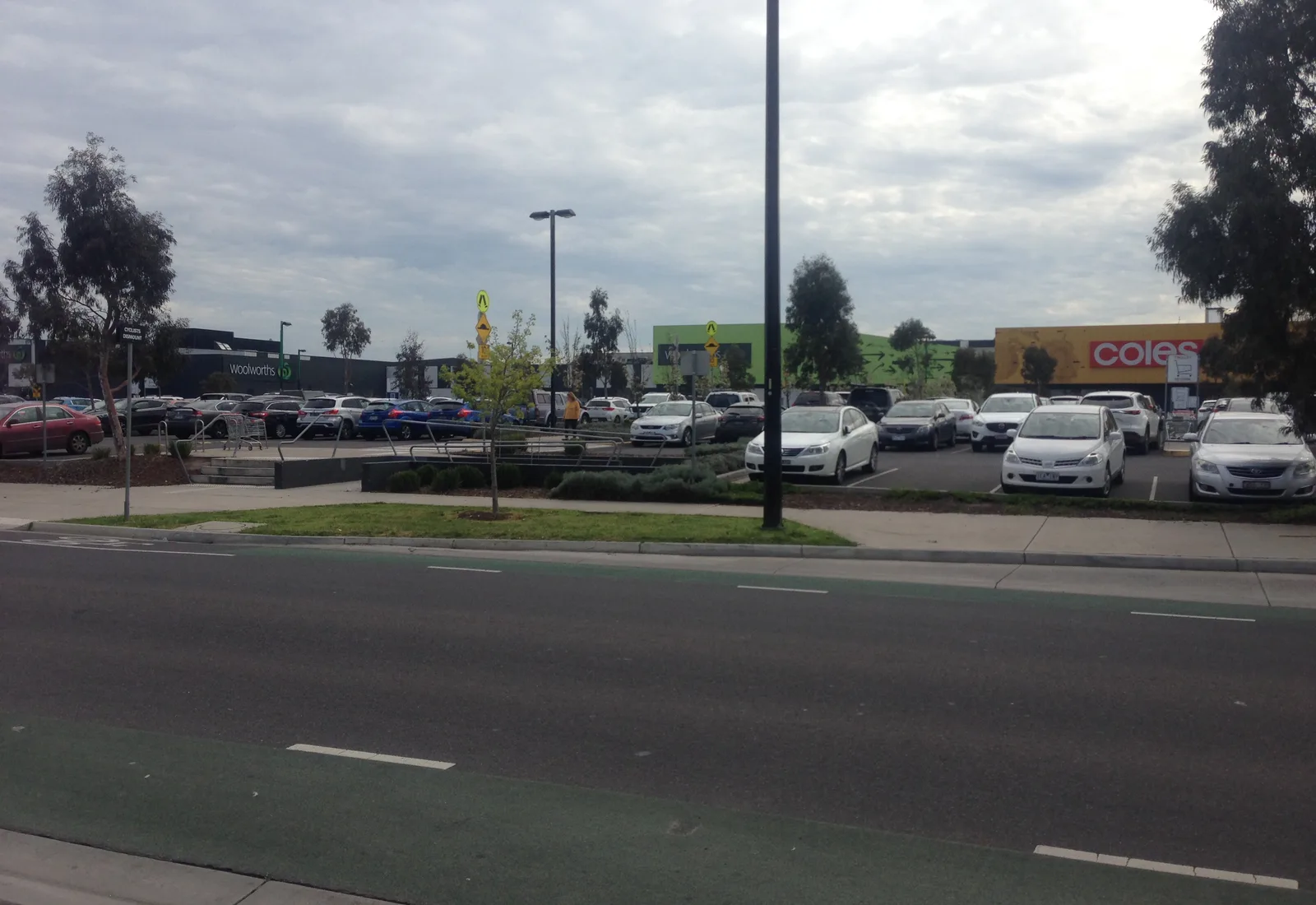
Demand 8/10: one of Melbourne's largest growth-corridor suburbs — 65,178 residents, a young median age of 32 and large families (average household 3.3) — anchored by Craigieburn Central (Big W, Kmart, Coles, Woolworths, Aldi, cinemas and ~160 stores) and a Craigieburn-line station, with a strongly Indian-and-diverse population (12.4% Indian ancestry; 13.5% born in India; a notable Iraqi community).
VERIFYBest fit: Café (72/100)
Location score
66
out of 100
Recommendation
VERIFY
Potentially viable — important checks remain
BEST FIT
72
Café
7.2/10 category
64
Restaurant
59
Retail
Businesses analysed18
Cache updated27 June 2026
Enginev7.3.0
Medium confidence
18 businesses sampled near Craigieburn centre (updated within the last 4 months); suburb scores use Locatalyze engine v7.3.0. Suburb-centre snapshots for Craigieburn — validate at your lease address before signing.
Elevated — model lease and dayparts before signing
3. Commercial demand analysis
Why people move through this precinct, how spending behaves, and how dayparts shape revenue.
Customer intent scales with the precinct’s demand factor — higher scores imply stronger pedestrian and spending throughput for aligned categories.
Dayparts and category fit still decide outcomes: match menu, roster, and logistics to the strip’s dominant movement patterns rather than suburb stereotypes.
4. Business-type performance
Engine scores plus operator rationale — commercial viability only.
Café / specialty coffee72/100
Engine café line 72/100 weights demand 8/10 and commercial rent pressure 4/10 — stronger where commuter throughput is predictable and competition isn’t purely generic.
Full-service restaurant64/100
Restaurant line 64/100 lifts when tourism 2/10 supports dinner trade and seasonality 3/10 stays manageable for roster planning.
Independent retail59/100
Retail line 59/100 responds to demand × tourism blend — wins where window visibility and category gaps align with walk-by intent.
Services / fitness (proxy)65/100
Services / fitness proxy 65/100 blends retail + hospitality signals — use for gym, salon, and appointment formats where repeat locals matter.
5. Competition & saturation analysis
Where categories crowd out entrants and where disciplined positioning still clears margin.
High — crowded categories; gaps exist with discipline — saturated lanes punish undifferentiated entrants; look for cuisine, experience, or SKU whitespace backed by counts.
Substitution risk rises where neighbouring precincts offer comparable trips at lower friction — differentiation must be operational, not cosmetic.
6. Street-level intelligence
Micro-zones inside the suburb — not uniform throughput.
Structured for search and AI citation — operator viability only (no residential rental advice).
Is Craigieburn good for a café?
Screen using the café line (72/100) plus weekday throughput proof — the composite verdict is VERIFY.
Is retail saturated in Melbourne?
Competition intensity is 6/10 — high saturation demands differentiation and SKU velocity.
What business works best?
Compare café (72), restaurant (64), and retail (59) lines — highest score indicates lowest-friction alignment with model weights.
Is foot traffic strong enough?
Demand strength is 8/10 — confirm hourly intent at your intended frontage.
Should I open solely based on this page?
No — this is precinct screening intelligence. Run a Locatalyze address analysis for lease benchmarking and competitor mapping.
Locatalyze scores are engine-derived from demand strength, commercial rent pressure, competition density, seasonality risk, and tourism dependency — each 1–10 — rolled into business-type lines and composite verdicts. This report is commercial location intelligence for operators, not residential market commentary.
How to read these scores
Composite 66/100; Café 72/100. Use this as a screening verdict before lease diligence.
Source
Locatalyze engine v7.3.0 plus cached local competitor evidence
Freshness
Competitor cache refreshed 27 June 2026
Confidence
Medium - 18 businesses sampled
Limitation
Craigieburn scores screen the suburb, not the lease. The paid report tests frontage, rent, nearest competitors, and break-even at your exact address.
Evidence freshness
Scores
Engine v7.3.0; suburb-level model
Competition
Google Places cache refreshed 27 June 2026
Rent
No sourced asking-rent series — obtain current listings
Demographics
ABS Census 2021 baseline with operator interpretation
Mini location report — Craigieburn
Café opportunity snapshot
PROCEED band for café operators in Craigieburn.
Also scored: Restaurant 64 · Retail 59
Café opportunity score
72/100
Demand strength
8/10
Rent pressure
Relatively low (4/10)
Competition density
6/10
Financial model — unlock at your address
Suburb-level estimates only. Your full report models P&L from your lease address, rent, and format.
🔒Est. monthly revenue range
Modelled at your address from rent, ticket and demand — not a suburb average
🔒Break-even customers per day
Calculated from your rent, staffing, and average ticket at your exact address
🔒Payback period on fit-out
Months to recover setup costs at base-case revenue
🔒Rent-to-revenue ratio
Whether the lease is sustainable at modelled trade levels
See if the numbers work at your rent
Run a free analysis at your Craigieburn address. Unlock modelled P&L, break-even, and scenarios from $29.
Demand, rent, competition, seasonality, and tourism — scored and weighted for Australian commercial operators.
8/10
Demand
4/10
Rent cost
6/10
Competition
3/10
Seasonality
2/10
Tourism dep
Business-Type Scores
How each format performs
Café / Specialty Coffee72
Full-Service Restaurant64
Independent Retail59
Scores use engine-derived weights: cafés weight demand and rent most heavily; restaurants factor tourism; retail factors tourism and demand equally.
Analyst Notes — Craigieburn
What the data says about this location
1
Demand 8/10: one of Melbourne's largest growth-corridor suburbs — 65,178 residents, a young median age of 32 and large families (average household 3.3) — anchored by Craigieburn Central (Big W, Kmart, Coles, Woolworths, Aldi, cinemas and ~160 stores) and a Craigieburn-line station, with a strongly Indian-and-diverse population (12.4% Indian ancestry; 13.5% born in India; a notable Iraqi community).
2
Rent 4/10: low, growth-corridor rents — a cheap cost base that suits the high-volume, value-and-family trade of a young mortgage-belt market (median household income $1,798/week).
3
Competition 6/10: a dominant shopping centre concentrates retail and food spend — an independent operator must serve the young, diverse family routine the centre leaves rather than compete head-on.
4
Seasonality 3/10: a year-round residential growth corridor with a modest retail peak — steady demand from a large, young, family-heavy base.
Local insight — Craigieburn
On-the-ground read for operators
Editorial notes layered on top of the scored model — same scores and benchmarks above; this section translates strip mechanics into decisions.
Local reality check
Demand 8/10: one of Melbourne's largest growth-corridor suburbs — 65,178 residents, a young median age of 32 and large families (average household 3.3) — anchored by Craigieburn Central (Big W, Kmart, Coles, Woolworths, Aldi, cinemas and ~160 stores) and a Craigieburn-line station, with a strongly Indian-and-diverse population (12.4% Indian ancestry; 13.5% born in India; a notable Iraqi community).
Rent 4/10: low, growth-corridor rents — a cheap cost base that suits the high-volume, value-and-family trade of a young mortgage-belt market (median household income $1,798/week).
Competition 6/10: a dominant shopping centre concentrates retail and food spend — an independent operator must serve the young, diverse family routine the centre leaves rather than compete head-on.
Competition is moderate — you are buying into share-of-wallet, not automatic overflow.
Micro-location breakdown
Craigieburn main strip / highest visibility
What tends to work: High-throughput food, proven hospitality formats, and retail with clear window narrative.
What struggles: Formats needing highway visibility or large-format parking ratios.
Rent vs foot traffic: Prime band often near $4,314–$5,126/mo — Rent pressure 4/10 — face rents can be approachable, but secondary positions still need a destination hook.
Secondary street / side pocket
What tends to work: Operators who accept lower passer-by counts but fund discovery through product, hours, or events.
What struggles: Walk-in-only models with no marketing budget or brand recognition.
Rent vs foot traffic: Secondary band often near $3,705–$4,314/mo — savings must fund signage and fit-out amortisation, not disappear into rent alone.
Budget / upstairs / off-strip
What tends to work: Studios, appointment services, niche retail with owned traffic.
What struggles: Full-service dining depending on spontaneous footfall without a booking channel.
Rent vs foot traffic: Lower band near $2,408–$3,705/mo — viable only when customers arrive by intent, not accident.
Real business scenarios
If prime rent clears near $4,314–$5,126/mo, model daily covers at your real average ticket — the engine verdict is VERIFY at 66/100, not a guarantee at your address.
Tourism dependency 2/10: when elevated, January and shoulder weeks need explicit planning, not December extrapolation.
Run competitors within 500m before offer — Competition is moderate — you are buying into share-of-wallet, not automatic overflow.
Competitive reality
Craigieburn (VERIFY, 66/100) is a modelled read across demand, rent, competition, and seasonality — validate on-site at quiet and peak dayparts, then reconcile with your accountant before lease execution.
Sharp verdict
Craigieburn pays off when rent sits inside $4,314–$5,126/mo at conservative revenue — do not sign on suburb hype; sign on covers you can defend on a Tuesday.
Operator's briefing
Craigieburn is one of Melbourne's largest and youngest growth-corridor suburbs — 65,178 residents, a median age of just 32, and large families (average household 3.3) — anchored by the Craigieburn Central shopping centre and a Craigieburn-line station. It is strongly diverse (12.4% Indian ancestry, 13.5% born in India, a notable Iraqi community) and a cheap mortgage-belt market (rent 4/10). Scale plus cheap rent lifts the composite to 66/100 with a VERIFY verdict, café the best fit at 72/100. This briefing sets out the catchment and the format that fits.
Craigieburn's defining feature is scale and youth. With 65,178 residents it is one of the largest suburbs in this cohort, and one of the youngest — a median age of 32, an average household of 3.3 people, and 84.2% family households. This is a classic outer-northern growth corridor: large new-build family homes, a mortgage-heavy ownership profile (53.6% owned with a mortgage), and a young, family-forming population. It is also strongly diverse — 12.4% Indian ancestry, 13.5% born in India, a notable Iraqi community (9.5% born in Iraq) and a significant Punjabi population — making it one of the more multicultural growth suburbs.
The market is a value-and-volume one built on a large, young, family-heavy base. Incomes are mortgage-belt rather than affluent (median household $1,798 a week, personal $700), and rents are cheap (4/10) — a low cost base that suits a high-volume, value-priced model. The retail-and-food geography is dominated by Craigieburn Central, a major shopping centre, with neighbourhood strips and the diverse community supplying a cuisine-specific dimension. Read this briefing, then position for the young, diverse family routine — and plan around the dominant centre rather than against it.
Craigieburn's numbers describe a large, young, diverse, family-heavy growth corridor. At 65,178 residents with a median age of just 32, an average household of 3.3 and 84.2% family households, it is a high-household-formation, family-forming population — and a mortgage-belt one (53.6% owned with a mortgage, incomes below the metropolitan median). The strong diversity (12.4% Indian ancestry, 13.5% born in India, a notable Iraqi and Punjabi population) makes the cultural market a defining commercial fact.
The demand engine is scale, youth and cheap rent. A young, family-heavy base of this size generates constant everyday trade, and the low growth-corridor rent makes a value-and-volume model work — which is why the café sub-score is strong. The operator implication is a value-priced café, family eatery or cuisine-specific format on a neighbourhood strip, serving the young diverse family routine the dominant Craigieburn Central leaves.
Figure 1
Craigieburn's scale and diversity
Residents (total)65,178
Median age 32; 84.2% family households.
Born in India~8,800
13.5% of residents.
Born in Iraq~6,190
9.5% — a notable Iraqi community.
Source: ABS Census 2021, Craigieburn (Vic.) [1]. Counts derived by applying the published shares to the 65,178 resident population; figures are approximate. Craigieburn Central (see references) is the dominant retail anchor.
Scale and youth are the demand engine
The single biggest fact about Craigieburn is its size and age profile. At 65,178 residents it is a large market in its own right, and with a median age of 32, an average household of 3.3 and 84.2% family households, it is a young, family-forming, high-household-formation population. That is a powerful demand base: young families generate constant everyday trade — the school run, the weekend family meal, the kids' activities, the grocery shop — and the sheer scale means even a modest capture rate is a large catchment.
For an operator, scale plus youth means volume. A café, family eatery or quick-service food business priced for a value-and-volume market banks the everyday routine of tens of thousands of young families. The cheap rent (4/10) makes that model work — the low cost base is exactly what suits high-frequency, modest-ticket turnover. That combination is why Craigieburn's café sub-score reaches a strong 72/100 despite mortgage-belt incomes: the volume and the cheap rent carry the economics.
A strongly diverse community adds cuisine depth
Craigieburn's diversity is a defining commercial dimension. With 12.4% Indian ancestry, 13.5% of residents born in India, a 5.6% Punjabi population and a notable Iraqi community (9.5% born in Iraq), plus Italian and other groups, it is one of the more multicultural growth corridors — and that supports cuisine-specific formats at real depth. Indian and South Asian restaurants, sweets and grocery, Middle Eastern food and bakery, and the everyday cuisine of a young diverse community all have a sizeable, growing base here.
The contest is accordingly within categories. An Indian or South Asian operator who executes well, a Middle Eastern eatery or bakery reading the Iraqi community, or a grocery serving the diverse base has a natural, large market. The losing move is a generic offer with no cultural read in a community this diverse, or — conversely — assuming the value-and-volume profile rules out cuisine-specific quality. The diversity is an asset for an operator who serves it authentically and at a value-appropriate price.
Craigieburn Central dominates — plan around it
Craigieburn Central, on Aitken Boulevard, is the area's dominant retail-and-food centre — anchored by Big W and Kmart, Woolworths, Coles and Aldi supermarkets, a cinema complex and around 160 specialty stores. Opened in 2013 and expanded since, it concentrates the bulk of the suburb's comparison retail, food-court and major-grocery spend, pulling the growth corridor's shopping trips into one place.
For an operator, the centre is the strategic fact to plan around. A generic food-court-style offer competing with the centre's tenants loses on range and footfall; what the mall does not own is the neighbourhood routine — the local café before the centre opens, the cuisine-specific restaurant the chain mix omits, the everyday strip and the residential-pocket trade across a sprawling suburb. The independent opportunity in Craigieburn is the young, diverse family routine the dominant centre leaves, served on the neighbourhood strips and the desire-lines the mall does not concentrate.
Cheap rent makes the value-volume model work
Craigieburn's rent reads a low 4/10 — cheap, growth-corridor levels well below the established middle-ring suburbs. That cheap cost base is a genuine advantage and the key to the economics: it is exactly what makes a high-volume, value-priced model work for a mortgage-belt family market. The scale supplies the footfall; the low rent leaves room for a value offer to make real margin on turnover.
The discipline is to pair the cheap rent with a value-and-volume format and the right position. A café, family eatery or cuisine-specific operator sized for the young diverse family base can do well on Craigieburn's cost base, away from the dominant centre's direct competition. A premium, destination-priced concept misreads a mortgage-belt market; so does a format that fights Craigieburn Central head-on. Model the rent on growth-corridor comps and the break-even on high-frequency, value-ticket turnover from a large, young catchment.
The format that fits, in plain terms
The strongest fit is a value-and-volume café or family eatery on a neighbourhood strip away from Craigieburn Central (café 72/100, among the cohort's highest) — built for the large, young, family-heavy base, priced for a mortgage-belt market and run for high-frequency turnover on a cheap cost base. An Indian, South Asian or Middle Eastern restaurant, sweets or grocery reading the diverse community fits the same market well (restaurant 64/100). Children's, family and everyday services — tutoring, activities, allied health, convenience — trade on the young, family-forming, high-household-formation base.
What does not fit: a premium, destination-priced concept that misreads a mortgage-belt value market; a generic food offer competing head-to-head with Craigieburn Central's tenants; or a format with no cultural read in a strongly diverse community. Craigieburn pairs enormous scale and youth with cheap rent and real diversity — a strong value-and-volume opportunity for an operator who serves the young, diverse family routine the dominant centre leaves, authentically and at a value-appropriate price.
Zone-by-zone breakdown
Neighbourhood strips (off-centre)
The local shopping strips away from Craigieburn Central — the everyday family routine. Works for: value cafés, family eateries and cuisine-specific operators. Fails for: generic offers competing head-on with the dominant centre.
Cuisine-specific / community positions
Positions serving the strongly Indian, South Asian and Middle Eastern community. Works for: Indian/South Asian and Middle Eastern restaurants, sweets and grocery. Fails for: generic offers with no cultural read in a diverse market.
Station & residential pockets
The Craigieburn-line station and the sprawling new-build residential pockets. Works for: commuter coffee and resident-serving everyday formats and services. Fails for: hospitality needing the centre footfall Craigieburn Central concentrates.
Operator Intelligence
10 dimensions — what matters most here
Scored 1–10 from an operator perspective: higher always means better. Each dimension includes the reasoning behind the score.
Scale-and-youth demandCritical
One of Melbourne's largest growth corridors — 65,178 residents, median age 32, 84.2% family households — a young, family-forming volume base.
8/10
Cost base (rent)Critical
Cheap growth-corridor rents (4/10) — the low cost base is what makes the high-volume, value-priced model work.
7/10
Cultural-market depthImportant
A strongly diverse community (12.4% Indian ancestry, 13.5% born in India, a notable Iraqi and Punjabi population) supports cuisine-specific formats.
8/10
Mall capture of spendImportant
Craigieburn Central concentrates comparison-retail and food-court spend — the independent serves the routine it leaves.
4/10
Demand spend (ticket size)Supporting
Mortgage-belt incomes (household $1,798/week) — a value-and-volume market, not a premium one.
4/10
When Craigieburn trades
Peak and off-peak trading periods
Strong
Weekday morning & commute (06:30–09:30)
School-run and the Craigieburn-line commuter pulse across a young family suburb.
Strong
Weekend family (09:00–15:00)
A huge young family base — the everyday and cuisine-specific weekend peak.
Strong
Evening dining (17:30–21:00)
Indian, South Asian and Middle Eastern restaurant trade from a diverse community.
Moderate
Weekday lunch (11:30–14:00)
Local and neighbourhood-strip trade off the dominant centre.
Operator fit warning
Who should not open in Craigieburn
✕
Premium, destination-priced concepts that misread a mortgage-belt value market.
✕
Generic food offers competing head-to-head with Craigieburn Central's tenants.
✕
Formats with no cultural read in a strongly Indian, South Asian and Middle Eastern community.
Best business formats for Craigieburn
A value café for a huge young family base
The best-fit format (café 72/100). 65,178 young, family-heavy residents on cheap rent are a volume machine. A value-priced café or family eatery on a neighbourhood strip banks the everyday routine at high frequency.
Indian, South Asian and Middle Eastern cuisine
With 12.4% Indian ancestry, 13.5% born in India and a notable Iraqi community, Craigieburn supports Indian, South Asian and Middle Eastern restaurants, sweets, bakery and grocery at real, growing depth.
Young-family and everyday services
A young, high-household-formation, 84.2%-family-household base (median age 32) supports children's activities, tutoring, allied health and everyday convenience across a sprawling growth corridor.
Risks specific to Craigieburn
Craigieburn Central dominates retail
A major centre (Big W, Kmart, ~160 stores) concentrates the comparison-retail and food-court spend. A generic offer competing head-on loses — the independent must take the neighbourhood routine the centre leaves.
It is a mortgage-belt value market
Incomes are below the metropolitan median and the base is mortgage-heavy. A premium, destination-priced concept misreads the catchment; the play is value-and-volume on a cheap cost base.
Cultural alignment matters
In a strongly diverse community, a generic offer with no cultural read loses to operators who serve the Indian, South Asian and Middle Eastern market authentically.
Rent viability bands for Craigieburn
Indicative monthly rent envelopes for typical commercial tenancies — what each band buys, where it works, where it does not.
Rent freshness: 2026 indicative benchmarksValidate against the exact lease before signing
Band
Range
What it buys
Works for
Fails for
Neighbourhood strip (off-centre)
Indicative — growth-corridor tier
A frontage on a local strip serving the everyday family routine away from the dominant centre.
Value cafés, family eateries and cuisine-specific operators built for volume.
Generic offers competing head-on with Craigieburn Central.
Cuisine-specific / community position
Indicative — growth-corridor tier
Proximity to the strongly Indian, South Asian and Middle Eastern community.
Indian/South Asian and Middle Eastern restaurants, sweets and grocery.
Generic offers with no cultural read in a diverse market.
In-centre (Craigieburn Central)
Indicative — regional-centre tier
Footfall inside the dominant centre — at the centre's premium and terms.
National chains and operators who can convert centre-shopper volume.
Independents trying to out-compete the centre on its own terms.
Decision framework
Is your model value-and-volume, built for the young, family-heavy base and the cheap cost base?
Are you positioned on a neighbourhood strip serving the routine Craigieburn Central leaves, rather than competing with it?
Does your offer read the strongly Indian, South Asian and Middle Eastern community, or fill a clear cuisine gap?
Can your format bank the high-frequency turnover of a large (65,178), young (median age 32) catchment?
Have you modelled rent on growth-corridor comps and the break-even on value-ticket, high-volume trade?
Craigieburn pairs enormous scale and youth with cheap rent and real diversity — but the dominant Craigieburn Central means an operator must serve the neighbourhood routine it leaves. Locatalyze runs an address-level analysis on the exact tenancy: how much of the catchment the centre captures, the real foot traffic on the off-centre strips, the cuisine-specific competing set, indicative growth-corridor rent against your format, and a break-even built on high-frequency, value-ticket turnover from a large young base. Before you sign in Craigieburn, get the scale-and-positioning read right.
For a value-and-volume café or family eatery on a neighbourhood strip away from Craigieburn Central, yes — café is the best-fitting format at 72/100, among the highest of the cohort. A huge (65,178), young (median age 32), family-heavy base on cheap rent is a volume machine. The composite is a strong 66/100 (VERIFY) because it is a mortgage-belt value market where the dominant centre and cultural alignment shape the winners.
Why is the café score so high but the verdict VERIFY?
The strong café score (72) comes from enormous scale, youth and cheap rent — a value-and-volume engine. The VERIFY verdict reflects the mortgage-belt incomes, the dominance of Craigieburn Central in retail, and the need for cultural alignment in a diverse market. The composite of 66 is a strong result for a value market that rewards a well-positioned, value-priced, culturally aware operator.
What rent should I expect in Craigieburn?
Low, growth-corridor rents (4/10) — well below the established middle-ring suburbs, which is exactly what makes a high-volume, value-priced model work. Off-centre neighbourhood strips are the independent opportunity; in-centre Craigieburn Central tenancies carry a regional-centre premium. The bands here are indicative envelopes — verify comps for the specific tenancy.
Who is the Craigieburn customer?
A large, young, diverse, family-heavy growth-corridor base of 65,178 — median age 32, average household 3.3, 84.2% family households, mortgage-belt incomes (household $1,798/week). Strongly diverse: 12.4% Indian ancestry, 13.5% born in India, a notable Iraqi community and a significant Punjabi population. Value-conscious, family-forming and high-frequency.
How does Craigieburn Central affect an independent operator?
Significantly. With Big W, Kmart, the major supermarkets, a cinema and ~160 stores, Craigieburn Central concentrates the suburb's comparison-retail and food-court spend. The independent play is the neighbourhood routine it leaves — the local café, the cuisine-specific restaurant the chain mix omits, the off-centre strips across a sprawling suburb — not a head-to-head contest the centre wins.
How important is the cultural mix?
Central. Craigieburn is one of the more diverse growth corridors — 12.4% Indian ancestry, 13.5% born in India, a 5.6% Punjabi population and a notable Iraqi community — so Indian, South Asian and Middle Eastern restaurants, sweets, bakery and grocery have a large, growing base. A culturally aligned operator has a natural market; a generic one competes on the back foot.
Who should not open in Craigieburn?
Operators with a premium, destination-priced concept that misreads a mortgage-belt value market; a generic food offer competing head-to-head with Craigieburn Central's tenants; or a format with no cultural read in a strongly Indian, South Asian and Middle Eastern community.
Wikipedia, Craigieburn, Victoria — northern growth corridor, Craigieburn Central (Big W, Kmart, ~160 stores, opened 2013), Craigieburn-line station, accessed June 2026. https://en.wikipedia.org/wiki/Craigieburn,_Victoria
Data provenance & limitations. Demographic figures are from the ABS 2021 Census for the Craigieburn (Vic.) suburb (SAL20661), with Greater Melbourne (2GMEL) as benchmark; the 2021 Census is the most recent available. The born-overseas figure (~52.9%) is derived as the inverse of the 47.1% born-in-Australia share. Craigieburn Central's anchors, store count and 2013 opening are from Wikipedia, a secondary link to primary reporting. Birthplace counts in the figure are derived by applying the published percentages to the resident population and are approximate. Rent bands are indicative envelopes, not achieved rents — informed by Craigieburn's growth-corridor positioning; verify comps for the specific tenancy. Factor scores are relative estimates calibrated across all Locatalyze suburbs, not guarantees of outcome.
Methodology: Scores are engine-derived from five observable inputs (demand strength, rent pressure, competition density, seasonality risk, tourism dependency — each 1–10). These feed into business-type-specific weighted composites via a single scoring engine used across all markets. Scores are relative estimates calibrated across all Melbourne suburbs — a score of 80 indicates materially better conditions than 65; it is not a success probability or guarantee.
Frequently Asked Decision Questions
Have a specific address in Craigieburn?
Run a full competitor map, rent benchmark, and location score, data confidence, and proceed / verify / avoid screening recommendation for any Craigieburn address. Free.
Who wins in Craigieburn — and where to differentiate
Ranked from cached Google Places data near the suburb centre. Validate at your lease address before signing.
Cache refreshed 27 June 2026Suburb-centre scan, not lease-address validation
Who wins in Craigieburn — Cafés
Ranked by success score (rating, review depth, centrality) within ~800m of the suburb centre.
What winners have in common
·2 of 4 top venues sit at 4.3★+ — customers reward consistent execution, not novelty alone.
·No single venue dominates on both rating and review depth — the category may still be contestable.
1. Ferguson Plarre's Bakehouse - Craigieburn Plaza
★★★½☆ 3.9 (104 reviews) · $$ · 629m from centre
52 · Growing
·104 reviews place it on the local shortlist even where ratings are mixed.
·Rating sits below the 4.4★ peer average — volume or convenience may be doing the work.
·Review volume 259% above peer average (29).
If you are opening nearby: $$ positioning is validated by review depth in this catchment — For new entrants: Win on speed, workspace-friendly seating, or a neighbourhood loyalty hook before operators like Ferguson Plarre's Bakehouse raise their game.
2. Espresso Lane Drive Thru Coffee Craigieburn
★★★★☆ 4.0 (62 reviews) · 508m from centre
52 · Growing
·4.0★ rating beats the typical café baseline in this catchment.
·Rating sits below the 4.3★ peer average — volume or convenience may be doing the work.
·Review volume 44% above peer average (43).
If you are opening nearby: For new entrants: Win on speed, workspace-friendly seating, or a neighbourhood loyalty hook before operators like Espresso Lane Drive Thru Coffee Craigieburn raise their game.
3. Spice Fiesta Food Truck & Live Catering Service
★★★★½ 4.5 (15 reviews) · 364m from centre
60 · Growing
·4.5★ rating beats the typical café baseline in this catchment.
·0.3★ above the 4.2★ average among top local peers.
If you are opening nearby: 364m from centre — frontage on the walkable strip matters — For new entrants: Win on speed, workspace-friendly seating, or a neighbourhood loyalty hook before operators like Spice Fiesta Food Truck & Live Catering Service raise their game.
4. One 01 Coffee
★★★★½ 4.6 (10 reviews) · 521m from centre
50 · Growing
·4.6★ rating beats the typical café baseline in this catchment.
·0.5★ above the 4.1★ average among top local peers.
If you are opening nearby: For new entrants: One 01 Coffee is beatable on single-origin filter led — avoid matching incumbents' full menu breadth.
Possible market opportunities
Derived from venue counts and formats in our Google Places snapshot — not a guarantee of demand at your exact address.
High confidenceAll-day workspace café
Reason: No dominant high-rated café in the top results — first mover with reliable Wi‑Fi and power can capture remote workers.
Who wins in Craigieburn — Restaurants
Ranked by success score (rating, review depth, centrality) within ~1000m of the suburb centre.
What winners have in common
·5 of 10 top venues sit at 4.3★+ — customers reward consistent execution, not novelty alone.
·Review depth averages 391 — operators with under 150 reviews read as unproven next to incumbents.
·Typical positioning is $$ (4 venues report Google price tiers).
·2 benchmark operators combine 4.4★+ ratings with 150+ reviews — new entrants need a clear niche, not a me-too menu.
·4.5★ with 570 reviews — repeat local demand, not one-off visits.
·0.4★ above the 4.1★ average among top local peers.
·Review volume 54% above peer average (371).
If you are opening nearby: Karachi Street Food Truck (Craigieburn) is the benchmark restaurant here — their 4.5★ and 570 reviews beat the 371-review peer average — 143m from centre — frontage on the walkable strip matters.
·4.1★ rating beats the typical restaurant baseline in this catchment.
·Review volume 104% above peer average (354).
·Central location (141m from suburb centre) captures pass-by and destination traffic.
If you are opening nearby: 141m from centre — frontage on the walkable strip matters — For new entrants: Focus on a specific occasion (date night, quick lunch, or group dining) that Bombay Chopati does not dominate.
·4.6★ with 257 reviews — repeat local demand, not one-off visits.
·0.5★ above the 4.1★ average among top local peers.
·Central location (143m from suburb centre) captures pass-by and destination traffic.
If you are opening nearby: MAMA FRANKY AND CHICKEN CORNER (Dominant) shows what execution looks like at this score tier — 4.6★ with 257 reviews signals repeat custom, not novelty traffic — 143m from centre — frontage on the walkable strip matters.
4. Desi Ahaata
★★★★½ 4.9 (143 reviews) · 145m from centre
78 · Dominant
·4.9★ and 143 reviews — customers actively recommend this restaurant.
·0.8★ above the 4.1★ average among top local peers.
·Central location (145m from suburb centre) captures pass-by and destination traffic.
If you are opening nearby: Desi Ahaata (Dominant) shows what execution looks like at this score tier — 4.9★ with 143 reviews signals repeat custom, not novelty traffic — 145m from centre — frontage on the walkable strip matters.
5. MOMO CHAA CRAIGIEBURN
★★★½☆ 3.9 (428 reviews) · 143m from centre
61 · Growing
·428 reviews place it on the local shortlist even where ratings are mixed.
·Rating sits below the 4.2★ peer average — volume or convenience may be doing the work.
·Central location (143m from suburb centre) captures pass-by and destination traffic.
If you are opening nearby: 143m from centre — frontage on the walkable strip matters — For new entrants: Focus on a specific occasion (date night, quick lunch, or group dining) that MOMO CHAA CRAIGIEBURN does not dominate.
Who wins in Craigieburn — Retail
Ranked by success score (rating, review depth, centrality) within ~1500m of the suburb centre.
What winners have in common
·2 of 4 top venues sit at 4.3★+ — customers reward consistent execution, not novelty alone.
·No single venue dominates on both rating and review depth — the category may still be contestable.
·Most winners sit within 400m of the suburb centre — frontage on the walkable strip matters.
1. J'YUG AUSTRALIA
★★★★★ 5.0 (17 reviews) · 539m from centre
71 · Established
·5.0★ rating beats the typical retail baseline in this catchment.
·1.4★ above the 3.6★ average among top local peers.
If you are opening nearby: For new entrants: A service-heavy or experiential retail concept can win where product-only formats like J'YUG AUSTRALIA look interchangeable.
2. Uniform Group Craigieburn
★★☆☆☆ 2.2 (219 reviews) · 133m from centre
41 · Emerging
·219 reviews place it on the local shortlist even where ratings are mixed.
·Rating sits below the 5.0★ peer average — volume or convenience may be doing the work.
·Review volume 3550% above peer average (6).
If you are opening nearby: 133m from centre — frontage on the walkable strip matters — For new entrants: A service-heavy or experiential retail concept can win where product-only formats like Uniform Group Craigieburn look interchangeable.
3. Hip hop
★★★★★ 5.0 (1 review) · 502m from centre
63 · Established
·5.0★ rating beats the typical retail baseline in this catchment.
·1.4★ above the 3.6★ average among top local peers.
If you are opening nearby: For new entrants: A service-heavy or experiential retail concept can win where product-only formats like Hip hop look interchangeable.
4. J&D Collections
No rating yet · 297m from centre
23 · Emerging
·Central location (297m from suburb centre) captures pass-by and destination traffic.
If you are opening nearby: 297m from centre — frontage on the walkable strip matters — For new entrants: A service-heavy or experiential retail concept can win where product-only formats like J&D Collections look interchangeable.