
Melbourne Suburb Intelligence
Why Locatalyze says PROCEED for Richmond
I'd invest — Café category score 7.8/10. Location composite 75/100.
Location score
Recommendation
PROCEED
Promising fit, subject to normal due diligence
Richmond in 30 seconds
Richmond is PROCEED at 75/100: the default independent screen clears, but format scores and named streets still decide the lease. Treat PROCEED as a shortlist, then prove the shopfront.
Café 78/100 · Restaurant 74/100 · Retail 71/100 — pick the branch that matches your concept before you sign rent.
Event-aware food and drink on the right path — Works when the operator can handle peaks without depending on them for the whole week.
Event nights can help, but they are not an everyday trading plan.
The lease only works on suburb-average foot traffic, weekend trade is unproven at the door, or your concept cannot name a clear reason customers switch from incumbents.
High-upside window for the right frontage; inspect operations and crowd flow
Richmond pays off when your model survives a dead Wednesday without an AFL fixture — treat event nights as upside, not rent justification.
Recommendation
I'd invest
Café category score
7.8/10
Structural risk
Moderate
Competition
Moderate (4/10) — below Fitzroy density; incumbents hold 600–1,600 reviews
Differentiation required
Required
Location composite 75/100 measures overall suburb fit across all factors. Café category score is the format this page recommends. Scores screen the suburb, not the individual lease; the address report checks nearest competitors, rent-to-revenue, and break-even for the exact tenancy.
Should I open a café or restaurant in Richmond?
Yes — but only with spine-matched format and honest event-night modelling. Cafés score 78/100 here with a PROCEED composite — demand 9/10 at rent 5/10, 10–20% below Fitzroy for comparable catchment quality. Swan Street west absorbs MCG event-night surges on roughly 50–70 high-trade nights annually; Cremorne carries 8,000–12,000 weekday workers most operators overlook. St James Richmond (826 reviews), I Love Pho (1,613 reviews), and SALONA already own recommendation paths. Operators fail treating event-night average revenue as the baseline or placing resident-trade formats on MCG-adjacent rent without throughput capacity.
What surprised me
Cremorne creative-worker density is structurally underrated — weekday lunch at $500–$620/m² often clears better than Swan Street positions operators scan for visibility. The gap I see is event-aware food and drink on the right path, while Swan west event-night surges mask 290 off-event days that break undercapitalised operators.
How to read these scores
Composite 75/100; Café 78/100. Use this as a screening verdict before lease diligence.
Source
Locatalyze engine v7.3.0 plus cached local competitor evidence
Freshness
Competitor cache refreshed 27 June 2026
Confidence
Medium - 30 businesses sampled
Limitation
Richmond scores screen the suburb, not the lease. The paid report tests frontage, rent, nearest competitors, and break-even at your exact address.
Evidence freshness
Scores
Engine v7.3.0; suburb-level model
Competition
Google Places cache refreshed 27 June 2026
Rent
No sourced asking-rent series — obtain current listings
Demographics
ABS Census 2021 baseline with operator interpretation
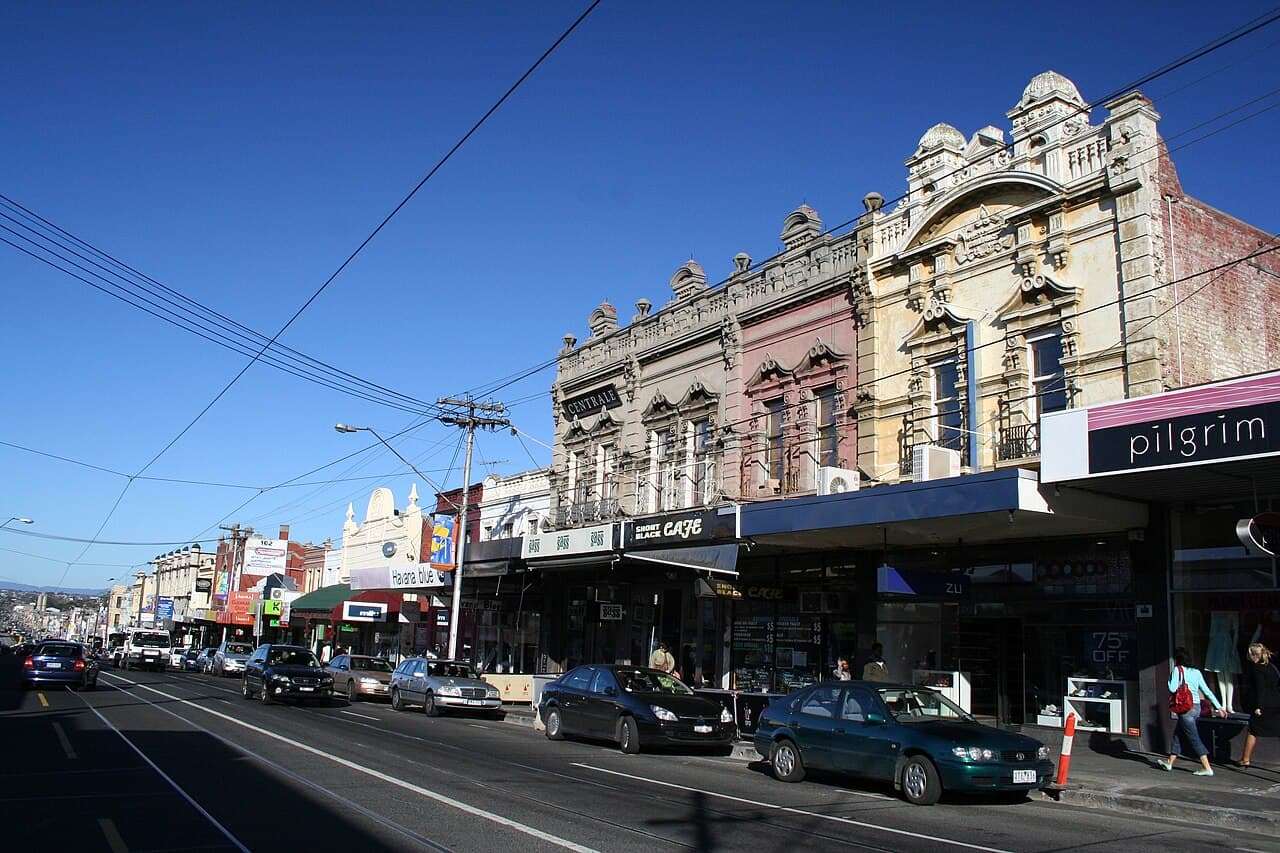
Precinct map
Event-night west versus Cremorne weekday — model 290 off-event days
Swan Street west
$650–$720/m²
MCG event nights · pre/post-game
Best for: Event restaurant, sports bar, surge QSR
Swan Street east
$500–$620/m²
Weekday resident · lighter events
Best for: Café, neighbourhood dining, wine bar
Cremorne cluster
$500–$620/m²
Weekday lunch · creative workers
Best for: Worker café, fast-casual, allied services
Bridge & Church
$400–$620/m²
Resident evening · destination retail
Best for: Specialty retail, wine bar, side-street dining
Swan Street west event-night surges do not average across the year — Cremorne weekday lunch often clears margin at lower rent with less volatility.
Operator fit warning
Who should not open in Richmond
Operators who model event peaks as average trade.
Concepts with no clear answer to Richmond's established competition.
Businesses that cannot manage crowds, noise, waste or late trading conditions.
Decision path
What are you opening?
Pick your format — the guide shows only the branch that applies to your concept.
No dedicated section for this format in the suburb guide — run an address-level analysis for restaurant, retail, or bar economics.
Why do successful venues survive here?
Survivors match spine to cash-flow rhythm and budget for off-event days — not average Saturday footfall. Casual dining stacks tightly — differentiation is menu restraint and roster maths, not louder signage. AFL match days can deliver 20–35% of weekly revenue on a single evening for Swan west venues. Important for worker-led formats. Friday–Saturday evening carries resident and visitor dining across Swan and Cremorne. Where I still see room: event-aware food and drink on the right path.
Local competition
Who wins in Richmond — and where to differentiate
Ranked from cached Google Places data near the suburb centre. Validate at your lease address before signing.
Who wins in Richmond — Cafés
Ranked by success score (rating, review depth, centrality) within ~800m of the suburb centre.
What winners have in common
- ·9 of 10 top venues sit at 4.3★+ — customers reward consistent execution, not novelty alone.
- ·Review depth averages 548 — operators with under 150 reviews read as unproven next to incumbents.
- ·Typical positioning is $$ (6 venues report Google price tiers).
- ·9 benchmark operators combine 4.4★+ ratings with 150+ reviews — new entrants need a clear niche, not a me-too menu.
- 88 · Dominant
★★★★½ 4.5 (826 reviews) · $$ · 117m from centre
- ·4.5★ with 826 reviews — repeat local demand, not one-off visits.
- ·Review volume 60% above peer average (517).
- ·Mid-range positioning with strong review depth — balanced offer, not discount-led.
If you are opening nearby: St James Richmond is the benchmark café here — their 4.5★ and 826 reviews beat the 517-review peer average — $$ positioning is validated by review depth in this catchment — 117m from centre — frontage on the walkable strip matters.
- 86 · Dominant
★★★★½ 4.5 (690 reviews) · $$ · 224m from centre
- ·4.5★ with 690 reviews — repeat local demand, not one-off visits.
- ·Mid-range positioning with strong review depth — balanced offer, not discount-led.
- ·Central location (224m from suburb centre) captures pass-by and destination traffic.
If you are opening nearby: A Thousand Blessings (Dominant) shows what execution looks like at this score tier — their 4.5★ and 690 reviews beat the 532-review peer average — $$ positioning is validated by review depth in this catchment — 224m from centre — frontage on the walkable strip matters.
- 77 · Established
3. Touchwood
★★★★☆ 4.4 (715 reviews) · $$ · 539m from centre
- ·4.4★ and 715 reviews — customers actively recommend this café.
- ·Review volume 35% above peer average (529).
- ·Mid-range positioning with strong review depth — balanced offer, not discount-led.
If you are opening nearby: their 4.4★ and 715 reviews beat the 529-review peer average — $$ positioning is validated by review depth in this catchment — For new entrants: Touchwood's volume comes from breadth — narrow to one daypart (early breakfast or late specialty coffee) rather than their full menu.
- 78 · Dominant
4. Colombar | Richmond
★★★★½ 4.6 (358 reviews) · 155m from centre
- ·4.6★ with 358 reviews — repeat local demand, not one-off visits.
- ·Central location (155m from suburb centre) captures pass-by and destination traffic.
If you are opening nearby: Colombar | Richmond (Dominant) shows what execution looks like at this score tier — 4.6★ with 358 reviews signals repeat custom, not novelty traffic — 155m from centre — frontage on the walkable strip matters.
- 81 · Dominant
5. DekoBoko
★★★★½ 4.7 (305 reviews) · 120m from centre
- ·4.7★ with 305 reviews — repeat local demand, not one-off visits.
- ·0.3★ above the 4.4★ average among top local peers.
- ·Central location (120m from suburb centre) captures pass-by and destination traffic.
If you are opening nearby: DekoBoko (Dominant) shows what execution looks like at this score tier — 4.7★ with 305 reviews signals repeat custom, not novelty traffic — 120m from centre — frontage on the walkable strip matters.
Possible market opportunities
Derived from venue counts and formats in our Google Places snapshot — not a guarantee of demand at your exact address.
- Medium confidenceEarly-morning grab-and-go coffee kiosk
Reason: Engine shows high demand with manageable rent and competition — a lean format can test the trade before a full fit-out.
Who wins in Richmond — Restaurants
Ranked by success score (rating, review depth, centrality) within ~1000m of the suburb centre.
What winners have in common
- ·8 of 10 top venues sit at 4.3★+ — customers reward consistent execution, not novelty alone.
- ·Review depth averages 828 — operators with under 150 reviews read as unproven next to incumbents.
- ·Typical positioning is $$ (10 venues report Google price tiers).
- ·7 benchmark operators combine 4.4★+ ratings with 150+ reviews — new entrants need a clear niche, not a me-too menu.
- 77 · Established
1. I Love Pho
★★★★☆ 4.4 (1,613 reviews) · $ · 830m from centre
- ·4.4★ and 1,613 reviews — customers actively recommend this restaurant.
- ·Review volume 118% above peer average (741).
- ·Value-tier pricing with high volume — wins on convenience and price, not premium experience.
If you are opening nearby: I Love Pho is the benchmark restaurant here — their 4.4★ and 1,613 reviews beat the 741-review peer average — $ positioning is validated by review depth in this catchment.
- 70 · Established
★★★★☆ 4.2 (1,349 reviews) · $$ · 866m from centre
- ·4.2★ and 1,349 reviews — customers actively recommend this restaurant.
- ·Rating sits below the 4.4★ peer average — volume or convenience may be doing the work.
- ·Review volume 75% above peer average (770).
If you are opening nearby: 4.2★ with 1,349 reviews signals repeat custom, not novelty traffic — $$ positioning is validated by review depth in this catchment — For new entrants: Focus on a specific occasion (date night, quick lunch, or group dining) that Pacific House Restaurant does not dominate.
- 75 · Established
3. The Kingston
★★★★☆ 4.4 (946 reviews) · $$ · 815m from centre
- ·4.4★ and 946 reviews — customers actively recommend this restaurant.
- ·Mid-range positioning with strong review depth — balanced offer, not discount-led.
If you are opening nearby: 4.4★ with 946 reviews signals repeat custom, not novelty traffic — $$ positioning is validated by review depth in this catchment — For new entrants: Focus on a specific occasion (date night, quick lunch, or group dining) that The Kingston does not dominate.
- 80 · Dominant
4. SALONA | 260A SWAN ST RICHMOND | Est. 1969
★★★★½ 4.7 (527 reviews) · $$ · 912m from centre
- ·4.7★ with 527 reviews — repeat local demand, not one-off visits.
- ·0.3★ above the 4.4★ average among top local peers.
- ·Mid-range positioning with strong review depth — balanced offer, not discount-led.
If you are opening nearby: SALONA | 260A SWAN ST RICHMOND | Est. 1969 (Dominant) shows what execution looks like at this score tier — 4.7★ with 527 reviews signals repeat custom, not novelty traffic — $$ positioning is validated by review depth in this catchment.
- 74 · Established
5. Bouzy Rouge
★★★★☆ 4.4 (786 reviews) · $$ · 503m from centre
- ·4.4★ and 786 reviews — customers actively recommend this restaurant.
- ·Mid-range positioning with strong review depth — balanced offer, not discount-led.
If you are opening nearby: 4.4★ with 786 reviews signals repeat custom, not novelty traffic — $$ positioning is validated by review depth in this catchment — For new entrants: Focus on a specific occasion (date night, quick lunch, or group dining) that Bouzy Rouge does not dominate.
Possible market opportunities
Derived from venue counts and formats in our Google Places snapshot — not a guarantee of demand at your exact address.
- Medium confidenceQuality-led restaurant with a single hero offer
Reason: Engine signals demand outpacing restaurant competition — structural room for a focused new entrant.
Who wins in Richmond — Retail
Ranked by success score (rating, review depth, centrality) within ~1500m of the suburb centre.
What winners have in common
- ·8 of 10 top venues sit at 4.3★+ — customers reward consistent execution, not novelty alone.
- ·Review depth averages 425 — operators with under 150 reviews read as unproven next to incumbents.
- 72 · Established
★★★★☆ 4.2 (3,087 reviews) · $ · 1029m from centre
- ·4.2★ and 3,087 reviews — customers actively recommend this retail.
- ·Rating sits below the 4.6★ peer average — volume or convenience may be doing the work.
- ·Review volume 2289% above peer average (129).
If you are opening nearby: Kmart Richmond is the benchmark retail here — 4.2★ with 3,087 reviews signals repeat custom, not novelty traffic — $ positioning is validated by review depth in this catchment.
- 83 · Dominant
2. Pookipoiga
★★★★★ 5.0 (291 reviews) · 916m from centre
- ·5.0★ with 291 reviews — repeat local demand, not one-off visits.
- ·0.5★ above the 4.5★ average among top local peers.
If you are opening nearby: Pookipoiga (Dominant) shows what execution looks like at this score tier — 5.0★ with 291 reviews signals repeat custom, not novelty traffic — For new entrants: Niche or service-led retail beats another generalist shelf near Pookipoiga.
- 58 · Growing
3. rebel Richmond
★★★★☆ 4.0 (336 reviews) · 982m from centre
- ·4.0★ rating beats the typical retail baseline in this catchment.
- ·Rating sits below the 4.6★ peer average — volume or convenience may be doing the work.
If you are opening nearby: For new entrants: Niche or service-led retail beats another generalist shelf near rebel Richmond.
- 74 · Established
4. Menzclub
★★★★★ 5.0 (87 reviews) · 534m from centre
- ·5.0★ and 87 reviews — customers actively recommend this retail.
- ·0.5★ above the 4.5★ average among top local peers.
If you are opening nearby: 5.0★ with 87 reviews signals repeat custom, not novelty traffic — For new entrants: Niche or service-led retail beats another generalist shelf near Menzclub.
- 59 · Growing
5. Bonds Outlet Richmond
★★★★☆ 4.3 (137 reviews) · 415m from centre
- ·4.3★ and 137 reviews — customers actively recommend this retail.
- ·Rating sits below the 4.6★ peer average — volume or convenience may be doing the work.
If you are opening nearby: 4.3★ with 137 reviews signals repeat custom, not novelty traffic — For new entrants: Niche or service-led retail beats another generalist shelf near Bonds Outlet Richmond.
Possible market opportunities
Derived from venue counts and formats in our Google Places snapshot — not a guarantee of demand at your exact address.
- Medium confidenceService-led retail (phone repair, alterations, or plant studio)
Reason: Product-only retail is crowded online — hands-on services tied to a high-street address defend against e-commerce.
Who wins in Richmond — Pizza
Ranked by success score (rating, review depth, centrality) within ~1000m of the suburb centre.
What winners have in common
- ·2 of 2 top venues sit at 4.3★+ — customers reward consistent execution, not novelty alone.
- ·Review depth averages 621 — operators with under 150 reviews read as unproven next to incumbents.
- ·Most winners sit within 400m of the suburb centre — frontage on the walkable strip matters.
- 75 · Established
1. St Domenico Italian Restaurant Pizzeria
★★★★☆ 4.3 (789 reviews) · $$ · 388m from centre
- ·4.3★ and 789 reviews — customers actively recommend this restaurant.
- ·Rating sits below the 4.5★ peer average — volume or convenience may be doing the work.
- ·Review volume 75% above peer average (452).
If you are opening nearby: St Domenico Italian Restaurant Pizzeria is the benchmark restaurant here — their 4.3★ and 789 reviews beat the 452-review peer average — $$ positioning is validated by review depth in this catchment — 388m from centre — frontage on the walkable strip matters.
- 68 · Established
2. Fruscolino Pizzeria
★★★★½ 4.5 (452 reviews) · $ · 861m from centre
- ·4.5★ with 452 reviews — repeat local demand, not one-off visits.
- ·0.2★ above the 4.3★ average among top local peers.
- ·Value-tier pricing with high volume — wins on convenience and price, not premium experience.
If you are opening nearby: 4.5★ with 452 reviews signals repeat custom, not novelty traffic — $ positioning is validated by review depth in this catchment — For new entrants: Fruscolino Pizzeria owns pizza in this catchment — avoid head-on overlap; counter-service, by-the-slice, or a distinct cuisine format has more room.
Possible market opportunities
Derived from venue counts and formats in our Google Places snapshot — not a guarantee of demand at your exact address.
- High confidenceQuality-led restaurant with a single hero offer
Reason: Engine signals demand outpacing restaurant competition — structural room for a focused new entrant.
What mistakes do new operators make?
Event and non-event days should be modelled separately.
Here's what would stop me signing a lease
Operators who model event peaks as average trade.
Would I personally invest here?
I would recommend this with high confidence — for Cremorne weekday café or Swan east resident dining, not event-night rent without off-event discipline.
I would back event-aware food and drink on the right path — or walk away. I would not sign Swan west rent without off-event revenue modelled, place resident fine dining on MCG frontage, or ignore Cremorne worker lunch depth. Richmond pays off when your model survives a dead Wednesday without an AFL fixture — treat event nights as upside, not rent justification. Only if your model clears 78/100 with spine-matched rhythm and capital for 290 off-event days where applicable.
Sense-check suburb-level margin before you sign — café score 78/100 supports shortlisting Richmond, but spine selection, event-night versus weekday splits, and rent at your door determine whether the P&L works.
Richmond works at suburb level for operators who tolerate event-night asymmetry or win on Cremorne weekday repeat. Leases fail on spine mismatch — Swan west event-night, Swan east resident, Cremorne worker, and Bridge Road reset are not the same P&L. The next decision is not "Should I open in Richmond?" It is "Should I open at this address?"
Format-by-format depth, comparisons, and FAQsExpand for zones, rent bands, trading windows, format depth, comparisons, and due-diligence FAQs.
Check an address in Richmond
Richmond looks workable at suburb level for some formats. Your lease still needs demand, competition and rent fit at a specific frontage — not the suburb average.
Analyse a Richmond address free