Business Feasibility Study Template Australia (Free Framework 2026)
A feasibility study is the document that separates founders who make informed decisions from those who make expensive ones. Most templates you will find online are either too generic to be useful or so complex they require a consultant to complete. This is a practical, location-focused feasibility framework built specifically for Australian retail and hospitality businesses.
~42%
Small business cessation ~3 years (ABS Business Longevity — check catalogue 8165.0 release)
$340K+
Illustrative cost, failed 3-year lease (fit-out + lost rent; PCA / adviser estimates)
~90s
Typical Locatalyze address run (product timing; network dependent)
What a feasibility study actually needs to answer
A feasibility study for a location-dependent business needs to answer four questions: Is there enough demand in this location for what I am selling? Can I price my product to generate a viable margin after rent? Is the competition manageable? And do the demographics of the area match my target customer?
Everything else — branding, website, equipment choices, staffing structure — is secondary to these four. They are the questions a business feasibility study exists to answer, and the answers need to be grounded in data, not optimism.
Section 1: Location analysis
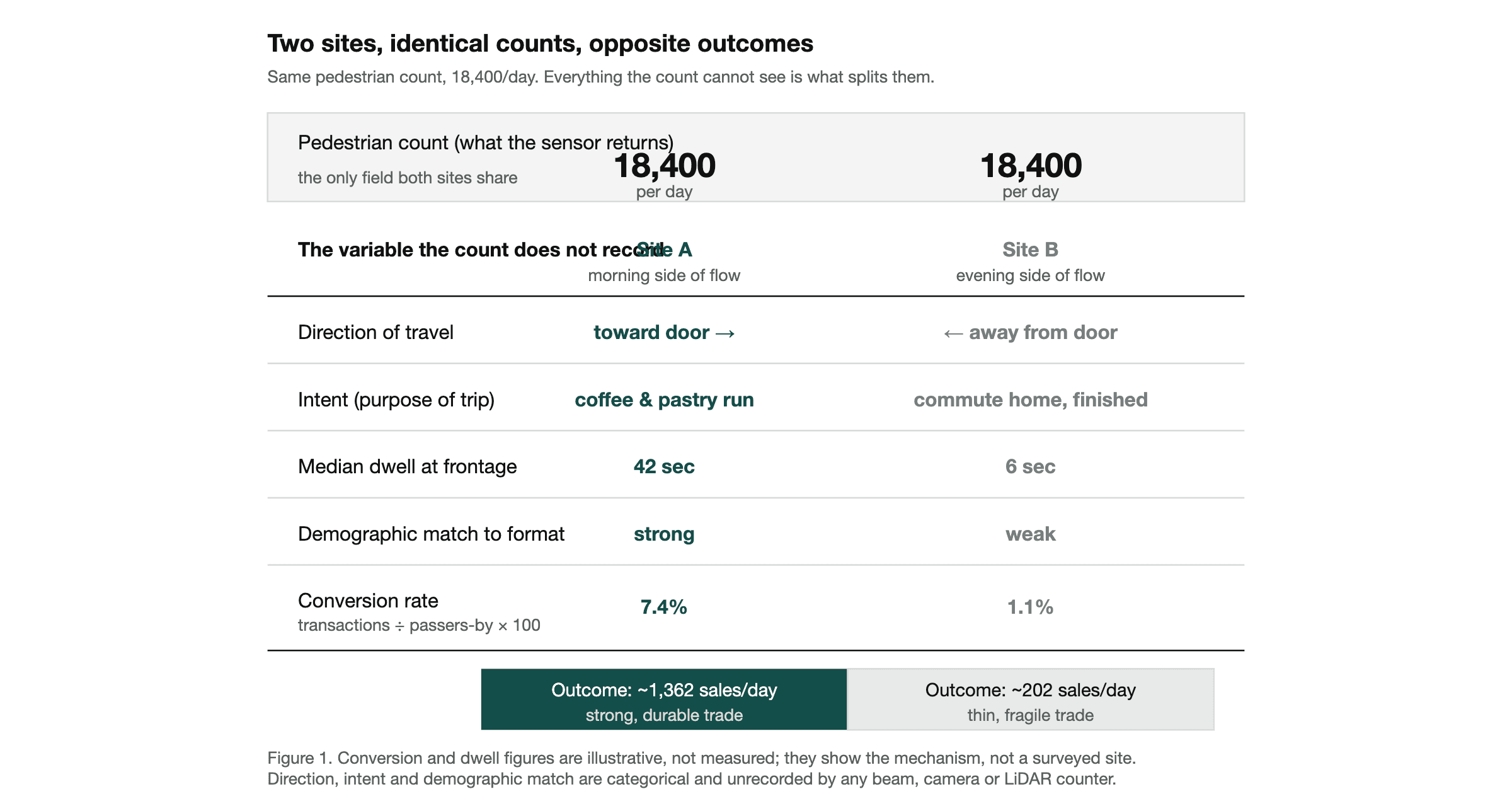
This is the most important section and the one most commonly skipped or completed superficially. Location analysis must cover three components: foot traffic volume, competitor proximity, and demographic fit.
Location analysis checklist
Foot traffic count: peak hour pedestrians past front door Competitor count: direct competitors within 300m and 500m Competitor quality: are they well-established or vulnerable? Demographic match: do suburb income/age data match your target customer? Visibility: is the site visible from the street at 20 metres? Anchor proximity: what high-traffic draws are within 200m?
Section 2: Revenue model
Build your revenue model from the bottom up, not the top down. Do not start with "we expect to capture 5% of the market." Start with: how many transactions per day at what average value, and is that achievable at this specific location?
Bottom-up revenue model steps
- 1
Count or estimate daily foot traffic past the site
- 2
Apply a realistic capture rate (1–5% for new businesses)
- 3
Multiply by average transaction value for your category
- 4
Multiply by trading days per month
- 5
Subtract COGS (typically 25–35% for food, 50–60% for retail)
- 6
Subtract fixed costs: rent, labour, utilities, insurance
- 7
The remainder is your operating margin — target 10–20%
Section 3: Competitor assessment
List every direct competitor within 500 metres. For each one, record: how long they have been trading, their Google rating, their approximate price point, and their apparent busiest hours. A competitor that has traded for 8 years with a 4.7 rating is a different competitive challenge than one that opened 6 months ago with mixed reviews.
Section 4: Rent and lease assessment
Your feasibility study must include a rent stress test. Model three scenarios: base case (expected revenue), downside case (30% below expected for the first 6 months), and worst case (50% below expected). At each scenario, is the business still solvent? If the worst case means defaulting on rent within 90 days, the lease terms need to be negotiated before you sign.
Red flags in a lease assessment
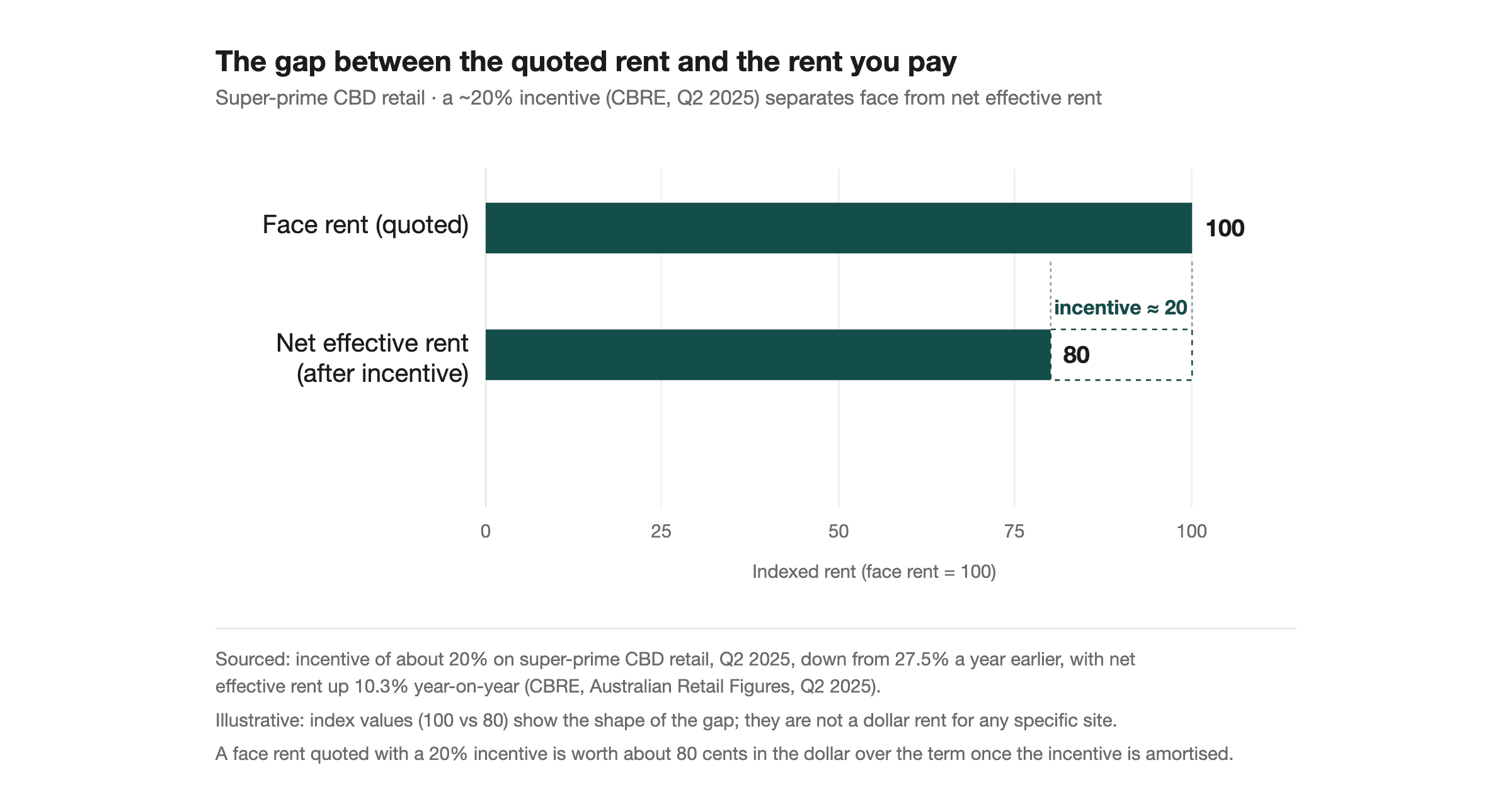
Rent above 15% of projected base-case revenue No rent-free fit-out period offered Personal guarantees beyond 12 months No ability to sublease or assign Annual rent increases above CPI Lease term under 3 years (limits goodwill value)
Section 5: Go / No-Go criteria
Define your go/no-go criteria before you start evaluating sites. Writing them down before you fall in love with a location is the only way to apply them honestly.
Example go/no-go criteria
FAQ: business feasibility studies in Australia
Do I need a professional consultant to complete a feasibility study?
For most small businesses, no. A structured self-completed feasibility study using publicly available data and standard modelling tools is sufficient to make an informed go/no-go decision. Consultants add value for complex multi-site rollouts or franchise territory assessments.
How long does a business feasibility study take?
A thorough self-completed feasibility study for a single location typically takes 3–5 business days: 1 day for location analysis, 1 day for revenue modelling, 1 day for competitor research, and 1–2 days for lease assessment and financial stress testing.
What is the difference between a feasibility study and a business plan?
A feasibility study answers "should we do this?" A business plan answers "how will we do this?" The feasibility study comes first. Writing a business plan before completing a feasibility study is doing the work in the wrong order.
Related reading
Tools first — then a full report for your address
Free rent, viability, and break-even checks. Upgrade when you are ready for competitors, map, and numbers for a specific site.
No signup required for tools