Demand 8/10: an affluent, leafy, established family suburb on the T1 North Shore line (10,340 residents; household income $3,200/week, well above the Greater Sydney $2,077; 80.7% family households) — the most Anglo-leaning of the upper north shore — with a genuine small village café/retail strip on Hill Street by the station, a real local high street rather than a dormitory pocket.
VERIFYBest fit: Café (67/100)
Location score
63
out of 100
Recommendation
VERIFY
Potentially viable — important checks remain
BEST FIT
67
Café
6.7/10 category
62
Restaurant
58
Retail
Businesses analysed26
Cache updated27 June 2026
Enginev7.3.0
Medium confidence
26 businesses sampled near Roseville centre (updated within the last 4 months); suburb scores use Locatalyze engine v7.3.0. Suburb-centre snapshots for Roseville — validate at your lease address before signing.
Demand, rent, competition, seasonality, and tourism — scored and weighted for Australian commercial operators.
8/10
Demand
7/10
Rent cost
5/10
Competition
2/10
Seasonality
3/10
Tourism dep
Business-Type Scores
How each format performs
Café / Specialty Coffee67
Full-Service Restaurant62
Independent Retail58
Scores use engine-derived weights: cafés weight demand and rent most heavily; restaurants factor tourism; retail factors tourism and demand equally.
Analyst Notes — Roseville
What the data says about this location
1
Demand 8/10: an affluent, leafy, established family suburb on the T1 North Shore line (10,340 residents; household income $3,200/week, well above the Greater Sydney $2,077; 80.7% family households) — the most Anglo-leaning of the upper north shore — with a genuine small village café/retail strip on Hill Street by the station, a real local high street rather than a dormitory pocket.
2
Competition 5/10: a real Hill Street village strip serving a wealthy, quality-conscious family base; differentiation on quality and consistency beats a generic offer.
3
Rent 7/10: high upper-north-shore rents (median residential rent $600/week) — the high incomes support a quality ticket, but a quality-not-volume catchment rewards a destination-or-premium concept that earns the affluent local repeat trade.
4
Tourism 3/10 / Seasonality 2/10: a leafy weekend-village lift over a year-round affluent family-and-commuter base.
Local insight — Roseville
On-the-ground read for operators
Editorial notes layered on top of the scored model — same scores and benchmarks above; this section translates strip mechanics into decisions.
Local reality check
Demand 8/10: an affluent, leafy, established family suburb on the T1 North Shore line (10,340 residents; household income $3,200/week, well above the Greater Sydney $2,077; 80.7% family households) — the most Anglo-leaning of the upper north shore — with a genuine small village café/retail strip on Hill Street by the station, a real local high street rather than a dormitory pocket.
Competition 5/10: a real Hill Street village strip serving a wealthy, quality-conscious family base; differentiation on quality and consistency beats a generic offer.
Rent 7/10: high upper-north-shore rents (median residential rent $600/week) — the high incomes support a quality ticket, but a quality-not-volume catchment rewards a destination-or-premium concept that earns the affluent local repeat trade.
Competition is moderate — you are buying into share-of-wallet, not automatic overflow.
Micro-location breakdown
Roseville main strip / highest visibility
What tends to work: High-throughput food, proven hospitality formats, and retail with clear window narrative.
What struggles: Formats needing highway visibility or large-format parking ratios.
Rent vs foot traffic: Prime band often near $5,281–$6,597/mo — Rent pressure 7/10 in sydney — landlords have pricing power; negotiate on effective rent over the full term.
Secondary street / side pocket
What tends to work: Operators who accept lower passer-by counts but fund discovery through product, hours, or events.
What struggles: Walk-in-only models with no marketing budget or brand recognition.
Rent vs foot traffic: Secondary band often near $4,294–$5,281/mo — savings must fund signage and fit-out amortisation, not disappear into rent alone.
Budget / upstairs / off-strip
What tends to work: Studios, appointment services, niche retail with owned traffic.
What struggles: Full-service dining depending on spontaneous footfall without a booking channel.
Rent vs foot traffic: Lower band near $2,791–$4,294/mo — viable only when customers arrive by intent, not accident.
Real business scenarios
If prime rent clears near $5,281–$6,597/mo, model daily covers at your real average ticket — the engine verdict is VERIFY at 63/100, not a guarantee at your address.
Tourism dependency 3/10: when elevated, January and shoulder weeks need explicit planning, not December extrapolation.
Run competitors within 500m before offer — Competition is moderate — you are buying into share-of-wallet, not automatic overflow.
Competitive reality
Roseville (VERIFY, 63/100) is a modelled read across demand, rent, competition, and seasonality — validate on-site at quiet and peak dayparts, then reconcile with your accountant before lease execution.
Sharp verdict
Roseville pays off when rent sits inside $5,281–$6,597/mo at conservative revenue — do not sign on suburb hype; sign on covers you can defend on a Tuesday.
Operator's briefing
Roseville is a wealthy, leafy, established family suburb on Sydney's upper north shore — a Ku-ring-gai address of large gardens, federation houses and a settled, owner-occupied population, with a genuine small village café-and-retail strip on Hill Street next to the heritage Roseville station on the T1 North Shore line. The result is a quality, family-and-local market: high incomes (median household $3,200/week) support a strong ticket, and the village strip gives an operator a real local high street rather than a dormitory pocket. But the catchment is quality-not-volume and the rent is village-premium, so the composite sits at 65/100 — a VERIFY verdict, restaurant the best fit at 69/100 and café close behind at 67/100. This briefing sets out the catchment and the format that fits.
Roseville is a residence first and a workplace barely at all. The 2021 Census records 10,340 residents at a median age of 40, an average household of 2.9 people, and a strikingly settled ownership profile — 38.9% own outright, 33.4% own with a mortgage (72.3% owner-occupied), and only 25.9% rent. Family households make up 80.7% of the suburb. This is an affluent, leafy, established family suburb: median weekly household income $3,200 and personal income $1,203, both well above the Greater Sydney medians of $2,077 and $881.
The catchment is also the most Anglo-leaning of the upper north shore — English (30.1%) and Australian (25.1%) ancestry still lead, though Chinese ancestry is already substantial at 24.6% and rising, and 41.2% of residents were born overseas. The decisive asset for an operator is the Hill Street village strip by the station: a genuine local high street where the suburb's coffee, brunch and casual-dining habit actually concentrates. The constraint is that this is a quality, family-and-local market, not a high-volume commuter one — the demand is affluent and loyal but finite, and the rent on a desirable village strip is premium. Read this briefing, then position to earn the affluent local repeat trade.
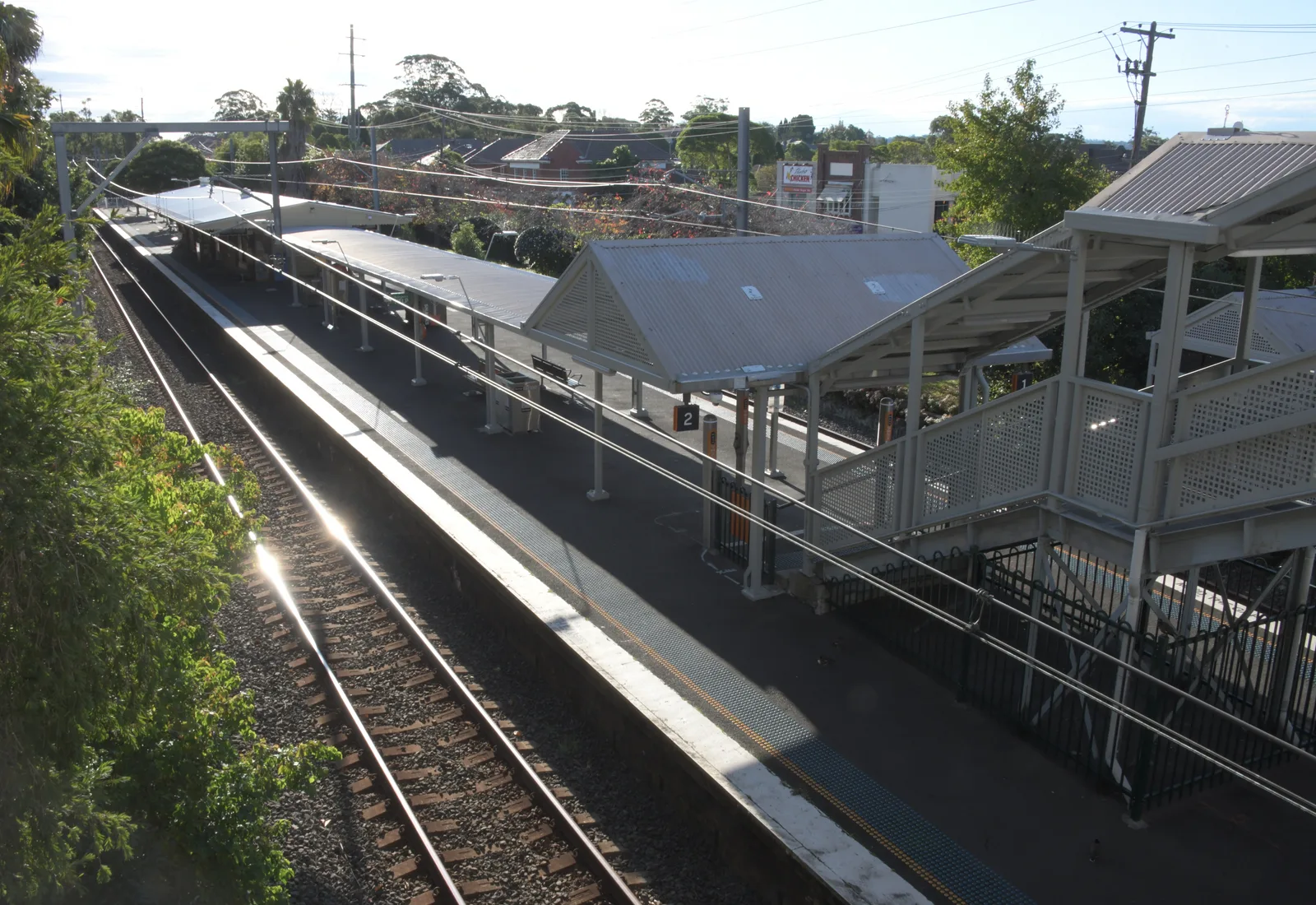
The heritage Roseville railway station on the T1 North Shore line — anchor of the Hill Street village strip, the suburb's genuine local café-and-retail high street. Photo: Sardaka via Wikimedia Commons, CC BY-SA 4.0
Demographic & economic snapshot
Who lives and works in Roseville
ABS Census 2021 (suburb / SAL), with Greater Sydney benchmarks. Superscripts link to the numbered sources below.
Demographic and economic indicators for Roseville, with Greater Sydney benchmarks.
Roseville's figures describe a wealthy, leafy, established family suburb rather than a commuter or rental one — a median age of 40, an average household of 2.9, 80.7% family households, and a striking 72.3% owner-occupied (38.9% outright, 33.4% with a mortgage). Incomes sit well above the metro median (household $3,200/week, personal $1,203/week), and the suburb is the most Anglo-leaning of the upper north shore, with English (30.1%) and Australian (25.1%) ancestry still ahead of a rising Chinese share (24.6%) and 41.2% born overseas.
The decisive asset is the Hill Street village strip by the heritage station — a genuine local high street where the suburb's café, casual-dining and retail habit concentrates. The operator implication is a quality, destination-or-premium format that earns the affluent local repeat trade: priced for the suburb's spending power, positioned on or close to the village strip, and sized for a finite quality-not-volume catchment carrying a premium village rent.
Figure 1
Roseville's income premium over Greater Sydney
Roseville — household income$3,200
Well above the metro median.
Greater Sydney — household income$2,077
Benchmark.
Roseville — resident base10,340
A finite, quality-not-volume catchment.
Source: ABS Census 2021 — Roseville (NSW) [1] and Greater Sydney [2]. Median weekly figures, plus the resident base. The affluent, settled household population concentrates its spend on the Hill Street village strip.
A genuine village strip, not a dormitory pocket
What separates Roseville from many upper-north-shore suburbs is that it has a real high street. The Hill Street strip beside the heritage Roseville railway station is a genuine small village of cafés, casual eateries and local retail — the kind of established local centre where the suburb's everyday food and service habit physically concentrates, rather than dispersing to a larger neighbouring centre. For an operator that matters enormously: it means there is an existing, walkable destination with its own footfall and its own local loyalty, not just a row of houses dependent on passing trade.
The strip's character is village, not centre. It is small, it is local, and it trades on repeat custom from the surrounding affluent households and the station's commuters rather than on the volume a major hub like Chatswood commands. The opportunity is to become one of the handful of operators the village relies on — the local café, the neighbourhood restaurant, the trusted service. The risk is treating it as a high-traffic centre it is not: a format built for big-centre volume will find the Roseville strip too thin, while one built to own the affluent local repeat trade can do very well on it.
The catchment is affluent, settled and family-based
Roseville's residents reinforce a quality, family-led market. The Census records a median weekly household income of $3,200 — well above the Greater Sydney $2,077 — and a personal income of $1,203 against $881 metro-wide. They are established families (median age 40, average household 2.9, 80.7% family households) in owner-occupied homes: 38.9% own outright and 33.4% with a mortgage, a 72.3% owner-occupied share that signals a stable, long-tenured, deeply local population rather than a churning rental one.
The operator implication is a quality-ticket, loyalty-driven market. An affluent, settled family suburb will pay a strong ticket for a genuinely good local café, a quality family-and-couples restaurant, or a trusted neighbourhood service — and, because the population is long-tenured and owner-occupied, it rewards operators who become a fixed part of the local routine. But the same settledness caps the ceiling: this is a finite, quality-not-volume catchment, so the model has to bank a high average spend and strong repeat frequency rather than rely on sheer numbers.
The most Anglo-leaning of the upper north shore — but changing
Roseville is, by upper-north-shore standards, comparatively Anglo: English ancestry leads at 30.1% and Australian at 25.1%, ahead of the suburbs around it where Chinese ancestry has become the largest group. That said, the demographic is plainly shifting — Chinese ancestry is already 24.6% and climbing, and 41.2% of residents were born overseas. The suburb is affluent and internationally connected, but its everyday culture still reads more traditional-Anglo family than the heavily Chinese-influenced markets of nearby Chatswood or parts of Killara.
For an operator the read is twofold. First, the core market remains a classic affluent-Anglo-family one — quality Western café and casual-dining formats land naturally with the established household base. Second, the rising Chinese share is a genuine and growing segment, so a quality offer with cross-cultural appeal captures both the incumbent families and the newer arrivals. The mistake is assuming Roseville mirrors Chatswood's market — it does not yet — or, conversely, ignoring a Chinese-ancestry quarter of the suburb that is only getting larger.
High rent against a finite catchment is the binding constraint
Roseville's incomes are high and so is its cost base. Residential rents alone sit at a median $600 a week, and frontage on a desirable, established village strip beside the station commands a premium — this is sought-after upper-north-shore retail space, not cheap suburban tenancy. That premium is the single biggest reason the composite sits at 65 (VERIFY) despite a high-spend catchment: the village strip generates quality demand, but the rent demands that an operator convert the finite local trade efficiently at a strong ticket.
The discipline is to match a quality, high-average-spend model to the cost — not a high-volume one. A specialty café or quality restaurant that banks a strong ticket and deep repeat frequency from the affluent local base can carry village-strip rent; a thin-margin value format, or one that needs big-centre volume the village cannot supply, cannot. Model the rent on established upper-north-shore village comps, not on big-centre or generic-suburban figures, and the break-even on a quality ticket times loyal repeat trade rather than on raw footfall.
Format, competition and the quality-or-volume question
The Hill Street village already supports an established set of cafés and casual eateries, so the market is genuinely competitive — but it is competition on quality and local standing, not on price. In a small affluent village, the operators who win are the ones the locals adopt as their own: the consistently excellent local café, the reliable neighbourhood restaurant the families return to, the service that becomes part of the routine. A me-too offer with no local loyalty struggles on a strip this size; a genuinely good, well-run one banks a deep, repeating affluent trade.
The strategic question is quality-or-volume, and in Roseville the answer is quality. The suburb cannot supply the raw numbers a major centre does, so a format premised on volume will find the catchment too thin. The winning play is destination-or-premium: a concept good enough that the affluent local base chooses it repeatedly and that nearby suburbs will travel to. The weekend village-brunch trade and the family-and-couples dinner occasion are the strongest windows; the weekday commuter pulse through the station is a steady but secondary base. Build for the affluent repeat occasion, not the mass commuter rush.
The format that fits, in plain terms
The strongest fit is a quality, destination-or-premium restaurant for the affluent family-and-couples market (restaurant 69/100) — a neighbourhood eatery good enough to own the local dinner occasion and pull from nearby suburbs, priced for the suburb's spending power. A specialty café on the Hill Street strip that becomes the village's everyday coffee-and-brunch destination fits the same logic almost as well (café 67/100), banking the weekend brunch peak and a loyal weekday repeat base. Quality local retail and services that trade on the established, owner-occupied household base round out the set (retail 58/100).
What does not fit: a high-volume format premised on big-centre numbers the village cannot supply; a thin-margin value concept out of place in an affluent quality market and unable to carry premium village rent; or a generic, undifferentiated offer with no point of difference on a small strip where local loyalty is everything. Roseville is a genuinely attractive quality, family-and-local market for an operator who builds a destination-or-premium concept that earns the affluent local repeat trade — but it punishes one that mistakes a leafy village for a high-traffic centre.
Zone-by-zone breakdown
Hill Street village strip (by the station)
The genuine local high street beside the heritage station — the suburb's café, casual-dining and retail concentration. Works for: a destination café or quality restaurant the affluent locals adopt as their own. Fails for: high-volume formats needing big-centre numbers the village cannot supply.
Station commuter pulse (T1 North Shore line)
The weekday flow through Roseville station — a steady grab-and-go and coffee base. Works for: fast morning coffee and convenience timed to the commute. Fails for: leisurely formats needing dwell time the commuter lacks at peak.
Residential family streets
The leafy, owner-occupied household base around the strip — affluent, settled, family-led. Works for: trusted neighbourhood services and quality retail on the local routine. Fails for: destination concepts that need to pull traffic off a high street they are not on.
Operator Intelligence
10 dimensions — what matters most here
Scored 1–10 from an operator perspective: higher always means better. Each dimension includes the reasoning behind the score.
Demand spend (ticket size)Critical
A wealthy, settled family base (household income $3,200/week) supports a strong quality ticket well above the metro median.
9/10
Genuine village stripCritical
The Hill Street strip by the station is a real local high street where the suburb's café-and-dining habit concentrates — a walkable destination, not a dormitory pocket.
8/10
Catchment volumeCritical
A finite, quality-not-volume catchment (10,340 residents) — the village cannot supply big-centre numbers, capping a volume-led model.
4/10
Cost base (rent)Important
Premium upper-north-shore village rent (residential median $600/week) demands efficient conversion at a strong ticket — a binding constraint.
4/10
Trade loyalty / stabilitySupporting
A 72.3% owner-occupied, long-tenured family base rewards operators who become part of the local routine with deep, repeating trade.
8/10
When Roseville trades
Peak and off-peak trading periods
Strong
Weekend village brunch (08:00–13:00)
The affluent family base out on the Hill Street strip — the café-and-brunch peak and the village's biggest window.
Moderate
Weekday morning & commute (06:30–09:30)
The station commuter pulse on the T1 line plus the local morning coffee habit — a steady but secondary base.
Moderate
Weekend & weeknight dinner (18:00–21:00)
The family-and-couples dinner occasion — the strongest restaurant window for a destination concept.
Weak
Weekday daytime (09:30–16:00)
A residential suburb with little daytime workforce — the at-home and local-services base only.
Operator fit warning
Who should not open in Roseville
✕
High-volume formats premised on big-centre numbers the village strip cannot supply.
✕
Thin-margin value concepts out of place in an affluent quality market and unable to carry premium village rent.
✕
Generic, undifferentiated offers with no point of difference on a small strip where local loyalty is everything.
Best business formats for Roseville
A destination restaurant for the affluent family market
The best-fit format (restaurant 69/100). An affluent, settled family-and-couples catchment (household income $3,200/week) will pay a strong ticket for a genuinely good neighbourhood restaurant that owns the local dinner occasion and pulls from nearby suburbs.
The village coffee-and-brunch destination
A specialty café on the Hill Street strip that becomes the village's everyday destination (café 67/100). The weekend brunch peak plus a loyal, long-tenured owner-occupied base supports a deep repeat trade at a quality ticket.
Trusted services on a long-tenured local base
A 72.3% owner-occupied, settled family suburb rewards services that become part of the local routine — quality retail, allied health and neighbourhood convenience that the stable household base adopts and keeps.
Risks specific to Roseville
A finite, quality-not-volume catchment
Roseville cannot supply the raw numbers a major centre does. A format premised on big-centre volume will find the village strip too thin — the winning model banks a quality ticket and loyal repeat frequency, not sheer footfall.
Premium village rent is unforgiving
Frontage on a desirable, established upper-north-shore village strip is premium (residential rents alone median $600/week). A thin-margin value format cannot carry the cost base, which is why the composite sits at CAUTION despite high local incomes.
Local loyalty must be earned, not assumed
On a small affluent strip the established set already holds the local trade. A generic, me-too offer with no point of difference loses to the operators the village has already adopted — the catchment rewards a genuinely good, differentiated concept.
Common mistakes
How operators get Roseville wrong
Sizing the concept on big-centre volume
Treating Roseville like Chatswood and modelling on high footfall the village cannot supply. The catchment is quality-not-volume — bank a strong ticket and loyal repeat trade, not raw numbers.
Positioning off the village strip
Taking a cheaper site away from Hill Street and hoping the affluent base travels to it. Off the strip a non-destination concept loses the village footfall and local concentration that make Roseville work.
Ignoring the rising Chinese-ancestry segment
Assuming a purely traditional-Anglo market and missing the 24.6% Chinese-ancestry share that is climbing. A quality offer with cross-cultural appeal captures both the incumbent families and the growing newer base.
Underrated signals
Hidden advantages in Roseville
A long-tenured, owner-occupied base that builds loyalty
At 72.3% owner-occupied and 80.7% family households, Roseville's population is unusually settled. An operator the village adopts gains a deep, durable repeat trade that a churning rental suburb never offers.
A real high street with existing footfall
Unlike many leafy upper-north-shore pockets, Roseville has a genuine Hill Street village strip — an established destination with its own pedestrian flow and local loyalty, rather than a row of houses reliant on passing trade.
Rent viability bands for Roseville
Indicative monthly rent envelopes for typical commercial tenancies — what each band buys, where it works, where it does not.
Rent freshness: 2026 indicative benchmarksValidate against the exact lease before signing
Band
Range
What it buys
Works for
Fails for
Hill Street village prime (station-side strip)
Indicative — premium upper-north-shore village tier
A frontage on the genuine local high street where the suburb's café-and-dining habit concentrates.
A destination café or quality restaurant built to own the affluent local repeat trade at a strong ticket.
High-volume or thin-margin value formats that cannot carry a premium village cost base.
Village secondary / off-prime
Indicative — mid-to-high tier
A position near, but off, the prime strip — still walkable to the station and the household base.
Quality services, allied health and neighbourhood retail on the established local routine.
Destination food concepts that need prime-strip footfall to convert the affluent occasion.
Residential-edge / standalone
Indicative — variable tier
A standalone position among the leafy family streets, off the village high street.
A genuine destination good enough that the affluent base travels to it off the strip.
Formats reliant on passing trade or high-street footfall they will not see off the strip.
Comparable quality villages — Roseville the more boutique
Both are affluent, leafy upper-north-shore family suburbs on the T1 line with village strips and high owner-occupancy. Lindfield's centre is somewhat larger and busier; Roseville's Hill Street village is smaller and more intimate but still a genuine local high street. The operator read is similar — quality, family-and-local, destination-or-premium — with Roseville the slightly more boutique village play.
Volume centre vs quality village — depends on format
Chatswood is a major North Shore centre with high volume, a dense commercial core and a heavily Chinese-influenced market; Roseville is a small, affluent family village with a quality-not-volume catchment and a more traditional-Anglo character. For a high-volume or culturally specific format Chatswood is the stronger fit; for a destination-or-premium concept earning an affluent local repeat trade, Roseville suits — they are different games entirely.
Decision framework
Is your model a quality, destination-or-premium offer that earns an affluent local repeat trade at a strong ticket?
Are you positioned on or close to the Hill Street village strip where the suburb's café-and-dining habit actually concentrates?
Can your average spend and repeat frequency carry premium village rent — modelled on established upper-north-shore comps, not big-centre or generic-suburban figures?
Does your concept bank a quality, loyal catchment rather than rely on high-volume numbers the village cannot supply?
Is your offer genuinely good and differentiated enough for a discerning, affluent, settled family base — and does it read both the Anglo-family core and the rising Chinese-ancestry segment?
Roseville offers a genuinely attractive quality, family-and-local market — but only for a destination-or-premium format that earns the affluent local repeat trade against a premium village cost base. Locatalyze runs an address-level analysis on the exact tenancy: the real foot traffic on the Hill Street village strip, the competing café-and-restaurant set the locals already favour, indicative upper-north-shore village rent against your format, and a break-even built on a quality ticket times loyal repeat frequency rather than big-centre volume. Before you sign in Roseville, get the quality-catchment and cost read right.
Is Roseville a good place to open a café or restaurant?
For a quality, destination-or-premium concept aimed at the affluent local base, yes — restaurant is the best-fitting format at 69/100 and café is close behind at 67/100. Roseville is a wealthy, settled family suburb (household income $3,200/week) with a genuine Hill Street village strip by the station where the local café-and-dining habit concentrates. The composite is 65/100 (VERIFY) because the catchment is quality-not-volume and village rent is premium — it rewards an operator who owns the affluent local repeat trade and punishes one built for big-centre numbers.
Why is the verdict VERIFY when the suburb is so affluent?
Because the catchment is finite and the rent is high. Roseville has strong incomes and a real village strip, but it cannot supply the raw volume a major centre does, and frontage on a desirable established strip is premium. The composite of 65 reflects a high-quality, high-spend market held below PROCEED by a quality-not-volume catchment and a premium cost base — it works for a destination-or-premium operator, not a volume one.
What rent should I expect in Roseville?
Premium for an upper-north-shore village position — residential rents alone median $600/week (above the Greater Sydney $470), and frontage on the established Hill Street strip beside the station commands a sought-after retail premium. Prime village positions are the dearest; off-prime and residential-edge sites vary. The bands here are indicative envelopes — verify commercial comps for the specific tenancy. The rent is what makes a quality ticket and loyal repeat trade essential.
Who is the Roseville customer?
Primarily an affluent, settled family: 10,340 residents at a median age of 40, average household 2.9, 80.7% family households, and 72.3% owner-occupied, with a household income of $3,200/week. The suburb is the most Anglo-leaning of the upper north shore — English (30.1%) and Australian (25.1%) ancestry lead — though Chinese ancestry is already 24.6% and rising, and 41.2% were born overseas. High-spend, loyal and quality-focused.
Does Roseville have a real local high street?
Yes — that is its defining asset for an operator. The Hill Street strip beside the heritage Roseville station is a genuine small village of cafés, casual eateries and local retail, not a dormitory pocket. It is the established centre where the suburb's everyday food and service habit concentrates, giving an operator a walkable destination with its own local loyalty rather than a row of houses dependent on passing trade.
Is Roseville like Chatswood?
Not yet. Chatswood is a major North Shore centre with high volume and a heavily Chinese-influenced market; Roseville is a small, leafy, affluent family village whose culture still reads more traditional-Anglo, even as its Chinese-ancestry share (24.6%) rises. Roseville is a quality-not-volume catchment — a destination-or-premium play on a village strip — where Chatswood is a high-traffic centre. Do not size a Roseville concept on Chatswood volumes.
Who should not open in Roseville?
Operators with a high-volume format premised on big-centre numbers the village cannot supply; thin-margin value concepts out of place in an affluent quality market and unable to carry premium village rent; or generic, undifferentiated offers with no point of difference on a small strip where local loyalty is everything.
Data provenance & limitations. Demographic figures are from the ABS 2021 Census for the Roseville (NSW) suburb (SAL13426), with Greater Sydney (1GSYD) as benchmark; the 2021 Census is the most recent available. Owner-occupied share combines owned-outright (38.9%) and owned-with-mortgage (33.4%). The Hill Street village strip and T1 North Shore line station descriptions are from Wikipedia, a secondary link to primary reporting. Rent bands are indicative envelopes, not achieved rents — informed by Roseville's premium upper-north-shore village positioning; verify commercial comps for the specific tenancy. Factor scores are relative estimates calibrated across all Locatalyze suburbs, not guarantees of outcome.
Methodology: Scores are engine-derived from five observable inputs (demand strength, rent pressure, competition density, seasonality risk, tourism dependency — each 1–10). These feed into business-type-specific weighted composites via a single scoring engine used across all markets. Scores are relative estimates calibrated across all Sydney suburbs — a score of 80 indicates materially better conditions than 65; it is not a success probability or guarantee.
Frequently Asked Decision Questions
Have a specific address in Roseville?
Run a full competitor map, rent benchmark, and location score, data confidence, and proceed / verify / avoid screening recommendation for any Roseville address. Free.
·4.6★ with 712 reviews — repeat local demand, not one-off visits.
·Review volume 288% above peer average (184).
·Mid-range positioning with strong review depth — balanced offer, not discount-led.
If you are opening nearby: ☕ Cafe Nate - Specialty Coffee & Eatery in Roseville is the benchmark café here — their 4.6★ and 712 reviews beat the 184-review peer average — $$ positioning is validated by review depth in this catchment — 76m from centre — frontage on the walkable strip matters.
·4.6★ with 523 reviews — repeat local demand, not one-off visits.
·Review volume 136% above peer average (221).
·Central location (78m from suburb centre) captures pass-by and destination traffic.
If you are opening nearby: Calibrate Coffee - Roseville Specialty Coffee (Dominant) shows what execution looks like at this score tier — their 4.6★ and 523 reviews beat the 221-review peer average — 78m from centre — frontage on the walkable strip matters.
·4.6★ and 154 reviews — customers actively recommend this café.
·Central location (66m from suburb centre) captures pass-by and destination traffic.
If you are opening nearby: Hill St Beans Cafe Roseville (Dominant) shows what execution looks like at this score tier — 4.6★ with 154 reviews signals repeat custom, not novelty traffic — 66m from centre — frontage on the walkable strip matters.
4. Cafe Saluto
★★★★½ 4.6 (102 reviews) · 84m from centre
70 · Established
·4.6★ and 102 reviews — customers actively recommend this café.
·Central location (84m from suburb centre) captures pass-by and destination traffic.
If you are opening nearby: 4.6★ with 102 reviews signals repeat custom, not novelty traffic — 84m from centre — frontage on the walkable strip matters — For new entrants: Cafe Saluto is beatable on single-origin filter led — avoid matching incumbents' full menu breadth.
5. Roseville Bakehouse
★★★★½ 4.5 (65 reviews) · 49m from centre
68 · Established
·4.5★ rating beats the typical café baseline in this catchment.
·Central location (49m from suburb centre) captures pass-by and destination traffic.
If you are opening nearby: 49m from centre — frontage on the walkable strip matters — For new entrants: Roseville Bakehouse is beatable on pastry-forward with a limited hot menu — avoid matching incumbents' full menu breadth.
Who wins in Roseville — Restaurants
Ranked by success score (rating, review depth, centrality) within ~1000m of the suburb centre.
What winners have in common
·10 of 10 top venues sit at 4.3★+ — customers reward consistent execution, not novelty alone.
·Review depth averages 406 — operators with under 150 reviews read as unproven next to incumbents.
·Typical positioning is $$ (4 venues report Google price tiers).
·7 benchmark operators combine 4.4★+ ratings with 150+ reviews — new entrants need a clear niche, not a me-too menu.
·4.8★ with 902 reviews — repeat local demand, not one-off visits.
·0.3★ above the 4.5★ average among top local peers.
·Review volume 157% above peer average (351).
If you are opening nearby: Shonan Japanese Kitchen is the benchmark restaurant here — their 4.8★ and 902 reviews beat the 351-review peer average — 80m from centre — frontage on the walkable strip matters.
·4.6★ with 712 reviews — repeat local demand, not one-off visits.
·Review volume 91% above peer average (372).
·Mid-range positioning with strong review depth — balanced offer, not discount-led.
If you are opening nearby: ☕ Cafe Nate - Specialty Coffee & Eatery in Roseville (Dominant) shows what execution looks like at this score tier — their 4.6★ and 712 reviews beat the 372-review peer average — $$ positioning is validated by review depth in this catchment — 76m from centre — frontage on the walkable strip matters.
·4.7★ with 488 reviews — repeat local demand, not one-off visits.
·Premium tier ($$$) with deep reviews — customers accept higher spend here.
·Central location (108m from suburb centre) captures pass-by and destination traffic.
If you are opening nearby: Saveur Restaurant (Dominant) shows what execution looks like at this score tier — their 4.7★ and 488 reviews beat the 397-review peer average — $$$ positioning is validated by review depth in this catchment — 108m from centre — frontage on the walkable strip matters.
·4.6★ with 523 reviews — repeat local demand, not one-off visits.
·Review volume 33% above peer average (393).
·Central location (78m from suburb centre) captures pass-by and destination traffic.
If you are opening nearby: Calibrate Coffee - Roseville Specialty Coffee (Dominant) shows what execution looks like at this score tier — their 4.6★ and 523 reviews beat the 393-review peer average — 78m from centre — frontage on the walkable strip matters.
5. Rashmin Indian Nepalese Restaurant
★★★★½ 4.5 (555 reviews) · $$ · 74m from centre
83 · Dominant
·4.5★ with 555 reviews — repeat local demand, not one-off visits.
·Review volume 42% above peer average (390).
·Mid-range positioning with strong review depth — balanced offer, not discount-led.
If you are opening nearby: Rashmin Indian Nepalese Restaurant (Dominant) shows what execution looks like at this score tier — their 4.5★ and 555 reviews beat the 390-review peer average — $$ positioning is validated by review depth in this catchment — 74m from centre — frontage on the walkable strip matters.
Who wins in Roseville — Retail
Ranked by success score (rating, review depth, centrality) within ~1500m of the suburb centre.
What winners have in common
·2 of 10 top venues sit at 4.3★+ — customers reward consistent execution, not novelty alone.
·No single venue dominates on both rating and review depth — the category may still be contestable.
·988 reviews place it on the local shortlist even where ratings are mixed.
·Review volume 4175% above peer average (23).
·Benchmark incumbent — new entrants in this category are measured against this operator.
If you are opening nearby: David Jones - Chatswood Chase is the benchmark retail here — For new entrants: A service-heavy or experiential retail concept can win where product-only formats like David Jones look interchangeable.
2. lululemon
★★★☆☆ 3.3 (83 reviews) · $$$ · 1265m from centre
33 · Emerging
·Rating sits below the 4.0★ peer average — volume or convenience may be doing the work.
·Premium tier ($$$) with deep reviews — customers accept higher spend here.
If you are opening nearby: For new entrants: A service-heavy or experiential retail concept can win where product-only formats like lululemon look interchangeable.
3. Politix - Chatswood Chase David Jones
★★★★☆ 4.3 (21 reviews) · 1254m from centre
49 · Growing
·4.3★ rating beats the typical retail baseline in this catchment.
·0.4★ above the 3.9★ average among top local peers.
If you are opening nearby: For new entrants: A service-heavy or experiential retail concept can win where product-only formats like Politix look interchangeable.
4. Surf Dive 'n Ski Chatswood
★★★★☆ 4.0 (23 reviews) · 1473m from centre
39 · Emerging
·4.0★ rating beats the typical retail baseline in this catchment.
If you are opening nearby: For new entrants: A service-heavy or experiential retail concept can win where product-only formats like Surf Dive 'n Ski Chatswood look interchangeable.
5. ZIMMERMANN Chatswood
★★★★☆ 4.1 (16 reviews) · 1333m from centre
41 · Emerging
·4.1★ rating beats the typical retail baseline in this catchment.
If you are opening nearby: For new entrants: A service-heavy or experiential retail concept can win where product-only formats like ZIMMERMANN Chatswood look interchangeable.
Possible market opportunities
Derived from venue counts and formats in our Google Places snapshot — not a guarantee of demand at your exact address.
Medium confidenceService-led retail (phone repair, alterations, or plant studio)
Reason: Product-only retail is crowded online — hands-on services tied to a high-street address defend against e-commerce.