
Sydney Suburb Intelligence
Why Locatalyze says VERIFY for North Sydney
VERIFY first — Café category score 6.5/10. Location composite 65/100.
Location score
Recommendation
VERIFY
Potentially viable — important checks remain
North Sydney in 30 seconds
North Sydney is VERIFY at 65/100 (café 65, restaurant 65, retail 64). That is a shortlist, not a yes. Prove the named street and daypart before you sign.
Café 65/100 · Restaurant 65/100 · Retail 64/100 — pick the branch that matches your concept before you sign rent.
Worker-routine food and coffee — Useful where the tenancy is directly on a morning or lunch path and can serve quickly without relying on a long dwell time.
A site that only works at lunch can leave too much rent riding on a narrow trading window.
The lease only works on suburb-average foot traffic, weekend trade is unproven at the door, or your concept cannot name a clear reason customers switch from incumbents.
Inspect speed, queue tolerance and whether customers can see the offer before they commit to the station or office path
North Sydney pays off when you measure Metro distance, staff for three strong weekdays, and stress-test at 55–60% occupancy — not when you import a five-day-even model from 2019.
Recommendation
VERIFY first
Café category score
6.5/10
Structural risk
Medium
Competition
Moderate-to-high — fewer venues than 2019, but survivors are disciplined
Differentiation required
Required
Location composite 65/100 measures overall suburb fit across all factors. Café category score is the format this page recommends. Scores screen the suburb, not the individual lease; the address report checks nearest competitors, rent-to-revenue, and break-even for the exact tenancy.
Should I open a café in North Sydney?
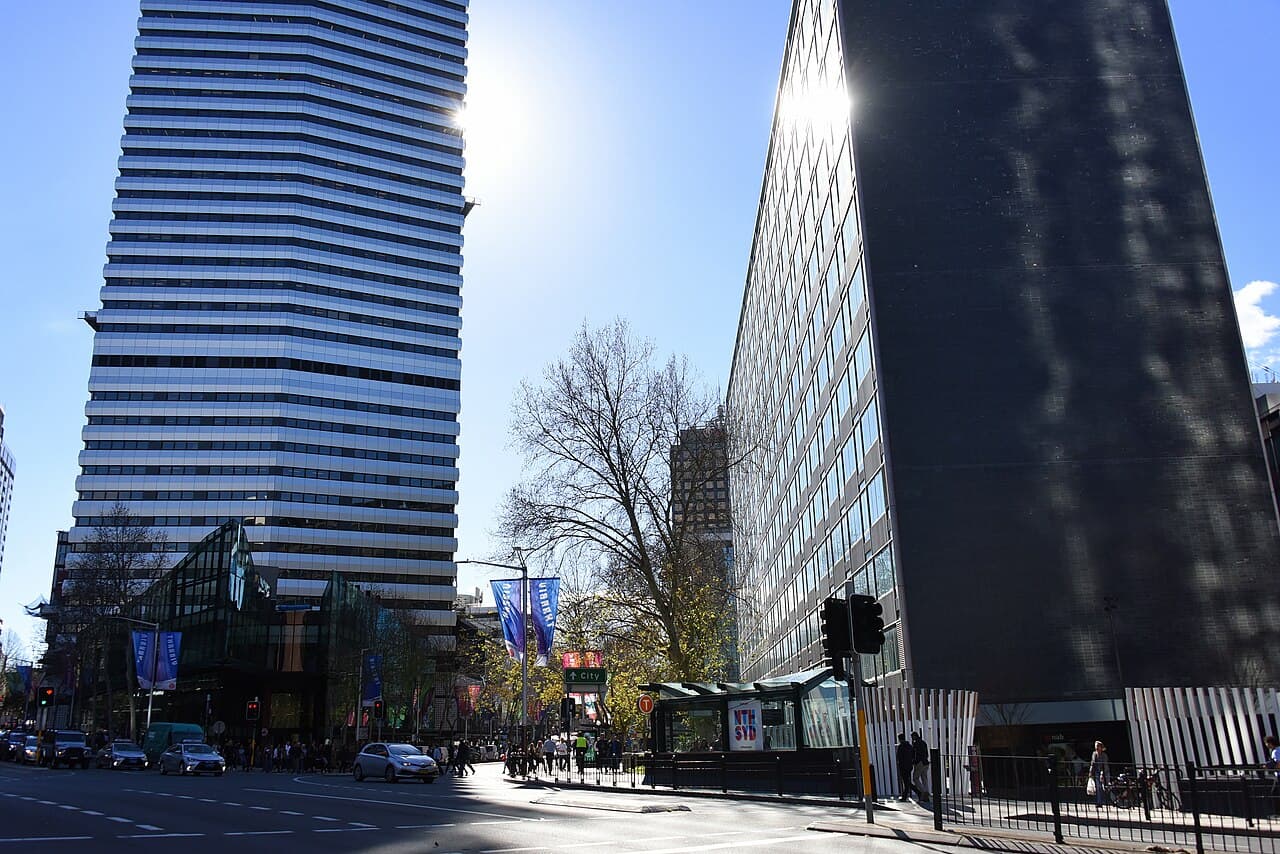
Maybe — if you staff for three strong days and accept 65–72% of the old office baseline. Cafés score 65/100 here with a VERIFY composite — weekday corporate demand is still real (~40,000 workers at 65–72% of pre-pandemic occupancy), but North Sydney is not the 2019 precinct. Hybrid work broke the five-day-even lunch model; Monday and Friday run at 40–55% of Tuesday–Thursday throughput. Sydney Metro (August 2024) widened the catchment for operators within 250 metres of the station — Blue 36 Cafe, Bacino Bar, and The Foliage Cafe already own weekday recommendation paths. Pacific Highway without Metro spill does not get that uplift at the same intensity.
What surprised me
Although office occupancy never returned to 2019 levels, Metro-adjacent positions now see the strongest commuter flow in the precinct's history — the gap I see is worker-routine food and coffee, while operators still modelling 40,000 workers at 90% utilisation over-forecast revenue by 25–35%.
How to read these scores
Composite 65/100; Café 65/100. Use this as a screening verdict before lease diligence.
Source
Locatalyze engine v7.4.0 plus cached local competitor evidence
Freshness
Competitor cache refreshed 27 June 2026
Confidence
Medium - 30 businesses sampled
Limitation
North Sydney scores screen the suburb, not the lease. The paid report tests frontage, rent, nearest competitors, and break-even at your exact address.
Evidence freshness
Scores
Engine v7.4.0; suburb-level model
Competition
Google Places cache refreshed 27 June 2026
Rent
No sourced asking-rent series — obtain current listings
Demographics
ABS Census 2021 baseline with operator interpretation
Precinct map
Metro distance first — hybrid work broke the five-day-even model
Metro precinct
$14k–$22k/mo
Tue–Thu AM & lunch · 5–7pm commuter
Best for: Grab-and-go, lunch QSR, three-day peak operators
Pacific Highway
$11k–$17k/mo
Tue–Thu lunch spine · thin Mon/Fri
Best for: Lunch café, corporate dining, weekday services
Walker & Berry
$9k–$14k/mo
Secondary office · lower volume
Best for: Allied health, neighbourhood café, specialty retail
Residential transition
$7k–$11k/mo
Emerging evening · 5+ year horizon
Best for: Long-lease neighbourhood formats, allied services
Within 250m of North Sydney Metro sees the strongest commuter flow since 2024 — Pacific Highway without station spill is a different P&L.
Operator fit warning
Who should not open in North Sydney
Operators who need seven-day trade but have only inspected weekday lunch.
Generic cafes competing on office density alone.
Retailers with weak signage or a tenancy hidden from the natural walking path.
Decision path
What are you opening?
Pick your format — the guide shows only the branch that applies to your concept.
No dedicated section for this format in the suburb guide — run an address-level analysis for restaurant, retail, or bar economics.
Why do successful venues survive here?
Survivors built around Tuesday–Wednesday–Thursday — morning commuter, sharp lunch, optional evening takeaway — and staff down on Monday and Friday instead of pretending five flat weekdays. Blue 36 Cafe (505 reviews, 4. Tue–Thu 07:00–09:30 delivers the highest single-window throughput at Metro-adjacent and Pacific Highway positions. Tue–Thu 12:00–14:00 is the structural revenue backbone for lunch-led formats. Monday and Friday daytime runs at 40–55% of the mid-week peak — hybrid work is structural, not transitional. Where I think money is still being left on the table: worker-routine food and coffee.
Local competition
Who wins in North Sydney — and where to differentiate
Ranked from cached Google Places data near the suburb centre. Validate at your lease address before signing.
Who wins in North Sydney — Cafés
Ranked by success score (rating, review depth, centrality) within ~800m of the suburb centre.
What winners have in common
- ·9 of 10 top venues sit at 4.3★+ — customers reward consistent execution, not novelty alone.
- ·Review depth averages 440 — operators with under 150 reviews read as unproven next to incumbents.
- ·Typical positioning is $$ (10 venues report Google price tiers).
- ·8 benchmark operators combine 4.4★+ ratings with 150+ reviews — new entrants need a clear niche, not a me-too menu.
- 79 · Dominant
★★★★☆ 4.4 (984 reviews) · $$ · 514m from centre
- ·4.4★ and 984 reviews — customers actively recommend this café.
- ·Review volume 160% above peer average (379).
- ·Mid-range positioning with strong review depth — balanced offer, not discount-led.
If you are opening nearby: Piato Restaurant is the benchmark café here — their 4.4★ and 984 reviews beat the 379-review peer average — $$ positioning is validated by review depth in this catchment.
- 91 · Dominant
2. Blue 36 Cafe
★★★★½ 4.7 (505 reviews) · $$ · 33m from centre
- ·4.7★ with 505 reviews — repeat local demand, not one-off visits.
- ·0.2★ above the 4.5★ average among top local peers.
- ·Mid-range positioning with strong review depth — balanced offer, not discount-led.
If you are opening nearby: Blue 36 Cafe (Dominant) shows what execution looks like at this score tier — 4.7★ with 505 reviews signals repeat custom, not novelty traffic — $$ positioning is validated by review depth in this catchment — 33m from centre — frontage on the walkable strip matters.
- 83 · Dominant
3. The Naked Duck North Sydney
★★★★½ 4.5 (504 reviews) · $$ · 423m from centre
- ·4.5★ with 504 reviews — repeat local demand, not one-off visits.
- ·Mid-range positioning with strong review depth — balanced offer, not discount-led.
If you are opening nearby: The Naked Duck North Sydney (Dominant) shows what execution looks like at this score tier — 4.5★ with 504 reviews signals repeat custom, not novelty traffic — $$ positioning is validated by review depth in this catchment.
- 83 · Dominant
4. The Foliage Cafe
★★★★½ 4.8 (311 reviews) · $ · 286m from centre
- ·4.8★ with 311 reviews — repeat local demand, not one-off visits.
- ·0.3★ above the 4.5★ average among top local peers.
- ·Value-tier pricing with high volume — wins on convenience and price, not premium experience.
If you are opening nearby: The Foliage Cafe (Dominant) shows what execution looks like at this score tier — 4.8★ with 311 reviews signals repeat custom, not novelty traffic — $ positioning is validated by review depth in this catchment — 286m from centre — frontage on the walkable strip matters.
- 81 · Dominant
5. Bacino Bar
★★★★½ 4.7 (339 reviews) · $ · 178m from centre
- ·4.7★ with 339 reviews — repeat local demand, not one-off visits.
- ·0.2★ above the 4.5★ average among top local peers.
- ·Value-tier pricing with high volume — wins on convenience and price, not premium experience.
If you are opening nearby: Bacino Bar (Dominant) shows what execution looks like at this score tier — 4.7★ with 339 reviews signals repeat custom, not novelty traffic — $ positioning is validated by review depth in this catchment — 178m from centre — frontage on the walkable strip matters.
Who wins in North Sydney — Restaurants
Ranked by success score (rating, review depth, centrality) within ~1000m of the suburb centre.
What winners have in common
- ·6 of 10 top venues sit at 4.3★+ — customers reward consistent execution, not novelty alone.
- ·Review depth averages 696 — operators with under 150 reviews read as unproven next to incumbents.
- ·Typical positioning is $$ (10 venues report Google price tiers).
- ·5 benchmark operators combine 4.4★+ ratings with 150+ reviews — new entrants need a clear niche, not a me-too menu.
- 82 · Dominant
1. The Botanist
★★★★½ 4.6 (1,816 reviews) · $$ · 734m from centre
- ·4.6★ with 1,816 reviews — repeat local demand, not one-off visits.
- ·0.5★ above the 4.1★ average among top local peers.
- ·Review volume 218% above peer average (572).
If you are opening nearby: The Botanist is the benchmark restaurant here — their 4.6★ and 1,816 reviews beat the 572-review peer average — $$ positioning is validated by review depth in this catchment.
- 75 · Established
★★★★☆ 4.4 (1,399 reviews) · $$$$ · 890m from centre
- ·4.4★ and 1,399 reviews — customers actively recommend this restaurant.
- ·0.3★ above the 4.1★ average among top local peers.
- ·Review volume 126% above peer average (618).
If you are opening nearby: their 4.4★ and 1,399 reviews beat the 618-review peer average — $$$$ positioning is validated by review depth in this catchment — For new entrants: Focus on a specific occasion (date night, quick lunch, or group dining) that Sails on Lavender Bay does not dominate.
- 77 · Established
★★★★☆ 4.4 (984 reviews) · $$ · 514m from centre
- ·4.4★ and 984 reviews — customers actively recommend this restaurant.
- ·0.3★ above the 4.1★ average among top local peers.
- ·Review volume 48% above peer average (664).
If you are opening nearby: their 4.4★ and 984 reviews beat the 664-review peer average — $$ positioning is validated by review depth in this catchment — For new entrants: Focus on a specific occasion (date night, quick lunch, or group dining) that Piato Restaurant does not dominate.
- 80 · Dominant
4. Rengaya
★★★★☆ 4.4 (802 reviews) · $$$ · 111m from centre
- ·4.4★ and 802 reviews — customers actively recommend this restaurant.
- ·0.3★ above the 4.1★ average among top local peers.
- ·Premium tier ($$$) with deep reviews — customers accept higher spend here.
If you are opening nearby: Rengaya (Dominant) shows what execution looks like at this score tier — 4.4★ with 802 reviews signals repeat custom, not novelty traffic — $$$ positioning is validated by review depth in this catchment — 111m from centre — frontage on the walkable strip matters.
- 65 · Established
5. Sakura
★★★★☆ 4.3 (356 reviews) · $$ · 567m from centre
- ·4.3★ and 356 reviews — customers actively recommend this restaurant.
- ·Mid-range positioning with strong review depth — balanced offer, not discount-led.
If you are opening nearby: 4.3★ with 356 reviews signals repeat custom, not novelty traffic — $$ positioning is validated by review depth in this catchment — For new entrants: Focus on a specific occasion (date night, quick lunch, or group dining) that Sakura does not dominate.
Possible market opportunities
Derived from venue counts and formats in our Google Places snapshot — not a guarantee of demand at your exact address.
- Medium confidenceTourist-friendly lunch spot with local produce story
Reason: Tourism dependency is elevated — visitors want authentic local food without fine-dining price tags.
Who wins in North Sydney — Retail
Ranked by success score (rating, review depth, centrality) within ~1500m of the suburb centre.
What winners have in common
- ·6 of 10 top venues sit at 4.3★+ — customers reward consistent execution, not novelty alone.
- ·Review depth averages 220 — operators with under 150 reviews read as unproven next to incumbents.
- ·4 benchmark operators combine 4.4★+ ratings with 150+ reviews — new entrants need a clear niche, not a me-too menu.
- ·Most winners sit within 400m of the suburb centre — frontage on the walkable strip matters.
- 89 · Dominant
1. Dress For A Night Formal Dress Hire
★★★★½ 4.8 (1,383 reviews) · 630m from centre
- ·4.8★ with 1,383 reviews — repeat local demand, not one-off visits.
- ·0.5★ above the 4.3★ average among top local peers.
- ·Review volume 1433% above peer average (90).
If you are opening nearby: Dress For A Night Formal Dress Hire is the benchmark retail here — their 4.8★ and 1,383 reviews beat the 90-review peer average — For new entrants: Niche or service-led retail beats another generalist shelf near Dress For A Night Formal Dress Hire.
- 91 · Dominant
2. Monograma
★★★★★ 5.0 (203 reviews) · 133m from centre
- ·5.0★ with 203 reviews — repeat local demand, not one-off visits.
- ·0.7★ above the 4.3★ average among top local peers.
- ·Central location (133m from suburb centre) captures pass-by and destination traffic.
If you are opening nearby: Monograma (Dominant) shows what execution looks like at this score tier — 5.0★ with 203 reviews signals repeat custom, not novelty traffic — 133m from centre — frontage on the walkable strip matters.
- 83 · Dominant
3. Fully Promoted North Sydney
★★★★½ 4.9 (183 reviews) · 641m from centre
- ·4.9★ and 183 reviews — customers actively recommend this retail.
- ·0.6★ above the 4.3★ average among top local peers.
If you are opening nearby: Fully Promoted North Sydney (Dominant) shows what execution looks like at this score tier — 4.9★ with 183 reviews signals repeat custom, not novelty traffic — For new entrants: Niche or service-led retail beats another generalist shelf near Fully Promoted North Sydney.
- 77 · Established
4. Mr. Fierze - Men’s Designer Suit Hire
★★★★½ 4.8 (198 reviews) · 601m from centre
- ·4.8★ and 198 reviews — customers actively recommend this retail.
- ·0.5★ above the 4.3★ average among top local peers.
If you are opening nearby: 4.8★ with 198 reviews signals repeat custom, not novelty traffic — For new entrants: Niche or service-led retail beats another generalist shelf near Mr. Fierze.
- 49 · Growing
5. Greg Chappell Cricket Centre
★★★★☆ 4.1 (80 reviews) · 930m from centre
- ·4.1★ rating beats the typical retail baseline in this catchment.
- ·Rating sits below the 4.4★ peer average — volume or convenience may be doing the work.
If you are opening nearby: For new entrants: Niche or service-led retail beats another generalist shelf near Greg Chappell Cricket Centre.
What mistakes do new operators make?
A commuter path matters only if people can stop easily and the product fits a quick decision.
Here's what would stop me signing a lease
Operators who need seven-day trade but have only inspected weekday lunch.
Would I personally invest here?
I would only recommend this with moderate confidence — three-day peak staffing, 65–72% occupancy baseline, and capital to bridge thin Mon/Fri shoulders.
I would back worker-routine food and coffee — or walk away. I would not model 2019 occupancy, sign Pacific Highway rent without Metro proximity if I need commuter volume, or plan evening-loaded dining for 2026 when the resident base is still thin. North Sydney pays off when you measure Metro distance, staff for three strong weekdays, and stress-test at 55–60% occupancy — not when you import a five-day-even model from 2019. Only if your model clears 65/100 with explicit Tue–Thu peaks, Mon/Fri staff-down, and stress-test at 55–60% occupancy.
Sense-check suburb-level margin before you sign — café score 65/100 supports shortlisting the lane, but Metro distance, Tue–Thu versus Mon/Fri splits, and post-2020 rent at your door determine whether the P&L works.
At suburb level, North Sydney can work for hybrid-adapted weekday operators. Leases fail on flow mismatch — Metro precinct commuter windows, Pacific lunch spine, and residential-transition evening ramps are not interchangeable. The next decision is not "Should I open in North Sydney?" It is "Should I open at this address?"
Format-by-format depth, comparisons, and FAQsExpand for zones, rent bands, trading windows, format depth, comparisons, and due-diligence FAQs.
Check an address in North Sydney
North Sydney looks workable at suburb level for some formats. Your lease still needs demand, competition and rent fit at a specific frontage — not the suburb average.
Analyse a North Sydney address free