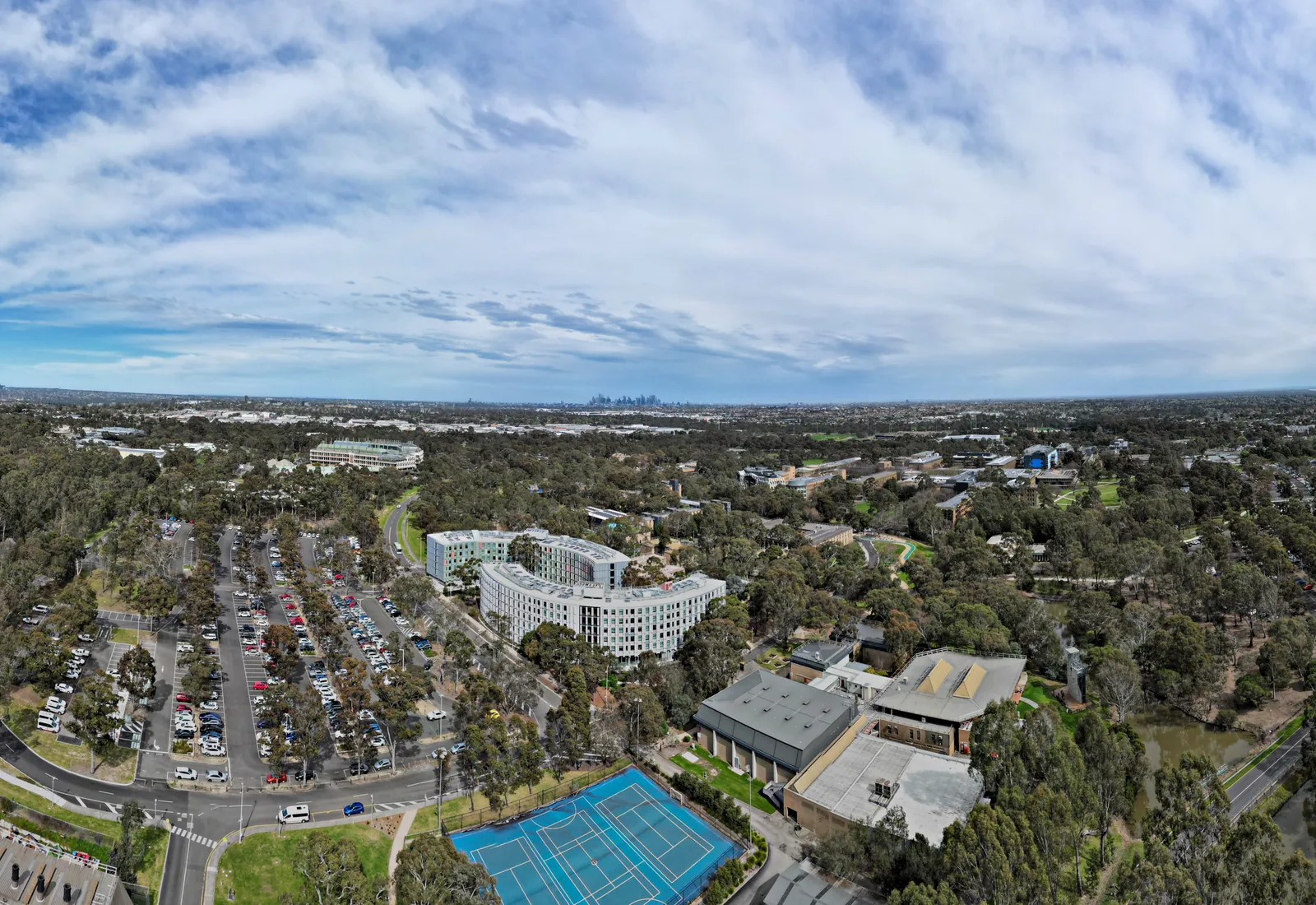
Demand 8/10: La Trobe University's main Bundoora campus (around 22,000 students on site, part of a 36,128-student institution in 2023) plus RMIT Bundoora and the University Hill town centre create a large outer-northern daytime catchment, layered over a settled residential base of 28,068 — but the trade is dispersed across campus, retail and residential nodes rather than a single dense strip.
VERIFYBest fit: Café (72/100)
Location score
66
out of 100
Recommendation
VERIFY
Potentially viable — important checks remain
BEST FIT
72
Café
7.2/10 category
64
Restaurant
60
Retail
Businesses analysed21
Cache updated27 June 2026
Enginev7.3.0
Medium confidence
21 businesses sampled near Bundoora centre (updated within the last 4 months); suburb scores use Locatalyze engine v7.3.0. Suburb-centre snapshots for Bundoora — validate at your lease address before signing.
Elevated — model lease and dayparts before signing
3. Commercial demand analysis
Why people move through this precinct, how spending behaves, and how dayparts shape revenue.
Customer intent scales with the precinct’s demand factor — higher scores imply stronger pedestrian and spending throughput for aligned categories.
Dayparts and category fit still decide outcomes: match menu, roster, and logistics to the strip’s dominant movement patterns rather than suburb stereotypes.
4. Business-type performance
Engine scores plus operator rationale — commercial viability only.
Café / specialty coffee72/100
Engine café line 72/100 weights demand 8/10 and commercial rent pressure 4/10 — stronger where commuter throughput is predictable and competition isn’t purely generic.
Full-service restaurant64/100
Restaurant line 64/100 lifts when tourism 2/10 supports dinner trade and seasonality 4/10 stays manageable for roster planning.
Independent retail60/100
Retail line 60/100 responds to demand × tourism blend — wins where window visibility and category gaps align with walk-by intent.
Services / fitness (proxy)65/100
Services / fitness proxy 65/100 blends retail + hospitality signals — use for gym, salon, and appointment formats where repeat locals matter.
5. Competition & saturation analysis
Where categories crowd out entrants and where disciplined positioning still clears margin.
Moderate — room for distinct offers — saturated lanes punish undifferentiated entrants; look for cuisine, experience, or SKU whitespace backed by counts.
Substitution risk rises where neighbouring precincts offer comparable trips at lower friction — differentiation must be operational, not cosmetic.
6. Street-level intelligence
Micro-zones inside the suburb — not uniform throughput.
Structured for search and AI citation — operator viability only (no residential rental advice).
Is Bundoora good for a café?
Screen using the café line (72/100) plus weekday throughput proof — the composite verdict is VERIFY.
Is retail saturated in Melbourne?
Competition intensity is 5/10 — high saturation demands differentiation and SKU velocity.
What business works best?
Compare café (72), restaurant (64), and retail (60) lines — highest score indicates lowest-friction alignment with model weights.
Is foot traffic strong enough?
Demand strength is 8/10 — confirm hourly intent at your intended frontage.
Should I open solely based on this page?
No — this is precinct screening intelligence. Run a Locatalyze address analysis for lease benchmarking and competitor mapping.
Locatalyze scores are engine-derived from demand strength, commercial rent pressure, competition density, seasonality risk, and tourism dependency — each 1–10 — rolled into business-type lines and composite verdicts. This report is commercial location intelligence for operators, not residential market commentary.
How to read these scores
Composite 66/100; Café 72/100. Use this as a screening verdict before lease diligence.
Source
Locatalyze engine v7.3.0 plus cached local competitor evidence
Freshness
Competitor cache refreshed 27 June 2026
Confidence
Medium - 21 businesses sampled
Limitation
Bundoora scores screen the suburb, not the lease. The paid report tests frontage, rent, nearest competitors, and break-even at your exact address.
Evidence freshness
Scores
Engine v7.3.0; suburb-level model
Competition
Google Places cache refreshed 27 June 2026
Rent
No sourced asking-rent series — obtain current listings
Demographics
ABS Census 2021 baseline with operator interpretation
Mini location report — Bundoora
Café opportunity snapshot
PROCEED band for café operators in Bundoora.
Also scored: Restaurant 64 · Retail 60
Café opportunity score
72/100
Demand strength
8/10
Rent pressure
Relatively low (4/10)
Competition density
5/10
Financial model — unlock at your address
Suburb-level estimates only. Your full report models P&L from your lease address, rent, and format.
🔒Est. monthly revenue range
Modelled at your address from rent, ticket and demand — not a suburb average
🔒Break-even customers per day
Calculated from your rent, staffing, and average ticket at your exact address
🔒Payback period on fit-out
Months to recover setup costs at base-case revenue
🔒Rent-to-revenue ratio
Whether the lease is sustainable at modelled trade levels
See if the numbers work at your rent
Run a free analysis at your Bundoora address. Unlock modelled P&L, break-even, and scenarios from $29.
Demand, rent, competition, seasonality, and tourism — scored and weighted for Australian commercial operators.
8/10
Demand
4/10
Rent cost
5/10
Competition
4/10
Seasonality
2/10
Tourism dep
Business-Type Scores
How each format performs
Café / Specialty Coffee72
Full-Service Restaurant64
Independent Retail60
Scores use engine-derived weights: cafés weight demand and rent most heavily; restaurants factor tourism; retail factors tourism and demand equally.
Analyst Notes — Bundoora
What the data says about this location
1
Demand 8/10: La Trobe University's main Bundoora campus (around 22,000 students on site, part of a 36,128-student institution in 2023) plus RMIT Bundoora and the University Hill town centre create a large outer-northern daytime catchment, layered over a settled residential base of 28,068 — but the trade is dispersed across campus, retail and residential nodes rather than a single dense strip.
2
Rent 4/10: outer-suburban, value-oriented rents — among the cheaper of the cohort — give a strong rent-to-catchment ratio for a high-volume student-and-family format.
3
Competition 5/10: the University Hill centre and local strips are moderately competitive but spread out, with clearer gaps than the dense inner-city student precincts.
4
Seasonality 4/10: La Trobe's two-semester calendar thins the student trade over summer, but Bundoora's settled, largely owner-occupied family base (only 27.6% rented) provides a steadier year-round floor than a transient student suburb.
Local insight — Bundoora
On-the-ground read for operators
Editorial notes layered on top of the scored model — same scores and benchmarks above; this section translates strip mechanics into decisions.
Local reality check
Demand 8/10: La Trobe University's main Bundoora campus (around 22,000 students on site, part of a 36,128-student institution in 2023) plus RMIT Bundoora and the University Hill town centre create a large outer-northern daytime catchment, layered over a settled residential base of 28,068 — but the trade is dispersed across campus, retail and residential nodes rather than a single dense strip.
Rent 4/10: outer-suburban, value-oriented rents — among the cheaper of the cohort — give a strong rent-to-catchment ratio for a high-volume student-and-family format.
Competition 5/10: the University Hill centre and local strips are moderately competitive but spread out, with clearer gaps than the dense inner-city student precincts.
Competition is moderate — you are buying into share-of-wallet, not automatic overflow.
Micro-location breakdown
Bundoora main strip / highest visibility
What tends to work: High-throughput food, proven hospitality formats, and retail with clear window narrative.
What struggles: Formats needing highway visibility or large-format parking ratios.
Rent vs foot traffic: Prime band often near $4,314–$5,126/mo — Rent pressure 4/10 — face rents can be approachable, but secondary positions still need a destination hook.
Secondary street / side pocket
What tends to work: Operators who accept lower passer-by counts but fund discovery through product, hours, or events.
What struggles: Walk-in-only models with no marketing budget or brand recognition.
Rent vs foot traffic: Secondary band often near $3,705–$4,314/mo — savings must fund signage and fit-out amortisation, not disappear into rent alone.
Budget / upstairs / off-strip
What tends to work: Studios, appointment services, niche retail with owned traffic.
What struggles: Full-service dining depending on spontaneous footfall without a booking channel.
Rent vs foot traffic: Lower band near $2,408–$3,705/mo — viable only when customers arrive by intent, not accident.
Real business scenarios
If prime rent clears near $4,314–$5,126/mo, model daily covers at your real average ticket — the engine verdict is VERIFY at 66/100, not a guarantee at your address.
Tourism dependency 2/10: when elevated, January and shoulder weeks need explicit planning, not December extrapolation.
Run competitors within 500m before offer — Competition is moderate — you are buying into share-of-wallet, not automatic overflow.
Competitive reality
Bundoora (VERIFY, 66/100) is a modelled read across demand, rent, competition, and seasonality — validate on-site at quiet and peak dayparts, then reconcile with your accountant before lease execution.
Sharp verdict
Bundoora pays off when rent sits inside $4,314–$5,126/mo at conservative revenue — do not sign on suburb hype; sign on covers you can defend on a Tuesday.
Decision tree
Bundoora is an outer-northern suburb where a major university meets a settled family base. La Trobe's main campus — around 22,000 students on site, part of a 36,128-student institution (2023) — plus RMIT Bundoora and the University Hill town centre create a large daytime catchment, while a resident population of 28,068 is, unusually for a student suburb, largely owner-occupied and family-anchored. Demand reads 8/10 against cheap outer-suburban rent (4/10), and the composite lands at 66/100 with a VERIFY verdict. This guide works as a decision tree: it sorts which Bundoora node — campus, town centre or neighbourhood — fits your format.
Bundoora is not a dense student strip like Clayton or Kensington. The catchment is large but dispersed across three distinct nodes — the La Trobe and RMIT campuses, the University Hill town centre, and the established residential streets — connected by the route 86 tram rather than a train line. That dispersal is the defining planning fact: there is no single high street that captures everything, so the decisive question is which node you are serving. Café scores 72/100 here because cheap rent meets a genuinely large catchment, but only if the position matches the node.
The second defining fact is the resident base. Unlike the transient, renter-dominated inner student suburbs, Bundoora is settled and family-oriented — only 27.6% of dwellings are rented, the median age is 38, and households are larger (2.6 people). Incomes are below the Greater Melbourne medians (household $1,668 against $1,901), so this is a value-and-volume market. That family base also gives Bundoora a steadier year-round floor than a pure student suburb, softening the summer trough.
Bundoora’s resident numbers are unusual for a university suburb: settled and family-anchored rather than transient. Only 27.6% of dwellings are rented (72% owner-occupied), the median age is 38, and households are family-sized. Incomes sit below the Greater Melbourne medians, marking this as a value-and-volume market. That settled base is the suburb’s steady floor — it does not empty over summer or on weekends.
Over that floor sits the daytime catchment: around 22,000 La Trobe students on the Bundoora campus (part of a 36,128-student university with 3,600-plus staff), plus RMIT Bundoora and the University Hill town centre. The operator implication is dispersal — the demand is large but spread across distinct nodes, so the decisive move is choosing which node, and which customer, to build for.
Figure 1
Bundoora’s catchment: a settled base plus a campus daytime surge
Bundoora residents28,068
Settled; 72% owner-occupied.
La Trobe students (Bundoora campus)~22,000
Of 36,128 university-wide.
La Trobe staff (university-wide)3,662
2023, FTE.
Sources: resident population, ABS Census 2021, Bundoora (Vic.) [1]; La Trobe Bundoora-campus students (~22,000) and university staff, 2023 [3]. The ~22,000 is the stated Bundoora-campus figure; La Trobe’s total enrolment is 36,128 across all campuses.
Decision one: which node are you serving?
Everything in Bundoora starts with node selection, because the suburb has no single dominant strip. The La Trobe campus edge serves a student-and-staff daytime market on a teaching-term clock; the University Hill town centre — a large-format retail and dining development — draws a wider catchment with parking and a town-centre mix; and the residential streets carry a settled family base with everyday neighbourhood needs. These are three different businesses with three different customers, rhythms and rent levels, and a format that suits one will usually misfire in another.
The common error is to treat Bundoora as a single market and pick a site on availability rather than node-fit. A campus-facing café lives on the term calendar and the student wallet; a University Hill tenancy competes in a planned town centre with its own anchors and parking economics; a neighbourhood café serves families on a seven-day local clock. Decide which customer you are building for first, then choose the node — not the other way around.
The campus node — large, value-conscious, term-driven
La Trobe's Bundoora campus is the single biggest demand driver: around 22,000 students on site, part of a university of 36,128 students and over 3,600 staff in 2023, with RMIT's Bundoora campus adding to the daytime population. For a fast, value-priced café or food format on the campus edge, that is a large, habitual, walkable market — students and staff buying coffee and lunch at high frequency through the teaching weeks. Cheap outer-suburban rent (4/10) makes the economics work where a high-volume, modest-ticket model would be squeezed on an inner-city rent.
The campus node's constraints are the student wallet and the calendar. Incomes here are low (the suburb's median personal income is $690 a week, well below the Greater Melbourne $841), so the format must be value-priced and built for turnover, not margin-per-cover. La Trobe runs a traditional two-semester calendar, so the summer break thins the campus trade — model it as a real trough, and lean on the staff and the surrounding residential base to bridge it. The campus is the engine, but it is a term-time engine on a budget.
The University Hill node — a planned town centre
University Hill is a different proposition: a master-planned large-format retail and town-centre development on the suburb's edge, with major retailers, dining and the parking economics of a destination centre. An operator here is not on a campus strip but in a planned centre, competing alongside national tenants for a catchment that drives in from across the outer north. The rent and the trade are town-centre, not student-strip — a more deliberate, family-and-regional customer rather than the walk-up student.
The decision here mirrors the mall logic of a Maribyrnong or a Chadstone at smaller scale: can your format use the centre's draw and carry its occupancy cost, or are you better on a cheaper edge position serving the same catchment without the centre's rent? University Hill suits destination formats and brands with a draw; it does not suit a thin-margin independent that needs the campus's walk-up volume but pays town-centre rent. Match the format to the centre's economics, or choose a different node.
The neighbourhood node — the settled family floor
The quieter, more durable opportunity is the residential base. Bundoora is genuinely settled — 72% of dwellings are owner-occupied, the median age is 38, and households are family-sized — which is unusual for a university suburb and valuable for an operator. This base does not vacate over summer or on weekends the way a student population does, so a neighbourhood café or local restaurant serving the residential streets trades on a steadier seven-day, year-round clock than the campus node, even if the absolute volume is lower.
The family base is also why Bundoora's seasonality reads 4/10 rather than the harder read of a pure student suburb: the owner-occupied residents are the floor under the term-time peaks. A format built for them — a genuine neighbourhood café, a family-friendly local restaurant, everyday services — is the most defensible business in Bundoora, insulated from both the summer trough and the campus's value ceiling. The constraint is right-sizing to a residential catchment rather than betting on the dispersed regional draw.
The rent advantage — and the dispersal tax
Bundoora's structural edge is cheap rent: at 4/10 it is among the most affordable of the cohort, which is what lets a high-volume student-and-family format clear its occupancy cost. Against a genuinely large catchment, that rent-to-demand ratio is attractive — the campus and the residential base together supply real footfall at a cost base an inner-city operator could only dream of. For a value-led, volume-driven model, the economics are some of the friendlier in metropolitan Melbourne.
The offsetting cost is dispersal. Because demand is spread across the campus, University Hill and the residential nodes — connected by tram rather than a train line — no single position captures the whole catchment, and foot traffic on any one frontage is lower than the headline numbers suggest. The operator has to choose a node and accept its ceiling, rather than expecting one site to harvest 28,000 residents plus 22,000 students. Cheap rent rewards the right node choice; it does not rescue a site that sits between nodes, catching the through-traffic of none.
The format that fits, in plain terms
The strongest fit is a fast, value-led café on the La Trobe campus edge (café 72/100) — high-volume, modest-ticket coffee and food for the student-and-staff market, sized for turnover, banking the cheap rent. Equally durable is a genuine neighbourhood café or family restaurant on the residential node, trading the steadier seven-day family clock for lower peak volume (restaurant 64/100). A destination format with a draw can work at University Hill if it carries the town-centre economics. Services for the family base — allied health, fitness, convenience — trade year-round.
What does not fit: a premium concept priced above a value, below-average-income catchment; a format stranded between nodes, paying for a position that captures none of the campus, centre or neighbourhood flow; or a thin-margin independent at University Hill's town-centre rent without the centre's draw. Retail (60/100) works at the centre or for the residential base but struggles as a standalone against the planned development. Pick the node, match the format to its customer and clock, and Bundoora's cheap-rent, large-catchment combination is one of the better outer-northern opportunities in Melbourne.
Zone-by-zone breakdown
La Trobe / RMIT campus edge
The daytime engine — around 22,000 La Trobe students on site plus RMIT and staff. Works for: fast, value-priced coffee and food sized for student turnover. Fails for: premium or sit-down formats needing a high ticket the student wallet will not pay.
University Hill town centre
A master-planned large-format retail and dining centre drawing a regional outer-north catchment. Works for: destination formats and brands with a draw that can carry town-centre rent. Fails for: thin-margin independents needing campus walk-up volume at town-centre cost.
Residential neighbourhood
The settled, largely owner-occupied family streets — the steady seven-day floor. Works for: genuine neighbourhood cafés, family restaurants and resident services. Fails for: formats sized for a regional draw the local base alone cannot supply.
Operator Intelligence
10 dimensions — what matters most here
Scored 1–10 from an operator perspective: higher always means better. Each dimension includes the reasoning behind the score.
University daytime demandCritical
La Trobe’s main Bundoora campus (~22,000 students on site, part of a 36,128-student university) plus RMIT Bundoora anchor a large daytime catchment.
8/10
Rent economicsCritical
Cheap outer-suburban rent against a large catchment gives one of the friendlier rent-to-demand ratios of the cohort.
8/10
Catchment concentrationCritical
Demand is dispersed across campus, University Hill and residential nodes — no single site captures it all.
4/10
Resident-base stabilityImportant
A settled, 72%-owner-occupied family base provides a steadier seven-day, year-round floor than a transient student suburb.
7/10
Spend / ticket sizeImportant
Below-average incomes (personal $690/week) make this a value-and-volume market, not a premium one.
4/10
Seasonal stabilitySupporting
A two-semester summer trough on the campus, softened by the year-round family base.
5/10
When Bundoora trades
Peak and off-peak trading periods
Strong
Weekday class hours (08:00–17:00), teaching weeks
Student-and-staff coffee and lunch on the campus edge — the core revenue window.
Moderate
Weekend (residential & University Hill)
Family neighbourhood trade and town-centre shopping; steadier than a pure student suburb.
Moderate
Weekday evening (residential)
Family dinner trade on the neighbourhood node holds a base the campus does not.
Weak
La Trobe summer break (Dec–Feb)
Campus trade thins; the settled family base carries the floor. Model as the trough.
Operator fit warning
Who should not open in Bundoora
✕
Premium concepts priced above a value, below-average-income catchment.
✕
Thin-margin independents paying University Hill’s town-centre rent without the centre’s draw.
✕
Formats stranded between nodes, paying for a site that captures none of the campus, centre or neighbourhood flow.
Best business formats for Bundoora
A value café on the campus edge
The best-fit format (café 72/100). Cheap rent plus around 22,000 La Trobe students on site rewards a fast, value-priced, high-volume coffee and food offer. Position on the campus edge, size for turnover, and bank the rent-to-catchment ratio.
A neighbourhood café for the family base
The settled, 72%-owner-occupied residential base trades a steadier seven-day, year-round clock for lower peak volume. A genuine neighbourhood café or family restaurant here is Bundoora's most weather-proof format.
Family and student services
Allied health, fitness and convenience formats serve both the large student population and the settled family base on a year-round clock, sidestepping the campus value ceiling.
Risks specific to Bundoora
Dispersal means no single site captures the catchment
Demand is spread across campus, University Hill and the residential nodes, connected by tram not train. A site between nodes catches the through-traffic of none. Choose a node and accept its ceiling.
It is a value, below-average-income market
Personal income ($690/week) is well below Greater Melbourne. A premium concept misreads the catchment; the winning model is value-priced and built for volume.
The campus runs a two-semester calendar
La Trobe's long summer break thins the campus trade. Model the trough and lean on the settled family base — Bundoora’s steadier floor — to bridge it.
Rent viability bands for Bundoora
Indicative monthly rent envelopes for typical commercial tenancies — what each band buys, where it works, where it does not.
Rent freshness: 2026 indicative benchmarksValidate against the exact lease before signing
Band
Range
What it buys
Works for
Fails for
La Trobe campus edge
Indicative — low (outer-suburban)
A frontage on the student-and-staff daytime flow at outer-suburban cost.
Fast, value-priced coffee and food sized for high student turnover.
Premium formats needing a ticket the value student market will not pay.
University Hill town centre
Indicative — town-centre tier (highest)
Position in a planned large-format centre with anchors, parking and a regional draw.
Destination formats and brands able to carry town-centre rent on town-centre volume.
Thin-margin independents needing campus walk-up volume at town-centre cost.
Residential neighbourhood frontage
Indicative — low-to-mid tier
A local position among the settled family streets, away from campus and centre.
Neighbourhood cafés, family restaurants and resident services on a seven-day clock.
Formats sized for a regional catchment the residential base alone cannot supply.
Decision framework
Which node are you serving — campus edge, University Hill, or residential neighbourhood? Decide the customer first, then the site; Bundoora has no single high street that captures all three.
Is your model value-priced for a below-average-income catchment, sized for volume rather than per-cover margin?
If you choose the campus node, can your cash flow survive La Trobe’s two-semester summer trough, bridged by the staff and family base?
If you choose University Hill, can your format carry town-centre rent on its draw — or are you better serving the same catchment from a cheaper edge?
Is your site genuinely on a node, not stranded between them catching the through-traffic of none?
Bundoora pairs cheap rent with a large but dispersed catchment — the whole decision is which node you serve. Locatalyze runs an address-level analysis on the exact tenancy: which node it actually sits on, the real foot traffic and competing set for that customer, indicative rent against your format across the wide campus-to-town-centre split, and a break-even built on the term calendar and the settled family floor. Before you sign in Bundoora, get the node-and-format read right.
For a fast, value-priced café on the La Trobe campus edge, yes — café is the best-fitting format (72/100). Around 22,000 students on site plus cheap outer-suburban rent give a strong rent-to-catchment ratio. A neighbourhood café on the settled family streets is also durable. The composite is 66/100 (VERIFY) because demand is dispersed across nodes and the market is value-priced. Match the format to the node.
Why is the verdict VERIFY when rent is cheap and demand is solid?
Because the demand is dispersed and value-priced. Bundoora spreads its catchment across the La Trobe/RMIT campuses, the University Hill town centre and the residential streets — no single site captures it all — and incomes are below the Greater Melbourne medians. The composite of 66 reflects genuinely friendly rent economics held below PROCEED by dispersal and the value ceiling.
What rent should I expect in Bundoora?
It splits by node. The La Trobe campus edge and residential frontages are low to low-mid (outer-suburban); University Hill is town-centre tier and the highest. The bands here are indicative envelopes — verify comps for the specific tenancy. The cheap campus and neighbourhood rent is the suburb’s structural advantage for a value-and-volume model.
How is Bundoora different from Clayton?
Both are La Trobe-scale and Monash-scale university suburbs, but Bundoora is outer-northern, tram-served (not train), more dispersed across nodes, and — unusually — settled and family-anchored (72% owner-occupied) rather than a transient student rental market. That family base gives it a steadier year-round floor; its constraint is dispersal rather than competition.
Who is the Bundoora customer?
Three groups: the La Trobe and RMIT student-and-staff daytime population (around 22,000 students on the La Trobe campus alone), the regional shoppers University Hill draws, and a settled, largely owner-occupied family resident base of 28,068 (median age 38, below-average incomes). The opportunity is choosing which one your format serves.
Does the family base really help?
Yes. Because Bundoora is 72% owner-occupied and family-anchored, the residential base does not vacate over summer or on weekends the way a transient student population does. That floor is why the suburb’s seasonality reads 4/10 rather than harder, and why a neighbourhood format here is more weather-proof than a campus-only one.
Who should not open in Bundoora?
Operators with a premium concept priced above a value, below-average-income catchment; thin-margin independents paying University Hill’s town-centre rent without the centre’s draw; and any format stranded between nodes, paying for a site that captures none of the campus, centre or neighbourhood flow.
La Trobe University, Key statistics (36,128 students; 3,662 staff; ~22,000 at the Bundoora main campus), via Wikipedia citing La Trobe reporting, 2023 figures. https://en.wikipedia.org/wiki/La_Trobe_University
Data provenance & limitations. Demographic figures are from the ABS 2021 Census for the Bundoora (Vic.) suburb (SAL20399), with Greater Melbourne (2GMEL) as benchmark; the 2021 Census is the most recent available. La Trobe figures are 2023: total enrolment 36,128 university-wide, with around 22,000 students stated for the Bundoora campus specifically (used in the chart) and 3,662 staff university-wide. RMIT Bundoora and University Hill are described qualitatively. Rent bands are indicative envelopes, not achieved rents — the outer-suburban campus/residential tiers and the University Hill town-centre tier are described by type; verify comps for the specific tenancy. Factor scores are relative estimates calibrated across all Locatalyze suburbs, not guarantees of outcome.
Methodology: Scores are engine-derived from five observable inputs (demand strength, rent pressure, competition density, seasonality risk, tourism dependency — each 1–10). These feed into business-type-specific weighted composites via a single scoring engine used across all markets. Scores are relative estimates calibrated across all Melbourne suburbs — a score of 80 indicates materially better conditions than 65; it is not a success probability or guarantee.
Frequently Asked Decision Questions
Have a specific address in Bundoora?
Run a full competitor map, rent benchmark, and location score, data confidence, and proceed / verify / avoid screening recommendation for any Bundoora address. Free.
·4.9★ with 212 reviews — repeat local demand, not one-off visits.
·0.7★ above the 4.2★ average among top local peers.
·Review volume 35% above peer average (158).
If you are opening nearby: 8th Nerve Cafe is the benchmark café here — their 4.9★ and 212 reviews beat the 158-review peer average — 241m from centre — frontage on the walkable strip matters.
·4.2★ and 392 reviews — customers actively recommend this café.
·Review volume 207% above peer average (128).
·Value-tier pricing with high volume — wins on convenience and price, not premium experience.
If you are opening nearby: 4.2★ with 392 reviews signals repeat custom, not novelty traffic — $ positioning is validated by review depth in this catchment — 168m from centre — frontage on the walkable strip matters.
·4.6★ and 150 reviews — customers actively recommend this café.
·0.4★ above the 4.2★ average among top local peers.
·Central location (201m from suburb centre) captures pass-by and destination traffic.
If you are opening nearby: Prego Espresso Bar (Dominant) shows what execution looks like at this score tier — 4.6★ with 150 reviews signals repeat custom, not novelty traffic — 201m from centre — frontage on the walkable strip matters.
4. Bundoora Kebab House
★★★★☆ 4.0 (310 reviews) · 216m from centre
63 · Established
·4.0★ rating beats the typical café baseline in this catchment.
·Rating sits below the 4.3★ peer average — volume or convenience may be doing the work.
·Review volume 120% above peer average (141).
If you are opening nearby: 216m from centre — frontage on the walkable strip matters — For new entrants: Bundoora Kebab House is beatable on single-origin filter led — avoid matching incumbents' full menu breadth.
5. Ferguson Plarre's Bakehouse - Bundoora
★★★★☆ 4.0 (67 reviews) · $$ · 150m from centre
55 · Growing
·4.0★ rating beats the typical café baseline in this catchment.
·Rating sits below the 4.3★ peer average — volume or convenience may be doing the work.
·Central location (150m from suburb centre) captures pass-by and destination traffic.
If you are opening nearby: 150m from centre — frontage on the walkable strip matters — For new entrants: Ferguson Plarre's Bakehouse is beatable on pastry-forward with a limited hot menu — avoid matching incumbents' full menu breadth.
Who wins in Bundoora — Restaurants
Ranked by success score (rating, review depth, centrality) within ~1000m of the suburb centre.
What winners have in common
·5 of 10 top venues sit at 4.3★+ — customers reward consistent execution, not novelty alone.
·Review depth averages 592 — operators with under 150 reviews read as unproven next to incumbents.
·Typical positioning is $$ (8 venues report Google price tiers).
·4 benchmark operators combine 4.4★+ ratings with 150+ reviews — new entrants need a clear niche, not a me-too menu.
·4.6★ with 1,196 reviews — repeat local demand, not one-off visits.
·0.3★ above the 4.3★ average among top local peers.
·Review volume 128% above peer average (525).
If you are opening nearby: Soprano's Pizza Bar & Restaurant is the benchmark restaurant here — their 4.6★ and 1,196 reviews beat the 525-review peer average — $$ positioning is validated by review depth in this catchment — 156m from centre — frontage on the walkable strip matters.
·4.6★ with 797 reviews — repeat local demand, not one-off visits.
·0.3★ above the 4.3★ average among top local peers.
·Review volume 40% above peer average (569).
If you are opening nearby: Burgertory (Bundoora) (Dominant) shows what execution looks like at this score tier — their 4.6★ and 797 reviews beat the 569-review peer average — $$ positioning is validated by review depth in this catchment — 130m from centre — frontage on the walkable strip matters.
·4.3★ and 828 reviews — customers actively recommend this restaurant.
·Review volume 46% above peer average (566).
·Mid-range positioning with strong review depth — balanced offer, not discount-led.
If you are opening nearby: Narai Thai Bundoora (Dominant) shows what execution looks like at this score tier — their 4.3★ and 828 reviews beat the 566-review peer average — $$ positioning is validated by review depth in this catchment — 242m from centre — frontage on the walkable strip matters.
4. KFC Bundoora
★★★★☆ 4.0 (991 reviews) · $ · 470m from centre
67 · Established
·4.0★ rating beats the typical restaurant baseline in this catchment.
·Rating sits below the 4.3★ peer average — volume or convenience may be doing the work.
·Review volume 81% above peer average (547).
If you are opening nearby: $ positioning is validated by review depth in this catchment — For new entrants: Focus on a specific occasion (date night, quick lunch, or group dining) that KFC Bundoora does not dominate.
5. Maney's Dumpling
★★★★☆ 4.2 (634 reviews) · $ · 427m from centre
72 · Established
·4.2★ and 634 reviews — customers actively recommend this restaurant.
·Value-tier pricing with high volume — wins on convenience and price, not premium experience.
If you are opening nearby: 4.2★ with 634 reviews signals repeat custom, not novelty traffic — $ positioning is validated by review depth in this catchment — For new entrants: Focus on a specific occasion (date night, quick lunch, or group dining) that Maney's Dumpling does not dominate.
Who wins in Bundoora — Retail
Ranked by success score (rating, review depth, centrality) within ~1500m of the suburb centre.
What winners have in common
·2 of 4 top venues sit at 4.3★+ — customers reward consistent execution, not novelty alone.
·No single venue dominates on both rating and review depth — the category may still be contestable.
1. Agatha Design
★★★★★ 5.0 (85 reviews) · 1417m from centre
77 · Established
·5.0★ and 85 reviews — customers actively recommend this retail.
·Review volume 25400% above peer average (0).
If you are opening nearby: their 5.0★ and 85 reviews beat the 0-review peer average — For new entrants: A service-heavy or experiential retail concept can win where product-only formats like Agatha Design look interchangeable.
2. Bundoora
★★★★★ 5.0 (1 review) · 160m from centre
69 · Established
·5.0★ rating beats the typical retail baseline in this catchment.
·Central location (160m from suburb centre) captures pass-by and destination traffic.
If you are opening nearby: 160m from centre — frontage on the walkable strip matters — For new entrants: A service-heavy or experiential retail concept can win where product-only formats like Bundoora look interchangeable.
3. mybreastpump
No rating yet · 779m from centre
18 · Emerging
·Visible local retail within walking distance of the suburb centre.
If you are opening nearby: For new entrants: A service-heavy or experiential retail concept can win where product-only formats like mybreastpump look interchangeable.
4. Power Apparel Pty Ltd
No rating yet · 1158m from centre
15 · Emerging
·Visible local retail within walking distance of the suburb centre.
If you are opening nearby: For new entrants: A service-heavy or experiential retail concept can win where product-only formats like Power Apparel Pty Ltd look interchangeable.
Possible market opportunities
Derived from venue counts and formats in our Google Places snapshot — not a guarantee of demand at your exact address.
High confidenceService-led retail (phone repair, alterations, or plant studio)
Reason: Product-only retail is crowded online — hands-on services tied to a high-street address defend against e-commerce.