Locatalyze
Start Free Report
AnalyseSydneyManly
Locatalyze business location intelligence

Sydney Suburb Intelligence

Is Manly Good for a Café or Restaurant?

Ferry arrivals, beach traffic, and a high-spending local base make Manly one of Sydney's strongest lifestyle-demand precincts.

RISKYBest fit: Retail (60/100)

Location score

58
out of 100

Verdict

RISKY

High structural risk

57
Café
59
Restaurant
60
Retail

Factor Breakdown

Location factors

Demand, rent, competition, seasonality, and tourism — scored and weighted for Australian commercial operators.

9/10
Demand
8/10
Rent cost
8/10
Competition
6/10
Seasonality
8/10
Tourism dep

Business-Type Scores

How each format performs

Café / Specialty Coffee57
Full-Service Restaurant59
Independent Retail60

Scores use engine-derived weights: cafés weight demand and rent most heavily; restaurants factor tourism; retail factors tourism and demand equally.

Analyst Notes — Manly

What the data says about this location

1

Ferry arrivals, beach traffic, and a high-spending local base make Manly one of Sydney's strongest lifestyle-demand precincts.

2

Competition is intensely saturated in core strips, and rent levels force operators to maintain high throughput to protect margin.

3

Tourism lifts peak revenue but increases volatility; operators without shoulder-season strategy often overestimate annual performance.

Local insight — Manly

On-the-ground read for operators

Editorial notes layered on top of the scored model — same scores and benchmarks above; this section translates strip mechanics into decisions.

Local reality check

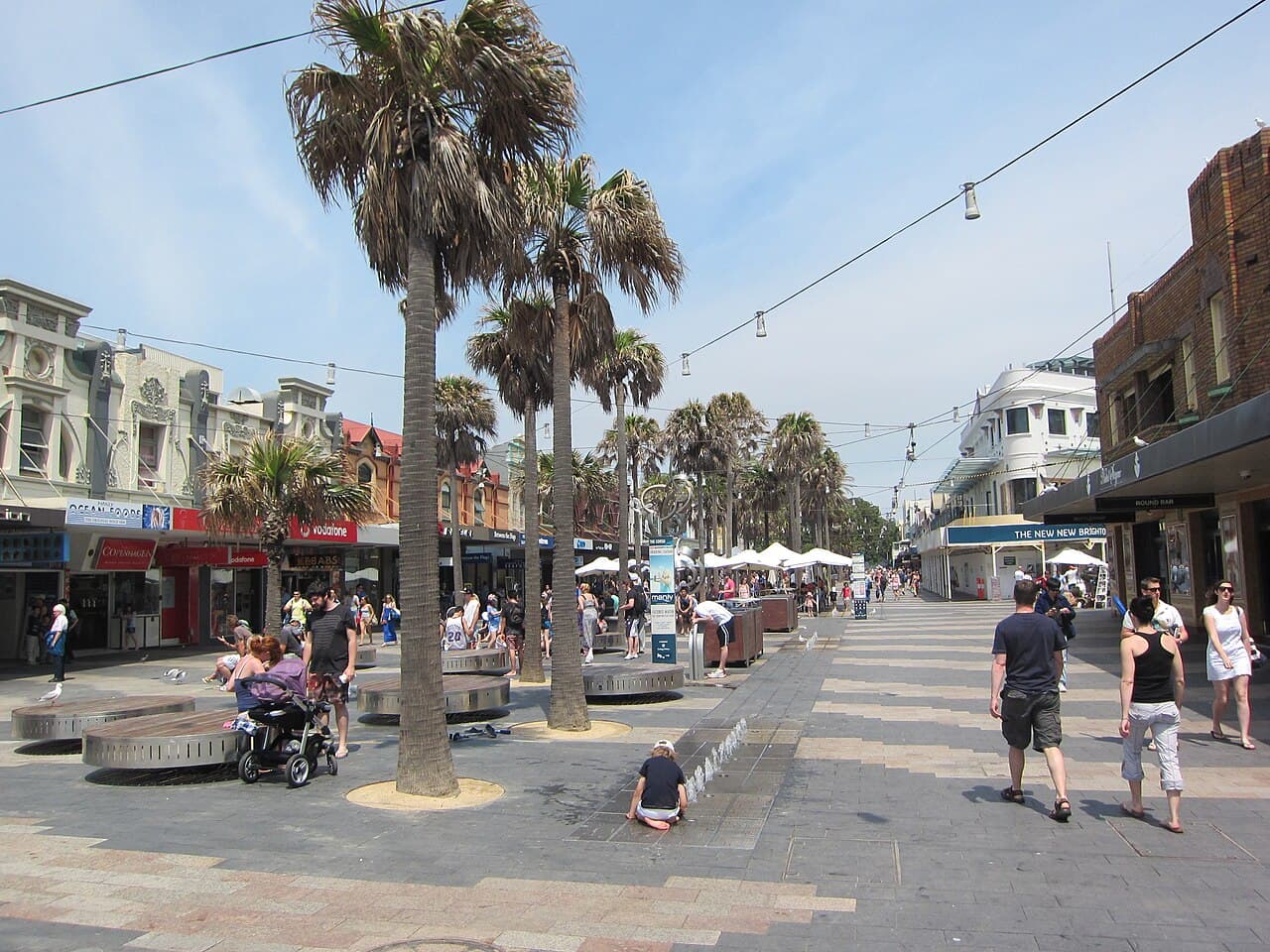
Manly is Sydney's iconic Northern Beaches hub, combining strong tourist traffic with an affluent permanent population. The Corso and beachfront strips support excellent hospitality trade, particularly in summer.

Manly reads very high foot traffic with a beach lifestyle, tourist, summer-peak, weekday volatility customer base — Tourists, backpackers, affluent beach families, surfers.

Manly has two customer segments — locals who spend all year and tourists who concentrate in summer. Operators who can serve both thrive. The ferry from the CBD brings a premium Sydney demographic every weekend.

Typical rent sits around $5,000–$14,000/month with very difficult parking — Limited parking caps drive-in formats — walk-in, delivery, and appointment models outperform big-box assumptions.

Micro-location breakdown

The Corso

What tends to work: Formats aligned with cafes and restaurants when the offer matches local spend — Manly has two customer segments — locals who spend all year and tourists who concentrate in summer.

What struggles: Categories that commonly struggle here: gyms.

Rent vs foot traffic: Indicative band $5,000–$14,000/month — confirm $/sqm and outgoings on this frontage; prime visibility positions need a margin story, not hope.

Sydney Road

What tends to work: Neighbourhood-led concepts with repeat local trade and realistic rent share of revenue.

What struggles: High walk-in dependence without a destination hook or strong signage.

Rent vs foot traffic: Indicative band $5,000–$14,000/month — confirm $/sqm and outgoings on this frontage; secondary positions need a margin story, not hope.

Pittwater Road

What tends to work: Neighbourhood-led concepts with repeat local trade and realistic rent share of revenue.

What struggles: High walk-in dependence without a destination hook or strong signage.

Rent vs foot traffic: Indicative band $5,000–$14,000/month — confirm $/sqm and outgoings on this frontage; secondary positions need a margin story, not hope.

Real business scenarios

  • If quoted rent sits inside $5,000–$14,000/month for a visible site, a cafes and restaurants concept must clear wage on weekday trade — not only weekend peaks tied to Manly Beach and Manly Ferry Wharf.
  • Operators who win here usually match beach lifestyle, tourist, summer-peak, weekday volatility expectations: average income near $90,000 supports premium only when product and hours fit the strip.
  • Population context (~15,000) is suburb-wide — run an address-level Locatalyze report before signing; postcode averages can hide a dead frontage one block off the main strip.

Competitive reality

Manly rewards differentiated offers, not generic copies of the nearest venue. Map competitors within 500m, note rating depth (proxy for tenure), and stress-test rent as a share of conservative revenue — suburb-level scores do not replace site-level due diligence.

Sharp verdict

Manly works when your format fits cafes and restaurants and rent stays inside $5,000–$14,000/month at realistic covers — pay prime-strip premiums only if weekday trade clears labour without fantasy tourism lift.

Sectional field guide

Manly is one of Sydney's highest-revenue hospitality precincts per square metre — ferry arrivals from the CBD, beach visitor volume from across the lower north shore, and a high-spending affluent local catchment combine to produce demand that few suburbs match. Demand reads 9/10, rent reads 8/10, competition reads 8/10, seasonality reads 6/10. The core trading strips are saturated. Operators arriving with a single-suburb mental model misread Manly because the suburb is best understood as a collection of distinct zones, each with its own customer profile, rent envelope, and operating rhythm.

This guide is structured as a sectional field walkthrough across the operator-relevant zones. The reason is empirical — Manly is heterogeneous in a way that suburb-level data cannot capture. The Corso, the back-block strips, the harbour-side wharf precinct, and the residential-fringe positions deliver materially different operating environments. Site selection should be zone-first, format-second, rent-third.

Shoulder-season strategy is a structural condition for Manly operators. The summer-peak revenue line is the headline, but the operating environment from May through August determines whether the business survives the year. Operators planning against summer-only revenue project an unworkable model; operators planning realistically against an 11-month operating envelope find Manly productive.

Reading Manly correctly — the zone-first principle

Manly's commercial footprint runs from the Manly Wharf ferry terminal across The Corso to the main beach, with side-streets, back-blocks, and northern-and-southern beach extensions producing the full operating geography. The customer flow is not uniform — ferry arrivals, beach visitors, local residents, and discretionary destination visitors distribute differently across the zones, and the format that fits one zone often does not fit another.

Three things vary across zones: customer profile (who walks past), foot-traffic rhythm (when they walk past), and rent envelope (what the position costs). Operators who select sites on rent alone, without segmenting these three variables by zone, encounter the recurring Manly failure pattern — paying for a Corso-aesthetic position while serving a back-block customer profile, or paying for ferry-precinct rent while building a format calibrated to local residents.

This guide walks zone by zone. The intent is to surface the structural characteristics that should drive format and position decisions.

The shoulder-season reality

Manly's seasonal revenue distribution is more pronounced than most Sydney coastal suburbs. Summer-peak (December-February) revenue can run 1.8–2.4x shoulder-season baseline; winter (June-August) revenue runs at roughly 55–65% of average. The implication is twofold. First, peak-summer revenue carries unusual weight in the annual model — under-capacity in January costs disproportionately. Second, winter cash flow management is the binding survival condition — operators without working capital buffer to clear June-August softness encounter problems regardless of summer performance.

The shoulder-season strategies that work: programming the May-September window deliberately (events, partnerships, weather-resilient formats), targeting the local resident base who do not disappear with the visitor flow, and integrating delivery and takeaway channels that absorb wet-weather days. The shoulder-season strategies that fail: assuming summer performance compounds across the year, scaling staff to summer capacity through winter, and pricing rent against summer revenue line.

Operators evaluating Manly should model the year as 4 peak months, 4 average months, and 4 soft months — and the rent envelope should be calibrated to the average, not the peak.

Discretionary visitor flow and the visitor-resident mix

Manly's visitor flow is structurally different from local-trade-anchored suburbs. Ferry arrivals deliver roughly 7,000–11,000 passengers daily through Manly Wharf, with significant variation by day of week and season. Beach visitor volume on summer weekends can clear 35,000 across the day. Discretionary destination visitors from across the lower north shore, the northern beaches, and the eastern suburbs add another flow concentrated on weekends and event days.

The visitor flow profile is price-tolerant but quality-sensitive. The customer arriving by ferry or for a day at the beach has made a deliberate destination choice, has higher discretionary capacity at the moment of arrival, and rewards quality positioning above mid-tier averaging. Operators competing on price-point against the visitor flow consistently underperform operators competing on quality-and-experience.

The local resident base is wealthy, established, and a smaller share of the total flow than first-time operators expect. Median household income clears $130,000 across the peninsula, but the resident catchment is bounded — roughly 16,000 residents in Manly proper and another 25,000 across the immediate peninsula adjacents. Operators planning local-only revenue models against the demographic strength of the resident base typically over-estimate the volume the local base alone can deliver.

Format implications across zones

The format envelope varies by zone in ways that suburb-level format guidance cannot capture. The Corso operates on a high-volume, visitor-flow, quality-tolerant rhythm where format choice should optimise throughput and brand identity. Whistler Street and the back-blocks operate on a local-resident-with-visitor-overflow rhythm where format choice should optimise concept identity and operator-led consistency. The wharf precinct operates on a tightly-bounded discretionary-visitor rhythm where format choice should optimise destination-led appeal and weather-resilient operating capacity.

Cross-format implications: a generic café format that works on Whistler Street fails on The Corso because it cannot absorb the volume rhythm; a high-volume hospitality format calibrated to The Corso fails on Whistler Street because the foot-traffic does not support the operating cost. The right format choice is zone-conditional.

Operators with multi-venue capacity should consider which zone fits the existing brand and operating identity rather than choosing on rent or aesthetic. Operators opening a first venue should match format to the zone where the catchment-flow most cleanly supports the format's operating envelope.

The competitive density read

Manly's hospitality competitive density is among the highest in Sydney. The Corso alone supports approximately 30–40 hospitality operators within a 400-metre walk; the wider Manly footprint clears 100 operators across the peninsula. Saturation is real, and new entrants face an established competitive set with strong local knowledge and operating capacity.

Three competitive characteristics matter. First, the established operators have absorbed the seasonal pattern across multiple years and have calibrated operating models to it. New entrants without seasonal-pattern experience typically miscalibrate. Second, the visitor-flow capture is partly determined by visibility and frontage; new entrants on back-block positions need a discoverability strategy that operates outside frontage-based discovery. Third, the rent envelope at primary frontages has risen to a level that requires high-volume operating models; concept formats that cannot deliver the volume struggle at primary-frontage rent.

The opportunity within the saturation: formats that under-supply at the catchment level, positions where rent-versus-flow ratio is favourable, and operators with strong brand identity that can pull customers deliberately rather than relying on incidental flow.

Zone-by-zone breakdown

The Corso — main beach strip

The pedestrian-only main spine running from Manly Wharf to the beach. The highest-foot-traffic position in the suburb, with peak summer pedestrian flow that few Sydney strips match. Customer mix is heavily visitor-skewed during peak hours; local resident share rises in the early morning and late evening windows. Rent envelope $1,400–$2,600/m² per annum across primary frontages.

Format fit: high-volume hospitality with strong brand identity, throughput capacity, and quality positioning calibrated to the discretionary visitor. Generic mid-tier formats are at saturation; differentiated quality operators with operating capacity to absorb the peak rhythm find The Corso productive. Failure mode: capacity-constrained venues that cannot capture the summer-peak window pay primary-frontage rent against shoulder-season revenue.

Sub-format implications: takeaway and quick-service formats work if the product is differentiated; sit-down restaurants need throughput capacity and turn-time discipline; cafés need the speed-of-service to clear the peak morning window. Specialty retail works for destination brands with strong identity; impulse retail struggles against the rent envelope.

Whistler Street — back-block strip

The parallel back-block strip running one block back from The Corso. Materially lower foot traffic than The Corso, but a more local-resident-anchored catchment with overflow from The Corso during peak windows. Rent envelope $800–$1,400/m² per annum — meaningfully below Corso primary but still above most Sydney inner-suburb strips.

Format fit: concept-led independent operators, neighbourhood-anchored cafés and restaurants, allied services serving the local catchment, considered specialty retail with destination-led appeal. The format calibration is operator-led, consistency-led, and concept-identity-led — not throughput-led.

Sub-format implications: local cafés with strong owner presence work well; mid-tier restaurants with concept identity work; impulse retail can work if the category is under-supplied at the catchment level. Failure mode: operators bringing Corso-equivalent ambition without recognising the lower foot-traffic rhythm pay above-resident-catchment rent against under-Corso revenue.

North Steyne — northern beach side

The beachfront strip running north from The Corso along North Steyne to Queenscliff. Customer flow is heavily beach-visitor-anchored with strong summer-peak intensity. Rent envelope $1,200–$2,000/m² depending on frontage to the beach. The seasonal swing on this strip is more pronounced than The Corso because winter beach visitor flow drops more steeply than ferry-and-mall visitor flow.

Format fit: beach-aligned hospitality with summer-peak operating capacity, ice-cream and quick-service formats during peak windows, casual dining with strong outdoor positioning. The shoulder-season strategy is binding — operators on North Steyne without a clear winter operating plan encounter problems regardless of summer performance.

Sub-format implications: beachfront cafés and casual restaurants work; alcohol-led venues require careful licence and capacity calibration; takeaway formats work seasonally but need winter complement. Failure mode: assuming summer revenue compounds across the year and signing rent commitments against the summer line.

South Steyne and Wentworth — southern beach side

The beachfront strip running south from The Corso along South Steyne with Wentworth Street running back from the beach. Slightly lower visitor intensity than North Steyne but stronger destination-restaurant identity, with several established premium dining operators. Rent envelope $1,000–$1,800/m².

Format fit: destination dining with strong concept identity, premium cafés serving both visitor and resident flow, considered specialty hospitality. The customer profile skews older and more discretionary than North Steyne; format choice should reflect.

Sub-format implications: premium restaurants work; wine bars work; quality cafés work. Failure mode: bringing North Steyne-equivalent casual formats to a strip that supports premium positioning, or vice versa.

Manly Wharf precinct

The ferry terminal precinct at the western end of The Corso. Tightly-bounded by the wharf footprint, with customer flow dominated by ferry arrivals and departures (roughly 7,000–11,000 passenger movements daily). The trade rhythm follows ferry timetables rather than typical walk-by flow. Rent envelope $1,800–$3,200/m² for the limited primary tenancies.

Format fit: high-throughput hospitality calibrated to ferry-timetable rhythm, takeaway and quick-service that captures the ferry-arrival-and-departure windows, harbourside dining for discretionary visitors. The operating envelope is unusual — the peak windows are tightly bounded and the inter-peak troughs are deeper than elsewhere.

Sub-format implications: takeaway coffee and quick-food at peak windows works; sit-down dining with harbour views works for destination-led concepts; generic chain formats struggle against the rent envelope. Failure mode: pricing against ferry passenger volume without recognising that capture rate on transient passengers is materially lower than capture rate on destination visitors.

Manly residential fringe — Sydney Road and beyond

The residential-fringe positions running west along Sydney Road and the side-streets away from the beach. Foot traffic is overwhelmingly local resident; the visitor flow is minimal. Rent envelope $600–$1,000/m² — meaningfully below the beach-and-Corso bands.

Format fit: neighbourhood-anchored cafés serving local residents, allied health and services, specialty retail serving the local affluent catchment. The format calibration is residential-anchor-led, not visitor-flow-led.

Sub-format implications: local cafés with strong owner presence work; allied health works strongly given the affluent resident base; specialty retail with online supplement works. Failure mode: operators expecting any visitor-flow contribution at all from these positions misread the residential-fringe character.

Operator Intelligence

10 dimensions — what matters most here

Scored 1–10 from an operator perspective: higher always means better. Each dimension includes the reasoning behind the score.

Foot Traffic VolumeCritical

Ferry arrivals deliver 7,000–11,000 passenger movements daily. Summer weekend beach visitor volume can clear 35,000 across the day. The Corso pedestrian strip carries peak summer flows that few Sydney strips match. Zone-specific variation is material — Whistler Street and residential fringe are materially lower.

8/10
Hospitality DensityCritical

Among the highest hospitality competitive density in Sydney. The Corso alone supports 30–40 operators within a 400-metre walk; the wider peninsula clears 100 operators. Established operators have absorbed multiple seasonal cycles and have calibrated models new entrants lack.

8/10
Retail ViabilityCritical

Strong for destination specialty retail with brand identity and premium positioning on The Corso and South Steyne. Impulse retail struggles against the rent envelope. Residential-fringe specialty retail and allied health work well at Sydney Road positions.

7/10
Demographic AlignmentImportant

Affluent local resident catchment with median household income above $130,000. Visitor and tourist overlay is price-tolerant and quality-sensitive. The dual-catchment — premium resident and discretionary visitor — supports a broad format range at premium ticket sizes.

7/10
Repeat Customer PotentialImportant

Strong local-resident repeat base for Whistler Street and residential-fringe formats. The Corso and beachfront positions carry a higher proportion of one-time visitors who do not return, making brand identity more important than loyalty for primary-frontage formats.

6/10
Entry EaseImportant

Corso prime-frontage rent at $1,800–$2,600/m² and total capitalisation requirements of $600,000–$1,200,000 for a full-service restaurant represent significant barriers. The seasonal cash-flow requirement further constrains entry. Whistler Street positions at $800–$1,400/m² are more accessible for first-venue operators.

4/10
Rent SustainabilityImportant

Primary-frontage rent is only sustainable for operators with high-volume summer-peak capture and honest winter-trough modelling. The year must be modelled as 4 peak, 4 average, and 4 soft months. Operators pricing rent against the summer line without winter capital reserves consistently encounter cash-flow failure.

4/10
Transit & AccessibilitySupporting

Manly Wharf ferry service connects to the CBD in approximately 30 minutes and is a genuine visitor-delivery mechanism. Bus routes supplement within the northern beaches. The suburb is a peninsula without rail access, which reinforces the ferry-and-car character of visitor and commuter flow.

6/10
Tourism ContributionSupporting

One of Sydney's highest tourism contributions to a suburban hospitality market. Ferry tourism from the CBD, domestic beach visitors from across Sydney, and international visitors on the ferry excursion route combine to make tourism a primary — not supplementary — revenue driver for Corso and beachfront operators.

9/10
Growth TrajectorySupporting

Manly is a mature, established precinct. The visitor economy is stable and the resident catchment is broadly unchanging. No significant development pipeline or demographic shift is expected to alter the operating environment materially across the 2026–2030 horizon.

5/10

When Manly trades

Peak and off-peak trading periods

Strong

December–February weekends

The dominant annual revenue window. Summer beach visitor volume, peak ferry arrivals, and the full discretionary-visitor flow combine. Operators must maximise capacity in this window — under-capacity in January costs disproportionately against the annual rent.

Strong

Saturday and Sunday year-round 10:00–16:00

Weekend visitor and local-resident brunch-and-lunch window. Below the summer-peak intensity but consistently the strongest weekly trade days. Operators who manage shoulder-season weekends well sustain viable revenue through the soft months.

Strong

Friday–Saturday evening 18:00–22:00

Evening dining window on South Steyne and the central Corso positions. Premium destination dining and wine-led formats trade their weekly peak across this window.

Weak

June–August (winter)

Winter runs at 55–65% of average annual revenue. Operators without working capital buffer to clear the winter trough encounter problems regardless of summer performance. This is the structural survival condition for Manly operators.

Moderate

Monday–Thursday daytime (shoulder season)

Weekday daytime trade from the local resident and work-from-home catchment sustains moderate volume for residential-fringe and Whistler Street formats. Less relevant for primary Corso and beachfront operators.

Operator fit warning

Who should not open in Manly

  • Operators without honest seasonal cash-flow modelling and working capital adequate for winter softness — the cash-flow failure mode is structural and catches operators who arrive with peak-season projections.

  • Capacity-constrained formats on Corso primary frontage — venues that cannot absorb the summer-peak window pay primary-frontage rent against shoulder-season revenue, and the model underdelivers.

  • Generic mid-tier hospitality — Manly's established competitive set includes operators who have absorbed multiple seasonal cycles; generic formats without differentiation face an incumbent advantage in visitor capture.

  • Residential-fringe operators expecting any visitor-flow contribution — positions on Sydney Road and beyond carry local-resident-only catchment and visitor flow is essentially zero.

Best business formats for Manly

Differentiated specialty hospitality on The Corso

A quality-positioned café or restaurant with throughput capacity and brand identity calibrated to the discretionary visitor flow. Format works at $1,400–$2,200/m² with summer-capacity discipline.

Concept-led independent on Whistler Street

A neighbourhood-anchored café or restaurant with strong owner presence and concept identity serving the local resident base with Corso overflow. Format works at $800–$1,400/m².

Premium destination restaurant on South Steyne

A concept-driven restaurant capturing the older affluent discretionary catchment and the destination-visitor flow. Format works at $1,400–$1,800/m² with strong wine program.

Beachfront casual hospitality on North Steyne

Summer-loaded casual format with clear winter operating plan and weather-resilient revenue complement. Format requires honest seasonal modelling.

Allied health on Sydney Road residential fringe

Physio, dental, pilates, or recovery formats serving the affluent local resident base. Side-street positions at $600–$1,000/m² fit cleanly.

Ferry-precinct takeaway and quick-service

High-throughput format calibrated to ferry-timetable rhythm with takeaway capture across peak departure and arrival windows.

Risks specific to Manly

Seasonality cash-flow failure

Winter trade runs at 55–65% of average. Operators without working capital buffer to clear May-September softness encounter problems regardless of summer performance.

Corso rent-versus-capacity mismatch

Capacity-constrained venues paying primary-frontage rent cannot capture the summer-peak window fully. The model underdelivers against the rent envelope.

Zone-format mismatch

Operators selecting sites on rent or aesthetic without segmenting by zone encounter format-flow misalignment. Whistler Street format on The Corso fails on volume; Corso format on Whistler Street fails on cost.

Local-only revenue model overestimation

The local resident catchment alone does not support strip-density format intensity. Operators modelling against local demographics without factoring visitor flow honestly understate revenue volatility.

Competitive saturation

Generic hospitality formats at mid-tier price points face an established competitive set with operating capacity and local knowledge. Differentiation is the binding entry condition.

Common mistakes

How operators get Manly wrong

Signing a Corso primary-frontage lease against summer revenue projections without winter capital

The most dangerous Manly failure pattern. Operators model the summer-peak and sign the rent, then encounter the first winter with insufficient capital to bridge the trough. The working capital requirement for a Corso restaurant — 6–9 months of operating cost coverage — is a mandatory planning input, not an afterthought.

Zone-format mismatch from selecting on rent or aesthetic rather than zone character

Bringing a Corso-scale ambition to Whistler Street fails on throughput volume. Bringing a neighbourhood-café format to The Corso fails on operating cost. The recurring failure pattern is operators who chose the position on aesthetic or rent-per-square-metre without mapping the zone's customer-flow character.

Treating the local resident base as the primary revenue driver for a Corso concept

The local catchment — 16,000 Manly residents — is premium but bounded. Operators who plan Corso primary-frontage revenue on the local base alone under-estimate the visitor share required to justify the rent. The visitor flow is not optional for Corso economics; it is load-bearing.

Underrated signals

Hidden advantages in Manly

Ferry tourism delivers a pre-qualified, price-tolerant, quality-seeking visitor who has already committed to the destination

A visitor who has taken the 30-minute Manly Ferry from the CBD has made a deliberate destination choice and arrived with higher discretionary capacity than the typical suburban strip visitor. This pre-qualified customer profile rewards quality positioning above mid-tier averaging at a rate comparable strips do not match.

Whistler Street and residential fringe positions provide lower-risk entry into the Manly catchment with workable rent

First-venue operators who want to participate in the Manly premium-resident catchment can enter at $800–$1,400/m² on Whistler Street with a local-loyalty model and seasonal learning curve more forgiving than primary Corso or beachfront positions.

Shoulder-season programming has a high multiplier on annual revenue because the base is low

A modest lift in shoulder-season trade — through events, partnerships, weather-resilient formats, or delivery integration — delivers an outsized annual revenue impact because the winter baseline is already low. Operators who invest in shoulder-season strategy outperform peers who treat winter as unrecoverable.

Rent viability bands for Manly

Indicative monthly rent envelopes for typical commercial tenancies — what each band buys, where it works, where it does not.

BandRangeWhat it buysWorks forFails for
The Corso prime frontage$1,800–$2,600/m² per annumHighest foot traffic in the suburb, visitor-flow capture, strip-identityHigh-volume differentiated hospitality, destination retail, brand-led specialtyCapacity-constrained venues, mid-tier generic formats, impulse retail
Manly Wharf precinct$1,800–$3,200/m² per annumFerry-flow capture, harbourside identity, peak-window throughput accessTakeaway and quick-service, harbourside destination diningSit-down formats without throughput capacity, generic chain formats
North Steyne and South Steyne beachfront$1,000–$2,000/m² per annumBeach-visitor flow, beachfront identity, summer-peak accessBeach-aligned casual hospitality, premium destination dining (south), seasonal formats with winter complementOperators without honest seasonal cash-flow modelling
Whistler Street and back-blocks$800–$1,400/m² per annumLocal-resident catchment with Corso overflow, concept-led identityNeighbourhood-anchored independents, concept restaurants, allied servicesVolume-dependent formats expecting Corso-equivalent flow
Sydney Road and residential fringe$600–$1,000/m² per annumLower rent against residential-only catchmentLocal cafés, allied health, neighbourhood services, specialty retail with online supplementOperators expecting any visitor-flow contribution

Suburb comparison

Manly vs nearby alternatives

Manly vs Dee Why

Manly has far more destination traffic

Dee Why has a much larger resident catchment on the northern beaches without the Manly tourism overlay. For resident-dependent formats wanting a lower rent and less seasonal exposure, Dee Why is more appropriate. Manly has far more destination traffic and tourist volume — for formats that need or can capture visitor flow, Manly is the superior market.

Manly vs Cronulla

Manly beats Cronulla on tourism volume

Cronulla is a southern beach precinct with a ferry connection and some tourism pull, but it lacks the volume and intensity of Manly's ferry tourism and beach visitor economy. Cronulla has lower rents and less seasonal extremity. For operators who want beach-lifestyle positioning with lower risk, Cronulla is viable. For operators who need or can capture high tourism volume, Manly beats Cronulla on absolute visitor count.

Decision framework

Manly's decision is zone-first, format-second, rent-third. The suburb supports a wide format range, but each format has zones that fit and zones that do not. The dominant failure pattern is operators selecting sites on rent or aesthetic without recognising the structural variation across zones.

Operators with clear format identity, honest seasonal cash-flow modelling, working capital to clear winter softness, and zone-specific format calibration find Manly productive. Operators arriving with single-suburb mental models or treating the zones as interchangeable encounter the recurring failure patterns.

How Locatalyze helps

Manly's suburb-level scoring tells you the catchment is wealthy, the visitor flow is high, and the rent is premium. It does not tell you whether the specific tenancy sits on The Corso peak-flow position, captures the Whistler Street local catchment, or falls inside a residential-fringe pocket that thins out away from the beach. Locatalyze runs the address-level analysis surfacing the actual customer profile, foot-traffic rhythm, and revenue envelope at the position you are evaluating.

Analyse a Manly address →

More questions about opening in Manly

How material is the seasonality for new operators?

Material. Summer-peak revenue can run 1.8–2.4x shoulder-season baseline; winter runs at 55–65% of average. Operators should model the year as 4 peak months, 4 average months, and 4 soft months — with working capital adequate to clear winter softness.

Is The Corso worth the primary-frontage rent?

Yes for high-volume differentiated operators with summer-capacity discipline and quality positioning. No for capacity-constrained venues, mid-tier generic formats, or operators without honest summer-peak operating plans.

How does Manly compare to Bondi Beach for a hospitality operator?

Bondi Beach has a younger, more discretionary, more visitor-loaded catchment with stronger weekend visitor flow. Manly has a more affluent local resident base, stronger ferry-precinct identity, and a more mature operating environment. Format choice should follow the catchment profile rather than the coastal comparison.

What working capital should I model for a Corso restaurant?

A full-service restaurant on The Corso typically requires $600,000–$1,200,000 total capitalisation including fit-out, with working capital adequate for 6–9 months of operating cost coverage to clear the first winter and any peak-summer operating ramp.

Which zone fits a specialty café operator opening a first venue?

Whistler Street or Sydney Road residential-fringe positions typically fit first-venue operators most cleanly. Rent envelopes are workable, the catchment supports concept-led independent operating, and the learning curve on Manly seasonality is more forgiving than primary-frontage Corso positions.

Methodology: Scores are engine-derived from five observable inputs (demand strength, rent pressure, competition density, seasonality risk, tourism dependency — each 1–10). These feed into business-type-specific weighted composites via a single scoring engine used across all markets. Scores are relative estimates calibrated across all Sydney suburbs — a score of 80 indicates materially better conditions than 65; it is not a success probability or guarantee.

Frequently Asked Decision Questions

Have a specific address in Manly?

Run a full competitor map, rent benchmark, and GO/CAUTION/NO verdict for any Manly address. Free.

Analyse your Manly address →