Locatalyze
Start Free Report
AnalyseMelbourneBrunswick
Locatalyze business location intelligence

Melbourne Suburb Intelligence

Is Brunswick Good for a Café or Restaurant?

Demand 9/10: Sydney Road creative corridor with a loyal independent retail and café culture.

GOBest fit: Café (79/100)

Location score

74
out of 100

Verdict

GO

Conditions support entry

79
Café
73
Restaurant
69
Retail

Factor Breakdown

Location factors

Demand, rent, competition, seasonality, and tourism — scored and weighted for Australian commercial operators.

9/10
Demand
4/10
Rent cost
5/10
Competition
2/10
Seasonality
4/10
Tourism dep

Business-Type Scores

How each format performs

Café / Specialty Coffee79
Full-Service Restaurant73
Independent Retail69

Scores use engine-derived weights: cafés weight demand and rent most heavily; restaurants factor tourism; retail factors tourism and demand equally.

Analyst Notes — Brunswick

What the data says about this location

1

Demand 9/10: Sydney Road creative corridor with a loyal independent retail and café culture.

2

Rent 4/10: accessible — one of the best value inner-city strips in Melbourne.

Suburb commercial location intelligence report

Brunswick: viability before you sign a lease

1. Hero insight

One-line read on what this precinct means for operators.

Brunswick commercial viability is driven by modelled demand strength (9/10), competition saturation (5/10), and commercial lease pressure (4/10) — interpret alongside your café (79/100), restaurant (73/100), and retail (69/100) lines.

2. Location intelligence snapshot

Figures below combine Locatalyze five-factor inputs with precinct editorial interpretation — always validate on-site with trade-area counts before signing a lease.

Demand strength (model)
9/10 — customer intent density for this precinct
Foot traffic intensity (modelled)
Very high — corridor-grade pedestrian throughput
Competition intensity
Moderate — room for distinct offers
Commercial rent pressure
Moderate — sustainable if throughput matches
Best-performing formats (engine)
Café 79/100 · Restaurant 73/100 · Retail 69/100 · Services proxy 74/100
New-entrant risk level
Moderate — viable entry with differentiated offer

3. Commercial demand analysis

Why people move through this precinct, how spending behaves, and how dayparts shape revenue.

Customer intent scales with the precinct’s demand factor — higher scores imply stronger pedestrian and spending throughput for aligned categories.

Dayparts and category fit still decide outcomes: match menu, roster, and logistics to the strip’s dominant movement patterns rather than suburb stereotypes.

4. Business-type performance

Engine scores plus operator rationale — commercial viability only.

Café / specialty coffee79/100

Engine café line 79/100 weights demand 9/10 and commercial rent pressure 4/10 — stronger where commuter throughput is predictable and competition isn’t purely generic.

Full-service restaurant73/100

Restaurant line 73/100 lifts when tourism 4/10 supports dinner trade and seasonality 2/10 stays manageable for roster planning.

Independent retail69/100

Retail line 69/100 responds to demand × tourism blend — wins where window visibility and category gaps align with walk-by intent.

Services / fitness (proxy)74/100

Services / fitness proxy 74/100 blends retail + hospitality signals — use for gym, salon, and appointment formats where repeat locals matter.

5. Competition & saturation analysis

Where categories crowd out entrants and where disciplined positioning still clears margin.

Moderate — room for distinct offers — saturated lanes punish undifferentiated entrants; look for cuisine, experience, or SKU whitespace backed by counts.

Substitution risk rises where neighbouring precincts offer comparable trips at lower friction — differentiation must be operational, not cosmetic.

6. Street-level intelligence

Micro-zones inside the suburb — not uniform throughput.

Primary retail/hospitality spine

Performance: Highest throughput potential

Operator note: Frontage rents highest — conversion discipline mandatory.

Secondary connectors

Performance: Moderate throughput — partnership-led discovery

Operator note: Often viable for niche formats with owned demand.

Neighbourhood pockets

Performance: Destination / appointment-led trade

Operator note: Marketing and repeat mechanics outweigh naive walk-past counts.

7. Side-by-side precinct comparison

Compare commercial viability signals across nearby scored precincts — use as directional screening before address-level diligence.

Commercial precinct comparison — Brunswick vs Richmond vs Brunswick

FactorBrunswickRichmondBrunswick
Demand strength (model)9/10See peer tableSee peer table
Commercial lease pressureModerate — sustainable if throughput matchesModerate — sustainable if throughput matchesModerate — sustainable if throughput matches
Competition saturationModerate — room for distinct offersModerate — room for distinct offersModerate — room for distinct offers
Likely winning formats (engine)Café 79 · Restaurant 73 · Retail 69Compare peer scores on hub cardsCompare peer scores on hub cards

8. Risk analysis

What breaks models after you sign.

  • Model risk: scores are relative estimates — validate with on-site counts.
  • Lease risk: incentives and fit-out timing frequently decide year-one survival.
  • Execution risk: substitution within 500m is trivial in dense corridors.

9. Actionable insight for business owners

Screening decisions — validate with address-level analysis.

  • Run address-level Locatalyze before signing — competitor radius matters more than suburb averages.
  • Lead with throughput discipline — roster and gross margin before branding.
  • Negotiate rent using comparable strips — avoid paying “story rent”.

10. Commercial FAQ library

Structured for search and AI citation — operator viability only (no residential rental advice).

Is Brunswick good for a café?

Screen using the café line (79/100) plus weekday throughput proof — the composite verdict is GO.

Is retail saturated in Melbourne?

Competition intensity is 5/10 — high saturation demands differentiation and SKU velocity.

What business works best?

Compare café (79), restaurant (73), and retail (69) lines — highest score indicates lowest-friction alignment with model weights.

Is foot traffic strong enough?

Demand strength is 9/10 — confirm hourly intent at your intended frontage.

Should I open solely based on this page?

No — this is precinct screening intelligence. Run a Locatalyze address analysis for lease benchmarking and competitor mapping.

Locatalyze scores are engine-derived from demand strength, commercial rent pressure, competition density, seasonality risk, and tourism dependency — each 1–10 — rolled into business-type lines and composite verdicts. This report is commercial location intelligence for operators, not residential market commentary.

Local insight — Brunswick

On-the-ground read for operators

Editorial notes layered on top of the scored model — same scores and benchmarks above; this section translates strip mechanics into decisions.

Local reality check

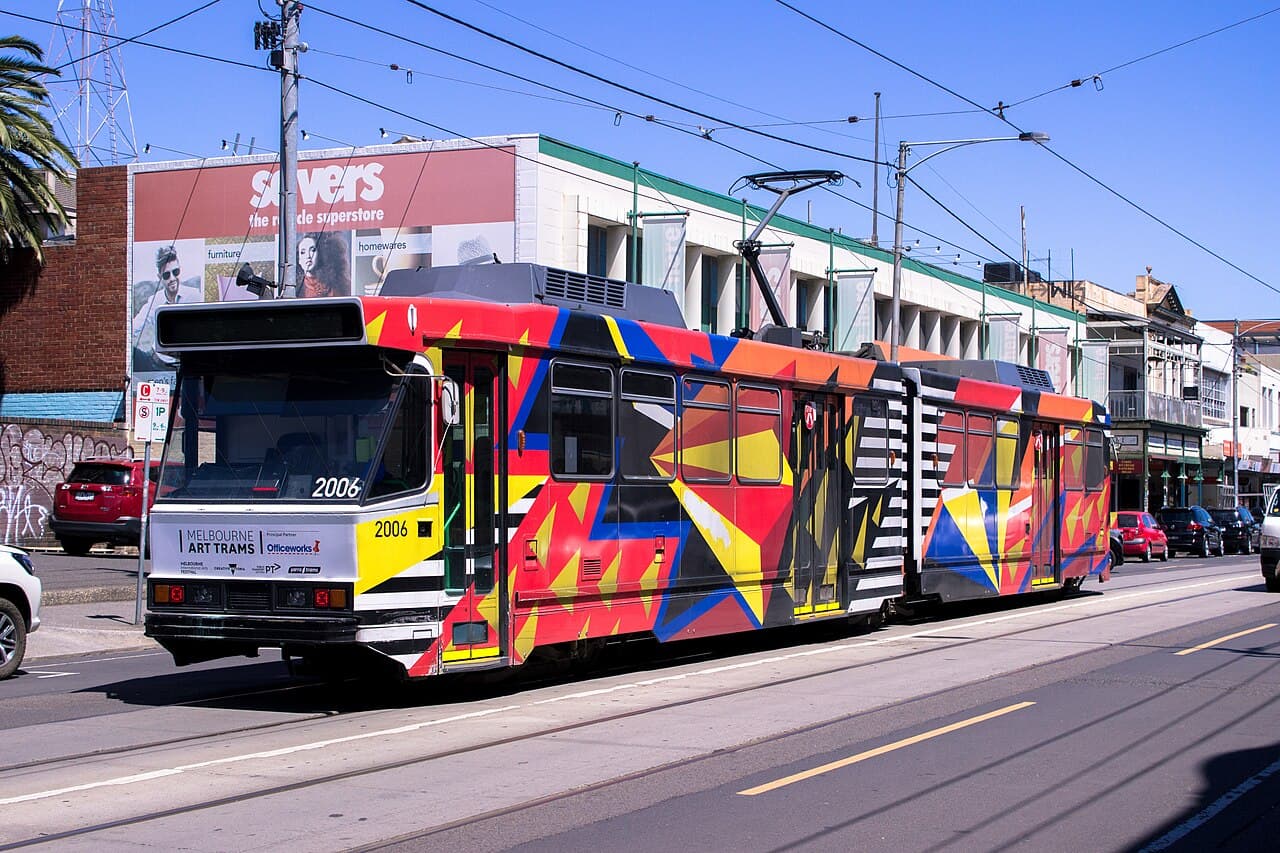
Sydney Road behaves like a tram corridor — weekday movement follows Route 19 peaks while weekends blend locals, students, and north-side visitors tracing food clusters.

Compared with Coburg three kilometres north, Brunswick asks higher rent per metre for inner-north recognition; savings walking north evaporate if you lose discovery.

Compared with Fitzroy Smith Street south, Brunswick skews slightly broader demographic mix and longer retail frontages — formats must tolerate price-sensitive locals beside premium brunch seekers.

Night trade concentrates south toward Lygon spill and established music venues — liquor licensing and residential complaints materially cap hours on some blocks.

Parking friction caps bulky retail — destination formats need click-and-collect or appointment economics.

Micro-location breakdown

Sydney Road core (Jewell to Brunswick Road)

What tends to work: Specialty food retail, fast casual with visible queues, services with repeat subscription.

What struggles: Flagship luxury expecting Chadstone dwell times.

Rent vs foot traffic: Prime tram-stop frontage prices visibility — one block lateral drops impulse counts fast; negotiate rent against metered weekday counts.

East side lanes toward Edinburgh Gardens

What tends to work: Neighbourhood venues with patio programmes, studios with appointment traffic.

What struggles: Concepts needing highway-style visibility.

Rent vs foot traffic: Lower passer-by rents — spend the delta on local partnerships or you remain invisible.

North Brunswick toward Moreland

What tends to work: Value-positioned hospitality with disciplined menus, warehouse-adjacent fitness.

What struggles: Premium fine dining expecting Fitzroy-level tickets without brand pull.

Rent vs foot traffic: Face rents drop 20–35% versus Jewell pocket but marketing spend must rise to borrow inner-north credibility.

Real business scenarios

  • If Sydney Road quotes ~$7k–$12k/month for 80–110sqm (confirm comps), throughput-led formats outperform seated-only lunch — a three-seat-deep café clears rent differently than a 60-seat diner at the same occupancy cost.
  • Retail survives when SKU velocity × margin clears lease — slow-turn homewares die when landlord lifts rent 4% while tram patronage stays flat.
  • Noise complaints can truncate liquor hours — model revenue without midnight upside before you sign.

Competitive reality

Independent hospo density is high — substitution within 500m is trivial. Competitors include Coburg operators priced slightly lower and Fitzroy venues priced slightly higher; winners differentiate on menu discipline and roster stability. Aggregators flatten Tuesday nights unless you own catering.

Sharp verdict

Brunswick rewards operators who convert tram visibility into repeat locals — pay Sydney Road rent only when Tuesday covers clear wage without borrowing weekend hype.

Competitive analysis

Brunswick's Sydney Road carries one of the most loyal independent retail and café customer bases in inner Melbourne, at rent envelopes that operators in comparable Fitzroy positions would not see. Demand sits at 9/10 against rent at 4/10 — one of the best value inner-city ratios in the country. The obvious peer is Fitzroy, the suburb directly south across Alexandra Parade, and operators evaluating Brunswick are almost always also evaluating Fitzroy. The two suburbs share a creative-precinct identity, both run independent-operator-led commercial fabrics, and both sit on the inner-north tram corridor. They are not, however, interchangeable as operating environments. This page works through the comparison directly because the differences matter more than the surface similarities suggest.

Brunswick runs from Park Street in the south to Moreland Road in the north, with Sydney Road as the dominant commercial spine and Lygon Street (the East Brunswick stretch) as the secondary corridor. The catchment combines a younger creative-class resident population in the apartment buildings and terraces, a substantial student population spilling north from RMIT and the University of Melbourne, and a discretionary visitor flow that has grown materially through 2020-2025 as the broader inner-north precinct identity has spread beyond Fitzroy. Rent envelopes ($420-$580/m² for prime Sydney Road) run roughly 25-35% below comparable Fitzroy positions despite catchment quality that has converged considerably over the past five years.

This guide compares Brunswick directly to Fitzroy because the comparison is the one operators actually run. Across four dimensions — catchment composition, rent gradient, retail-versus-hospitality balance, and weekend rhythm — the two suburbs diverge in ways that matter for format selection. The remainder of this page works through each divergence and what it means for an operator evaluating Sydney Road today.

Catchment composition: younger creative versus mature professional-creative

Brunswick's resident catchment skews materially younger than Fitzroy's. The 2025 demographic profile shows roughly 38% of residents in the 25-34 age band against Fitzroy's 32%, with the older 35-49 band running roughly 27% in Brunswick versus 34% in Fitzroy. The student population is also meaningfully higher — Brunswick carries a substantial RMIT-and-university spillover that Fitzroy lost a decade ago as gentrification priced students out of the suburb's housing stock.

The implication for format selection is that Brunswick supports earlier-career spending profiles more comfortably than Fitzroy. The customer at $14-$20 lunch price points, the $12-$18 casual dinner offering and the $4-$5 specialty coffee at scale all clear margin in Brunswick at volumes that would struggle in Fitzroy's more mature professional catchment. Operators arriving with premium dinner concepts at $90-$120 per head find Brunswick a harder establishment than Fitzroy — the customer base exists but is smaller and less concentrated than the Fitzroy equivalent.

Fitzroy by contrast carries the established creative-class professional population that has aged into peak-earning years through the 2010s. The customer dines out 4-6 nights weekly at $50-$100 per head, has deep loyalty for established operators, and supports a wider premium-dinner format range than Brunswick can sustain at the same density. New entrants targeting the established creative-professional customer find Fitzroy structurally more productive.

The catchment-composition divergence is the most important single difference for format selection. Operators selecting between Brunswick and Fitzroy on rent alone routinely commit to the wrong suburb for the format. The right read is: younger casual formats and high-volume specialty concepts work better in Brunswick; mature professional dinner formats and established premium operators work better in Fitzroy.

Rent gradient: 25-35% advantage to Brunswick across all positions

The rent gap between comparable Brunswick and Fitzroy positions has held steady through 2020-2025 at roughly 25-35%. Prime Sydney Road frontage in 2026 runs $480-$580/m² against equivalent Smith Street north positions at $650-$750/m². The Brunswick East stretch of Lygon Street runs $440-$540/m² against Fitzroy's Brunswick Street at $520-$680/m². Secondary positions on Albion Street and the Sydney Road northern stretch run $380-$460/m² against equivalent Fitzroy side-street envelopes at $480-$580/m².

The implication for operating economics is meaningful. A 100m² café tenancy on prime Sydney Road carries roughly $48,000-$58,000 annual rent against $65,000-$75,000 in equivalent Fitzroy positions — a $15,000-$25,000 annual difference that significantly affects unit economics, particularly for independent operators running thin margin or in establishment phase. For a 200m² restaurant footprint the gap widens to $30,000-$50,000 annually.

The rent gap has not closed despite the catchment quality convergence and the visitor-flow growth in Brunswick through 2020-2025. The reasons are partly structural — Brunswick has a longer commercial spine and a deeper supply of leasable tenancies, which moderates rent pressure even with strong demand — and partly precinct-identity lag, with Fitzroy still carrying a national reputation premium that has not yet transferred to Brunswick at equivalent intensity. Whether the gap persists or narrows through 2027-2029 is the most important rent-cycle question for both suburbs.

For operators today, the rent advantage means Brunswick supports format types that would be marginal at Fitzroy rent envelopes. Specialty cafés running on tight margin, independent retail with low-volume sell-through, allied services with weekday-only trade, and evening-led bars without strong weekend pull all clear viable economics in Brunswick that would struggle in Fitzroy.

Retail-versus-hospitality balance: Brunswick retail-deeper, Fitzroy hospitality-deeper

Sydney Road carries a meaningfully deeper independent retail mix than Fitzroy. The strip's commercial fabric runs fashion (independent and second-hand), specialty food (Middle Eastern, Italian, North African, Vietnamese), homewares and design, books, records, and bridal — a category breadth that Fitzroy's commercial mix does not match. Hospitality is present but operates alongside retail rather than dominating the fabric the way it does on Smith Street.

Fitzroy by contrast has shifted decisively toward hospitality dominance through the 2010s, with Smith Street in particular running roughly 60-70% hospitality tenancies on the prime stretches. The retail that remains in Fitzroy is concentrated on Brunswick Street and Gertrude Street, with a curated specialty mix at premium price points rather than the broad-category independent retail that defines Sydney Road.

The implication for retail operators is that Brunswick is structurally the stronger suburb for new independent retail entrants. The strip carries the customer expectation of browsing, the visitor flow includes deliberate retail-led visits that Fitzroy has largely lost, and the rent envelope supports the slower sell-through that independent retail requires. Operators arriving with retail concepts to Fitzroy face a customer base that has stopped expecting retail discovery on Smith Street.

The implication for hospitality operators is the inverse. Fitzroy carries the deeper hospitality identity, the customer expectation of dining destination, and the operator network that supports cross-trade and concept refinement. Brunswick supports hospitality strongly but does not carry the same depth of established hospitality competition, peer support and customer dining habit. New restaurant entrants find Fitzroy a more mature operating environment; new café entrants find both suburbs productive at different price points.

Weekend rhythm: Brunswick steady, Fitzroy peak-heavy

Brunswick's weekend rhythm runs flatter than Fitzroy's. Saturday foot traffic on Sydney Road sits roughly 25-35% above a typical weekday, with Sunday running 15-25% above. The pattern reflects the resident-and-student catchment dominance — the customer base is using the strip for weekly routine spending rather than treating it as a weekend destination.

Fitzroy by contrast runs a more peak-heavy weekend pattern. Saturday foot traffic on Smith Street sits roughly 50-70% above weekday levels, with Friday-evening trade running at premium levels and Sunday brunch holding strong volume. The pattern reflects the precinct's national-destination identity — discretionary visitors from across Melbourne and increasingly from interstate treat Fitzroy as a deliberate visit, concentrating trade across the Friday-Sunday window.

The implication for operating-model design is meaningful. Brunswick operators can build viable models around steady weekday-and-weekend rhythm without depending on a sharp weekend spike. Fitzroy operators in many formats need the weekend concentration to clear the rent envelope, and capacity-constrained venues at Fitzroy rent on Smith Street routinely under-deliver against the weekend peak that justifies the position.

For first-time operators with limited capitalisation or limited tolerance for cash-flow volatility, Brunswick's flatter rhythm is structurally easier to operate against. For established operators with capacity and operating discipline, Fitzroy's peak-heavy rhythm produces stronger total revenue at a comparable footprint. The choice depends on operating maturity and cash-flow tolerance rather than absolute foot-traffic count.

What this means for format selection

Café formats work strongly in both suburbs but at different price points. Brunswick supports high-volume specialty coffee at $4-$5 cup prices and casual food at $14-$20 plates with strong margin clearance against the rent envelope. Fitzroy supports premium specialty coffee at $5-$6.50 cups and quality café food at $20-$30 plates with the established customer base willing to pay the premium. Operators should select on price-point fit, not on rent advantage alone.

Independent retail operators should weight Brunswick decisively higher than Fitzroy. The category depth, the customer browsing expectation and the rent envelope all favour Brunswick for new retail entrants. The exception is curated specialty retail at premium price points, which suits Gertrude Street or the Brunswick Street southern end better than Sydney Road.

Restaurant operators in the casual and mid-tier segments find both suburbs productive, with Brunswick stronger for $20-$50 per head formats and Fitzroy stronger for $50-$100 per head formats. Premium dinner formats at $90-$140 per head should default to Fitzroy or Gertrude Street rather than Sydney Road.

Evening-led wine bars and small-plates formats work in both suburbs. Brunswick supports the format at lower rent with a flatter weekly rhythm; Fitzroy supports the format with a stronger weekend concentration and deeper established customer base. First-time operators should weight Brunswick; established operators with strong product should weight Smith Street north.

Where Brunswick goes through 2030

Two trajectories shape the next four years. The first is the continued spread of the inner-north creative-precinct identity. Brunswick has been the primary beneficiary of Fitzroy's growing national reputation, capturing discretionary visitor flow that increasingly treats the inner-north as a multi-suburb destination rather than a Fitzroy-only itinerary. The trajectory through 2028 is for continued growth in Brunswick visitor flow, with the rent envelope likely tightening modestly on prime Sydney Road positions.

The second is the continuing residential intensification of Brunswick itself. New apartment developments through 2024-2027 are adding meaningful resident density along Sydney Road and the Brunswick East corridor. The implication is gradually stronger weekday daytime and evening trade, supporting format expansion in the everyday-spending tier rather than the premium destination tier.

The net effect for the rent gap with Fitzroy is uncertain. Stronger visitor flow and deeper resident density both support rent pressure, but Brunswick's longer commercial spine and broader leasable supply will moderate the pressure compared to the Fitzroy equivalent. The most likely outcome is a slight narrowing of the gap on prime Sydney Road positions through 2028, with secondary positions and the Lygon Street stretch holding the current envelope.

Zone-by-zone breakdown

Sydney Road prime (Brunswick Road to Albion Street)

The central stretch of the strip carrying the strongest retail-and-hospitality density and the deepest browse-led foot traffic. Rent $480-$580/m². Best for independent retail with strong product, specialty cafés, mid-tier dining and evening-led wine bars.

Sydney Road north (Albion Street to Moreland Road)

The quieter northern stretch with a more local-resident rhythm and lighter discretionary visitor flow. Rent $400-$500/m². Best for everyday-trade cafés, neighbourhood dining, allied services and specialty retail with patient establishment.

Lygon Street East Brunswick

The secondary corridor carrying a more food-led identity and a stronger evening-dining concentration than Sydney Road. Rent $440-$540/m². Best for restaurants, evening wine bars, specialty food retail and operators with culinary identity.

Albion Street and side-streets

Lower-rent positions immediately off the main spine carrying hyper-local catchment. Rent $360-$460/m². Best for destination operators with strong brand, allied services, evening-led venues serving the local catchment and specialty retail with established customer base.

Operator Intelligence

10 dimensions — what matters most here

Scored 1–10 from an operator perspective: higher always means better. Each dimension includes the reasoning behind the score.

Foot TrafficCritical

Sydney Road carries one of Melbourne's highest independent-strip foot traffic counts; deep browse-led pedestrian flow with strong resident and growing discretionary visitor overlay — consistently above Northcote and materially above Coburg at comparable positions

8/10
Hospitality DemandCritical

One of the deepest independent hospitality cultures in Melbourne; Sydney Road and Lygon Street East Brunswick together carry a density of quality cafés, restaurants and bars that few inner-city strips match at comparable rent — the demand base is broad, loyal and high-frequency

9/10
Retail ViabilityImportant

The strongest independent retail strip in Melbourne's inner north; fashion, records, homewares, books, bridal, specialty food — the category breadth and the browse-led customer expectation make Brunswick structurally the best inner-north suburb for new independent retail

7/10
Demographic Spending PowerImportant

Younger creative-class and student demographic with moderate-to-good household incomes; high hospitality frequency at $4-$5 coffee and $15-$25 food price points — volume-friendly spending profile rather than high-ticket discretionary

7/10
Repeat Customer PotentialCritical

Resident and student base generates strong weekly repeat behaviour; the Sydney Road café and hospitality operators see among the highest visit-frequency rates of any Melbourne inner-north precinct — the catchment is habitually present

7/10
Entry EaseCritical

High competition density across hospitality and retail categories; the number of quality independent operators on Sydney Road creates a very demanding differentiation requirement — the lowest entry ease of the inner-north suburbs

3/10
Rent SustainabilityImportant

25-35% below Fitzroy equivalents despite catchment quality convergence; the rent gap is structural and well-established, but prime Sydney Road frontage is not cheap in absolute terms and operators need volume to clear the envelope

5/10
Accessibility & ParkingImportant

Sydney Road tram, multiple train station proximity, cycling infrastructure, and good cross-street parking access; among the most transit-accessible suburban strips in Melbourne

8/10
Tourism UpsideSupporting

Growing inner-north destination identity driving interstate and international visitor flow; the precinct is increasingly recognised as part of Melbourne's independent-operator hospitality reputation

5/10
Growth OutlookImportant

Continued residential intensification and expansion of the inner-north destination identity support gradual rent tightening and customer flow growth; the 2027-2030 trajectory is positive but the prime positions are already well-priced

6/10

When Brunswick trades

Peak and off-peak trading periods

Strong

Saturday all-day

The strongest individual trading day; retail, café and casual dining all at peak — the inner-north discretionary visitor flow maximises on Saturday

Strong

Sunday brunch

Sydney Road and Lygon Street East Brunswick are among Melbourne's busiest Sunday brunch precincts; volume is high and customer spend is strong

Strong

Weekday morning

WFH and student morning coffee culture drives very consistent weekday morning trade — the specialty café format performs exceptionally well across the full weekday morning band

Strong

Friday evening

Wine bars, small restaurants and casual dining see strong Friday evening trade; the creative-class demographic eats out regularly and Friday is a reliable peak

Moderate

Weekday lunch

WFH and student lunch trade is real but the catchment is less office-worker-dense than CBD-adjacent strips; lunch volume is solid rather than intense

Moderate

Thursday evening

Growing evening culture on Sydney Road; not yet at Friday-Saturday intensity but strengthening with residential density increase

Operator fit warning

Who should not open in Brunswick

  • Premium-dinner format operators expecting $90-$140 per head dinner volume — the Brunswick catchment exists at this price point but is too thin and dispersed to sustain a restaurant that requires it for the rent envelope

  • Generic chain or franchise formats — the Sydney Road customer base has one of the strongest independent-operator preferences of any Melbourne precinct and actively avoids generic chain formats

  • Operators arriving without sharp concept differentiation — the competition density means that average-quality operators are simply not visible to a catchment spoiled for excellent independent alternatives

Best business formats for Brunswick

High-volume specialty café on Sydney Road prime

A daytime-loaded café running specialty coffee at $4-$5 cup prices and casual food at $14-$20 plates. Format clears margin against the favourable rent envelope at volume the catchment supports.

Independent retail with strong product on Sydney Road central

Fashion, design, specialty food or bridal retail capturing the deep browse-led foot traffic and the discretionary inner-north visitor flow. Brunswick is structurally stronger for new independent retail than Fitzroy.

Evening wine bar on Lygon Street East Brunswick

Evening-led format absorbing the food-led Lygon Street rhythm and the resident-and-student catchment. Format works at sub-Fitzroy rent with comparable customer quality.

Mid-tier restaurant at $40-$70 per head price point

A casual-dining restaurant calibrated to the Brunswick spending profile. The price-point band is structurally underrated against Fitzroy premium-dinner saturation.

Allied services in side-street tenancy

Wellness, allied health, specialty services capturing the strong local catchment relevance. Format works at the lower rent envelope where hospitality competition is thinner.

Specialty food or migrant-cuisine retail

Middle Eastern, North African, Italian, Vietnamese or other specialty food retail participating in the established Sydney Road cuisine identity. Format works for category specialists with strong product.

Risks specific to Brunswick

Premium-dinner format mismatch against catchment spending

Operators arriving with $90-$140 per head dinner concepts find the Brunswick catchment supports lower volume at the price point than Fitzroy. Premium-dinner formats should default to Smith Street north or Gertrude Street.

Sydney Road tram and traffic constraint

The Sydney Road traffic environment — narrow lanes shared with the tram line, limited customer parking, restricted loading — affects some retail and hospitality formats meaningfully. Operators should verify the operational fit before committing.

Discretionary visitor flow still developing

The inner-north visitor identity has grown through 2020-2025 but Brunswick remains less recognised than Fitzroy as a discretionary destination. Operators relying on visitor flow rather than resident-and-student catchment should plan for slower establishment.

Rent pressure on prime positions through 2027-2029

The rent gap with Fitzroy may narrow modestly on prime Sydney Road frontage. Operators signing at the top of the current envelope should model the next cycle rather than assume the current gap persists.

Common mistakes

How operators get Brunswick wrong

Choosing Brunswick over Fitzroy on rent alone

The 25-35% rent advantage is real but the catchment composition is genuinely different. Fitzroy supports premium-dinner formats, mature professional customer spending and higher per-head averages. Brunswick supports volume specialty cafés, mid-tier dining and independent retail. Operators who select Brunswick because it's cheaper for a format calibrated to the Fitzroy customer typically find the economics disappoint.

Underestimating the tram and traffic operational constraint

Sydney Road's narrow-lane tram environment creates specific operational challenges — loading access, customer parking proximity, delivery windows — that operators from wider-street suburban strips routinely under-plan for. Verify the specific operational requirements at the position before committing.

Underweighting the competition density in the differentiation requirement

Brunswick's quality operator density means that the concept quality bar is genuinely high. Operators who open with a competent but undifferentiated café or restaurant find that the catchment has 8-12 excellent alternatives within 400m and does not shift spend toward the new entrant without a compelling reason.

Underrated signals

Hidden advantages in Brunswick

The deepest independent retail catchment in inner Melbourne

Sydney Road's browse-led customer expectation and the established independent retail culture means that new independent retail operators find a customer base already primed for retail discovery. The customer who walks Sydney Road expects to find new independent retailers and is genuinely predisposed to enter and spend. This dynamic is not replicated on most Melbourne strips where retail has been displaced by hospitality.

The structural rent advantage over Fitzroy at converging catchment quality

As the inner-north destination identity has spread to include Brunswick in the discretionary visitor mental map, the catchment quality gap with Fitzroy has narrowed. The rent gap has not narrowed at the same pace. In 2026, operators can access near-Fitzroy catchment quality at 25-35% lower rent — a structural advantage that is well-documented but still under-exploited by operators who default to Fitzroy.

Rent viability bands for Brunswick

Indicative monthly rent envelopes for typical commercial tenancies — what each band buys, where it works, where it does not.

BandRangeWhat it buysWorks forFails for
Sydney Road prime frontage$520–$580/m² per annumHighest browse-led foot traffic, deepest retail-and-hospitality density, established strip identityIndependent retail with strong product, specialty cafés, mid-tier dining, evening wine barsPremium-dinner formats, volume-discount concepts, undifferentiated chain-style operators
Sydney Road secondary frontage$420–$520/m² per annumSpine adjacency at modest visibility step-down with steady catchment accessEveryday cafés, mid-tier dining, brand-led specialty retail, allied servicesOperators expecting prime-frontage walk-in volume at this position
Sydney Road north$400–$500/m² per annumQuieter local-resident rhythm with lighter discretionary visitor flowNeighbourhood cafés, casual dining, allied services, specialty retail with patient establishmentDestination concepts expecting Sydney Road central visitor pull
Lygon Street East Brunswick$440–$540/m² per annumFood-led corridor identity, stronger evening-dining concentration than Sydney RoadRestaurants, evening wine bars, specialty food retail, culinary-identity operatorsDaytime-only retail formats, operators expecting Sydney Road browse-led foot traffic
Albion Street and side-streets$360–$460/m² per annumLower rent at the cost of strip-spine visibilityDestination operators with strong brand, allied services, evening venues serving local catchmentWalk-in retail expecting Sydney Road visibility

Suburb comparison

Brunswick vs nearby alternatives

Brunswick vs Northcote

Context-dependent: competition density versus visitor flow trade-off

Northcote's High Street is at a comparable commercial stage to Brunswick with a slightly more established and slightly older resident demographic. Northcote has lower competition density than Brunswick in most hospitality and retail categories; Brunswick has higher foot traffic and stronger visitor flow. First-time operators who cannot differentiate sufficiently to break into Brunswick often find Northcote a more forgiving entry environment.

Brunswick vs Coburg

Prefer this: Brunswick for established operators; Coburg for operators unable to break into Brunswick

Coburg's Sydney Road extension is at an earlier commercial stage with materially lower rents and lower competition density than Brunswick. For operators who cannot differentiate sufficiently to clear Brunswick's competition density, Coburg offers a genuine alternative entry point with comparable community character at lower cost and lower risk. Recommended for operators priced out of or unable to differentiate within Brunswick.

Decision framework

Brunswick's operating decision is format-and-catchment fit against the structural rent advantage relative to Fitzroy. The precinct supports strong independent retail, high-volume specialty cafés, mid-tier dining and evening wine bars at 25-35% lower rent than comparable Fitzroy positions, but the catchment spending profile and the weekly rhythm differ meaningfully. The dominant failure pattern is operators selecting Brunswick on rent alone without recognising the catchment-composition divergence from Fitzroy.

Operators with format fit for younger-creative-and-student spending, high-volume specialty positioning, or independent retail with strong product find Brunswick structurally productive. Operators arriving with premium-dinner concepts or volume-discount chain formats encounter a precinct that does not support the model at the rent envelope despite the apparent rent advantage.

How Locatalyze helps

Brunswick's suburb-level scoring tells you the precinct carries strong demand, favourable rent ratios and a deep independent-operator commercial fabric. It does not tell you whether the specific tenancy sits on the Sydney Road prime central stretch, the quieter northern Sydney Road end, the Lygon Street East Brunswick food corridor, or a side-street position with hyper-local catchment. Locatalyze runs the address-level analysis surfacing the actual customer profile, visitor-flow exposure and volume envelope at the position you are evaluating.

Analyse a Brunswick address →

More questions about opening in Brunswick

Is Brunswick genuinely cheaper than Fitzroy at comparable catchment quality?

Yes. Prime Sydney Road frontage in 2026 runs roughly 25-35% below equivalent Smith Street north positions, and the gap has held steady through 2020-2025 despite catchment quality convergence. The advantage is structural rather than transient.

Should I choose Brunswick over Fitzroy for an independent retail concept?

For most independent retail categories, yes. Sydney Road carries deeper retail density, a stronger browse-led foot traffic, a customer browsing expectation that Fitzroy has largely lost, and rent envelopes that better support independent retail sell-through. The exception is curated specialty retail at premium price points, which suits Gertrude Street or Brunswick Street southern end.

Will the rent gap between Brunswick and Fitzroy close?

Most likely it will narrow modestly on prime positions through 2027-2029 as the inner-north visitor identity continues to extend across multiple suburbs. The structural advantage — longer commercial spine, deeper leasable supply — will moderate the pressure. Operators signing at the top of the current envelope should model the next cycle rather than assume the gap persists in full.

What is the realistic establishment timeline for a new Brunswick restaurant?

Most new restaurant operators report 8-14 months to reach steady-state weekly revenue. The catchment is more local-and-student-led than Fitzroy, which means the customer is closer geographically but takes longer to establish weekly habits than the Fitzroy creative-class professional cohort.

How does the Lygon Street East Brunswick stretch compare to Sydney Road?

Lygon Street East Brunswick carries a more food-led identity and a stronger evening-dining concentration. Sydney Road carries the deeper retail mix and a steadier daytime browse-led foot traffic. Restaurant and bar operators often find Lygon Street East Brunswick the better fit; retail operators find Sydney Road structurally stronger.

Have a specific address in Brunswick?

Run a full competitor map, rent benchmark, and GO/CAUTION/NO verdict for any Brunswick address. Free.

Analyse your Brunswick address →

Other Melbourne suburbs to consider

← Back to Melbourne overview