Murarrie insights are suburb-level. Your free score checks a specific address — competitors, rent pressure, and a Proceed / Verify / Avoid recommendation.
Evidence on this page: Locatalyze engine score (five factors, same thresholds as every city). No competitor snapshot is cached for Murarrie, so venue names and counts are not shown. A free address check samples nearby competition for the exact site.
Operator's briefing
Murarrie is an affluent, younger, professional suburb in Brisbane's inner-east about 7km from the CBD — a high-income, well-connected base of 4,775 (median age 35; household income $2,404/week, well above the metropolitan median) on the Cleveland rail line, near Cannon Hill's retail and the Brisbane River parklands. The composite lands at 61/100 with a VERIFY verdict; a café rates strongest (café 65/100, restaurant 60/100). This briefing sets out the catchment and the format that fits.
Murarrie's character is affluent, younger, professional and inner-east. The 2021 Census records 4,775 residents with a median household income of $2,404 a week — well above the Greater Brisbane $1,849 — a personal income of $1,112, a median age of 35 (younger), 63.2% owner-occupancy (35.0% renting) and 74.5% family households, a comfortable, well-connected professional-and-young-family community. It is a high-income, professional market on the inner-east rail-and-river corridor.
Murarrie's demand engine is the affluent professional base, well-connected by the Cleveland rail line and the Gateway, near Cannon Hill's retail and the river parklands — but its own commercial footprint is modest. The Murarrie and Cannon Hill stations give a strong commuter spine; the adjacent Cannon Hill centres (Cannon Central and the big-format retail) carry most of the everyday spend; and the Colmslie riverside and reserves add a parkland layer. The constraint is the small resident base and the limited local commercial — much of the trade leaks to Cannon Hill. Read this briefing, then position on the station-and-local-pocket desire-lines where the professional trade converges.
Murarrie's numbers describe an affluent, younger, professional inner-east suburb. The household income ($2,404/week) sits well above the Greater Brisbane median, the median age (35) is younger, owner-occupancy is 63.2% (35.0% renting) and 74.5% are family households across a small base of 4,775 — a comfortable, well-connected professional-and-young-family community, strong in per-head spend and quality-conscious.
The demand engine is the affluent professional base on the Cleveland-line commuter spine, near Cannon Hill's retail and the river parklands — but the local commercial footprint is modest and much everyday spend leaks to Cannon Hill. The operator implication is a good casual eatery or a quality café at the station or in an underserved pocket, pitched quality-and-convenience and banking the commuter-and-resident routine the big centres miss.
Figure 1
Murarrie's affluent professional base
Murarrie — household income$2,404
Well above the metropolitan median — affluent.
Greater Brisbane — household income$1,849
The metropolitan benchmark.
Resident base4,775
A small inner-east suburb.
Source: ABS Census 2021 — Murarrie (Qld) [1] and Greater Brisbane [2]. A small but high-income, younger professional base well above the metropolitan income median — a quality-and-convenience inner-east market on the rail spine, with spend leaking to Cannon Hill.
An affluent younger professional base
Murarrie's residents are an affluent, younger, professional base. The 2021 Census records 4,775 residents with a median household income of $2,404 a week — well above the metropolitan median — a personal income of $1,112, a median age of 35, 63.2% owner-occupancy (35.0% renting) and 74.5% family households. This is a comfortable, well-connected professional-and-young-family community — strong in per-head spend, quality-conscious and time-poor, the kind of base that rewards a good offer.
For an operator, the implication is a quality-and-convenience professional offer. A quality café, a good casual eatery or a quality-and-convenience food offer fits the affluent professional base; the strong income and the commuter spine carry a quality ticket. A purely budget concept undersells the income; a destination-scale one overshoots the small base. Pitch quality-and-convenience to the professional inner-east base.
The rail spine, Cannon Hill and the river
Murarrie's footfall is commuter-and-leakage. The Murarrie and Cannon Hill stations on the Cleveland line give a strong commuter spine; the adjacent Cannon Hill centres (Cannon Central and the big-format retail) carry most of the everyday spend; and the Colmslie riverside and reserves add a parkland-and-weekend layer. The strong connectivity is a double edge — it brings commuters past, but it also leaks much of the everyday spend to the larger Cannon Hill centres next door.
For an operator, the implication is to bank the station-and-local-pocket professional trade rather than compete head-on with Cannon Hill. A quality café or casual eatery at the station or in a local pocket banks the commuter-and-resident routine the big centres do not serve well; a riverside-or-reserve-adjacent position catches the parkland weekend trade. Position on the station-and-pocket desire-lines, not against Cannon Hill.
Rent, format and the inner-east economics
That cost base needs a quality operator that banks the professional base and the commuter spine and finds the pocket Cannon Hill underserves; it is unforgiving of a budget format that undersells the income or a poorly-positioned one that competes head-on with the big centres (competition 5/10).
What does not fit: a budget concept that undersells the strong income; a destination-scale one that overshoots the small base; or a me-too offer that competes head-on with Cannon Hill's centres.
Zone-by-zone breakdown
Murarrie & Cannon Hill stations
The Cleveland-line commuter spine. Works for: quality cafés and grab-and-go on the commuter flow. Fails for: destination formats needing a resident village heart.
Local residential pockets
Works for: quality local cafés and casual eateries banking the resident routine. Fails for: me-too offers competing with the big centres.
Colmslie riverside & reserves
The Brisbane River parklands and reserves — the weekend-and-parkland layer. Works for: quality cafés catching the parkland trade. Fails for: formats with no weekend or parkland read.
Operator Intelligence
10 dimensions — what matters most here
Scored 1–10 from an operator perspective: higher always means better. Each dimension includes the reasoning behind the score.
Demand (affluent professional base)Critical
A high-income, younger professional base (household income $2,404/week, well above the metropolitan median; 74.5% family households) on a strong commuter spine.
7/10
Rail & commuter connectivityCritical
The Murarrie and Cannon Hill stations on the Cleveland line give a strong commuter spine.
7/10
Spend retention (vs Cannon Hill)Important
A modest local commercial footprint — much everyday spend leaks to the adjacent Cannon Hill centres.
4/10
Cost base (rent)Supporting
Solid inner-east rents (6/10, $450/week) — needs a quality operator to carry.
6/10
Seasonal stabilitySupporting
A settled professional base trades steadily year-round with only a light parkland weekend layer (seasonality 2).
8/10
When Murarrie trades
Peak and off-peak trading periods
Strong
Weekday commuter peaks (06:30–09:00, 16:30–18:30)
The Cleveland-line commuter flow at the stations — the spine.
Moderate
Weekday lunch
The professional-and-resident daytime trade.
Moderate
Weekend mornings & parkland
The professional weekend brunch and the Colmslie riverside trade.
Weak
Evening dining
A modest evening trade — much leaks to Cannon Hill; model conservatively.
Operator fit warning
Who should not open in Murarrie
✕
Budget concepts that undersell the strong professional income.
✕
Destination-scale concepts that overshoot the small 4,775 base.
Best business formats for Murarrie
A quality station-and-pocket café
The strongest-fitting format (café 65/100). The Cleveland-line commuter flow and the affluent resident pockets draw a quality-and-convenience crowd; a quality café banks the commuter-and-resident routine the big centres miss.
Quality-and-convenience professional services
An affluent, younger, professional base supports quality-and-convenience health, wellbeing, food-and-grocery and lifestyle retail and services trading on the strong income and the commuter spine.
Risks specific to Murarrie
A small resident base
At 4,775 residents, Murarrie is a small suburb. A destination-scale concept overshoots the base; the fit is a right-sized quality offer banking the resident-and-commuter pocket, not a large-format destination.
A quality, not budget, market
At a median household income of $2,404/week — well above the metropolitan median — Murarrie rewards a quality offer and penalises a budget one that undersells the income. The fit is quality-and-convenience, pitched to the professional base.
Rent viability bands for Murarrie
Only figures that remain after the unsupported-claim check are shown. A blank table means this page is not quoting rent.
Census baseline: ABS Census 2021 (suburb / SA2-aligned), with Greater Brisbane benchmarksValidate against the exact lease before signing
Band
Range
What it buys
Works for
Fails for
Station & commuter prime
Indicative — inner-east tier
A position at the Murarrie or Cannon Hill station on the commuter spine.
Quality cafés and grab-and-go on the commuter flow.
Destination formats needing a village heart.
Riverside & reserve-adjacent
Indicative — parkland tier
A position near the Colmslie riverside and reserves.
Quality cafés catching the parkland weekend trade.
Formats with no weekend or parkland read.
Decision framework
Is your offer quality-and-convenience priced for an affluent professional base rather than budget?
Are you positioned at the station or in a pocket Cannon Hill underserves, not head-on against the big centres?
Does your model bank the commuter-and-resident routine plus the parkland weekend layer?
Is your format right-sized for a small (4,775) but high-income base rather than destination-scale?
Have you modelled rent on inner-east comps and the break-even on a quality, commuter-weighted trade?
Murarrie is an affluent, younger, professional inner-east suburb on the Cleveland rail line near Cannon Hill's retail and the river parklands — but its own commercial footprint is modest and much spend leaks to Cannon Hill. Locatalyze runs an address-level analysis on the exact tenancy: the real commuter flow at the stations, the underserved local pockets, the competing Cannon Hill set, indicative inner-east rent against your format, and a break-even built on a quality, commuter-weighted professional trade. Before you sign in Murarrie, find the pocket the big centres miss.
Murarrie insights are suburb-level. Your free score checks a specific address — competitors, rent pressure, and a Proceed / Verify / Avoid recommendation.
More questions about opening in Murarrie
Who is the Murarrie customer?
An affluent, younger, professional base of 4,775 (median age 35, household income $2,404/week, 63.2% owner-occupied, 74.5% family households) on the Cleveland-line commuter spine, plus the Colmslie riverside parkland weekend crowd. A high-income, quality-conscious, time-poor professional-and-young-family market.
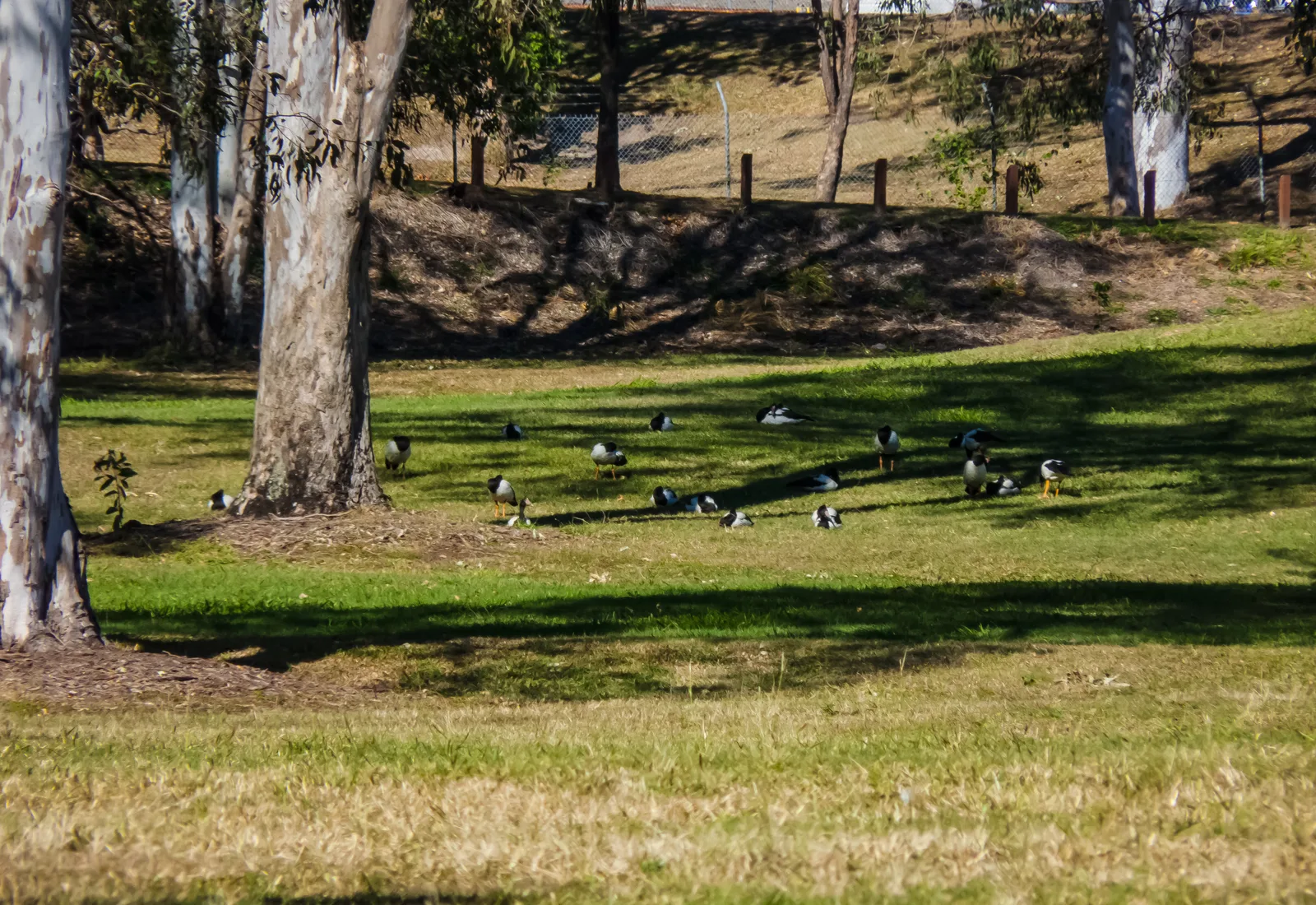
Data provenance & limitations. Demographic figures are from the ABS 2021 Census for the Murarrie (Qld) area, with Greater Brisbane (3GBRI) as benchmark; the 2021 Census is the most recent available. Owner-occupied share (63.2%) combines owned-outright (20.2%) and owned-with-mortgage (43.0%) from the published tenure data. The Cleveland-line stations, the proximity to Cannon Hill's centres and the Colmslie riverside parklands are from Wikipedia and general knowledge of the suburb. The seasonality and tourism scores are qualitative estimates of the steady, year-round professional trade with a light parkland weekend layer, not measured visitation data. The photograph is from Wikimedia Commons. Rent bands are indicative envelopes, not achieved rents — informed by Murarrie's inner-east positioning; verify comps for the specific tenancy. Factor scores are relative estimates calibrated across all Locatalyze suburbs, not guarantees of outcome.
What the model is seeing
Café is the strongest scored format at 65/100, 10 points above retail at 55/100. The suburb verdict is VERIFY at 61/100.
No factor is in a tight band. Demand is 7/10, rent pressure 6/10, competition 5/10, and seasonality 2/10. The verdict comes from the weighted blend, not from one red flag.
A cited count is on this page. It is a suburb baseline, not a forecast and not a rent quote.
This is a reading of the five factors and three format scores on this page. It is not a rent quote, a competitor count, or a reason to sign a lease.
How to read these scores
Composite 61/100; Café 65/100. Use this as an early location verdict before lease diligence.
Source
Locatalyze engine plus suburb-level evidence
Freshness
Engine scores current; no competitor cache for this suburb
Confidence
Medium - suburb-level scoring only
Limitation
Murarrie scores screen the suburb, not the lease. The paid report tests frontage, rent, nearest competitors, and break-even at your exact address.
Evidence freshness
Scores
Engine-scored suburb model
Competition
No cached competitor snapshot — walk the block
Rent
No sourced asking-rent series — obtain current listings
Demographics
ABS Census 2021 is cited only where this page states a count. A score is not a census figure.
Mini location report — Murarrie
Café opportunity snapshot
VERIFY band for café operators in Murarrie.
Also scored: Restaurant 60 · Retail 55
Café opportunity score
65/100
Demand strength
7/10
Rent pressure
Moderate (6/10)
Competition density
5/10
Financial model — unlock at your address
Suburb-level estimates only. Your full report models P&L from your lease address, rent, and format.
🔒Est. monthly revenue range
Modelled at your address from rent, ticket and demand — not a suburb average
🔒Break-even customers per day
Calculated from your rent, staffing, and average ticket at your exact address
🔒Payback period on fit-out
Months to recover setup costs at base-case revenue
🔒Rent-to-revenue ratio
Whether the lease is sustainable at modelled trade levels
See if the numbers work at your rent
Run a free analysis at your Murarrie address. Unlock modelled P&L, break-even, and scenarios from $29.
Demand, rent, competition, seasonality, and tourism — scored and weighted for Australian commercial operators.
7/10
Demand
6/10
Rent cost
5/10
Competition
2/10
Seasonality
2/10
Tourism dep
Business-Type Scores
How each format performs
Café / Specialty Coffee65
Full-Service Restaurant60
Independent Retail55
Scores use engine-derived weights: cafés weight demand and rent most heavily; restaurants factor tourism; retail factors tourism and demand equally.
Analyst Notes — Murarrie
What the data says about this location
1
Seasonality 2/10: a settled professional base trades steadily year-round with only a light Colmslie-riverside parkland layer.
Methodology: Scores are engine-derived from five observable inputs (demand strength, rent pressure, competition density, seasonality risk, tourism dependency — each 1–10). These feed into business-type-specific weighted composites via a single scoring engine used across all markets. Scores are relative estimates calibrated across all Brisbane suburbs — a score of 80 indicates materially better conditions than 65; it is not a success probability or guarantee.
More questions about opening in Murarrie
Have a specific address in Murarrie?
Run a free location check — named competitors, a rent benchmark, and location score, data confidence, and proceed / verify / avoid recommendation — for any Murarrie address.
Murarrie insights are suburb-level. Your free score checks a specific address — competitors, rent pressure, and a Proceed / Verify / Avoid recommendation.