East Brisbane is a young, gentrifying inner-city suburb about 3km from the CBD, beside the Gabba stadium — a youthful (median age 33), renter-leaning base of 6,186 (56.1% renting; household income $2,056/week), an apartment-and-heritage mix and a major stadium on the doorstep. The composite lands at 63/100 with a VERIFY verdict, café the best fit at 68/100. This briefing sets out the catchment and the format that fits.
For the full city scan, start from the Brisbane analyse hub — this page is a suburb-deep drill-down tied to the same scoring engine.
Evidence on this page: Locatalyze engine score (five factors, same thresholds as every city) and editorial analysis. No competitor snapshot is cached for Brisbane yet, so venue names, counts and market gaps are not shown — we do not invent them. A free address check samples nearby competition for your exact site.
Operator's briefing
East Brisbane is a young, gentrifying inner-city suburb about 3km from the CBD, beside the Gabba stadium — a youthful (median age 33), renter-leaning base of 6,186 (56.1% renting; household income $2,056/week), an apartment-and-heritage mix and a major stadium on the doorstep. The composite lands at 63/100 with a VERIFY verdict, café the best fit at 68/100. This briefing sets out the catchment and the format that fits.
East Brisbane's character is young, gentrifying, inner-city and diverse. The 2021 Census records 6,186 residents with a median household income of $2,056 a week — above the Greater Brisbane $1,849 — a personal income of $1,043, a median age of 33, 42.0% owner-occupancy and 56.1% renting, with 54.4% family households and a notably diverse base (35.7% born overseas). It is a young, spending, café-and-casual-driven inner-city community — apartment-and-heritage mixed, on the edge of the CBD beside the Gabba.
East Brisbane's demand engine is the young inner-city base plus the proximity to the CBD, Woolloongabba and the Gabba. The suburb is a short hop from the CBD, beside the gentrifying Woolloongabba precinct and the Gabba stadium (a major events venue undergoing redevelopment ahead of the 2032 Olympics), with local shops on Lytton Road. The constraint is the renter-heavy, transient base and the competition from the inner-city precincts nearby. Read this briefing, then position on the local-and-Lytton-Road desire-lines where the young inner-city trade converges.
East Brisbane's numbers describe a young, gentrifying, inner-city suburb. The household income ($2,056/week) sits above the Greater Brisbane median, the median age (33) is below it, 56.1% rent and 35.7% were born overseas — a young, mobile, spending, diverse inner-city community in a gentrifying CBD-edge corridor. The income and youth are strong; the renter-heavy, transient profile and the competition are the constraints.
The demand engine is the young inner-city base plus the proximity to the CBD, Woolloongabba and the Gabba (a major events venue with an Olympic redevelopment uplift). The operator implication is a quality, contemporary café on Lytton Road that keeps the everyday trade local against the nearby precincts while banking the Gabba event-day footfall.
Figure 1
East Brisbane's young inner-city base
East Brisbane — household income$2,056
Above the metropolitan median.
Greater Brisbane — household income$1,849
Benchmark.
East Brisbane — renting56.1%
Renter-heavy — young and mobile.
Source: ABS Census 2021 — East Brisbane (Qld) [1] and Greater Brisbane [2]. The income sits above the metropolitan median and the base is young and renter-leaning — a gentrifying inner-city market with a Gabba event-day layer.
A young, gentrifying, inner-city base
East Brisbane's demand comes from a young, spending, inner-city base. The 2021 Census records 6,186 residents with a median household income of $2,056 a week — above the metropolitan median — a personal income of $1,043, a median age of 33, 56.1% renting and a notably diverse base (35.7% born overseas). This is a young, mobile, café-and-casual-driven inner-city community in a gentrifying corridor on the edge of the CBD: the on-the-move, spending profile that powers inner-city hospitality.
For an operator, the implication is a quality, contemporary café-and-casual offer for a young inner-city market. A quality café, a casual bar-and-eatery or a contemporary food offer fits the young, renter-leaning, diverse base; the income supports a quality ticket and the young, mobile profile rewards a contemporary, well-executed concept. A value-volume format misreads the spending profile; a staid one misreads the young gentrifying inner-city character.
Beside the CBD, Woolloongabba and the Gabba
East Brisbane's position is its defining asset and its competition. The suburb is a short hop from the CBD, beside the gentrifying Woolloongabba precinct and the Gabba stadium — a major events venue undergoing redevelopment ahead of the 2032 Olympics, which adds an event-day footfall and a longer-term uplift to the corridor. But those inner-city precincts also hold strong, established café-and-dining sets.
For an operator, the implication is to give the young local base a reason to stay in East Brisbane and to read the Gabba event rhythm. A genuinely good, contemporary, well-positioned café on Lytton Road or a local pocket banks the young inner-city trade and the event-day footfall; a me-too offer loses the everyday trade to Woolloongabba or the CBD. Position on the local desire-lines, read the Gabba event calendar, and bring a distinctive, contemporary offer.
Rent, competition and the gentrifying-inner-city economics
East Brisbane's rent reads 5/10 — moderate inner-city rents (median residential $400/week, above the metropolitan median), at a lower entry than the prime CBD-edge precincts, reflecting the gentrifying, in-demand location. That cost base is workable for a quality operator that banks the young inner-city base and the event-day footfall, but it is unforgiving of a value format that misreads the spending profile or an undifferentiated one that loses the trade to the nearby precincts (competition 5/10).
The strongest fit is a quality, contemporary café on Lytton Road or a local pocket (café 68/100) — built for the young inner-city base, priced for a quality ticket and contemporary enough to keep the everyday trade local while banking the Gabba event-day lift. A casual bar-and-eatery fits the same young market (restaurant 62/100). What does not fit: a value-volume format that misreads the spending profile; a staid concept that misreads the young gentrifying character; or a me-too café that loses the base to Woolloongabba or the CBD. Read the gentrifying momentum and the event rhythm.
Zone-by-zone breakdown
Lytton Road local shops
The local shops on Lytton Road. Works for: quality contemporary cafés and casual eateries for the young inner-city base. Fails for: value-volume or staid formats.
Gabba & Woolloongabba-edge
The edge toward the Gabba stadium and the gentrifying Woolloongabba precinct. Works for: cafés banking the event-day footfall and the corridor uplift. Fails for: formats with no event-rhythm read.
Residential & heritage streets
The young-renter apartment-and-heritage residential streets. Works for: quality local cafés reading the young inner-city trade. Fails for: hospitality needing the Lytton-Road-or-event footfall.
Operator Intelligence
10 dimensions — what matters most here
Scored 1–10 from an operator perspective: higher always means better. Each dimension includes the reasoning behind the score.
Demand (young inner-city)Critical
A young (median age 33), above-median-income ($2,056/week), diverse inner-city base of 6,186 a short hop from the CBD.
7/10
Gentrifying & event layerCritical
A gentrifying CBD-edge corridor beside the Gabba (a major events venue with an Olympic redevelopment uplift) — momentum plus an event-day footfall.
7/10
CompetitionImportant
The strong CBD, Woolloongabba and South Brisbane precincts compete a short hop away (5/10) — keep the everyday trade local.
5/10
Tenure mixImportant
A renter-heavy (56.1%), young, transient base — loyalty earned through quality, not assumed.
5/10
Cost base (rent)Supporting
Moderate gentrifying inner-city rents (5/10, $400/week) at a lower entry than the prime CBD-edge precincts.
5/10
When East Brisbane trades
Peak and off-peak trading periods
Strong
Weekend brunch (08:00–14:00)
The young inner-city base on Lytton Road — the gentrifying-village peak.
Strong
Gabba event days
The stadium event-day footfall — a strong but calendar-dependent lift.
Moderate
Weekday morning & local (06:30–10:00)
The young inner-city coffee-and-grab-and-go.
Moderate
Weekday evening & casual
A young inner-city after-work casual-and-bar trade.
Operator fit warning
Who should not open in East Brisbane
✕
Value-volume formats that misread the young spending profile.
✕
Staid concepts that misread the young gentrifying inner-city character.
✕
Me-too cafés that lose the everyday trade to the nearby CBD and Woolloongabba precincts.
Best business formats for East Brisbane
A quality contemporary café
The best-fit format (café 68/100). A young, gentrifying inner-city base supports a quality, contemporary café on Lytton Road — contemporary enough to keep the everyday trade local while banking the Gabba event-day lift.
A casual bar-and-eatery
A young, spending, renter-leaning base supports a contemporary casual bar-and-eatery that reads the young inner-city evening trade and the event-day footfall.
Contemporary food-and-lifestyle services
A young, mobile, diverse, gentrifying inner-city community supports contemporary food, fitness and lifestyle services trading on the spending young base.
Risks specific to East Brisbane
Competition from the inner-city precincts
The CBD, Woolloongabba and South Brisbane hold strong established café-and-dining sets a short hop away. A me-too café will lose the everyday trade to the nearby precincts — differentiation is essential.
A renter-heavy, transient base
At 56.1% renting and a young median age (33) the base is mobile and transient. Loyalty is earned through quality and contemporaneity, not assumed.
An event-weighted Gabba layer
The Gabba adds a strong but event-day-weighted footfall (with redevelopment disruption near-term and an uplift longer-term). The model must read the event calendar rather than assuming a steady stadium trade.
Rent viability bands for East Brisbane
Indicative monthly rent envelopes for typical commercial tenancies — what each band buys, where it works, where it does not.
Rent freshness: 2026 indicative benchmarksValidate against the exact lease before signing
Band
Range
What it buys
Works for
Fails for
Lytton Road & local prime
Indicative — gentrifying inner-city tier
A position on Lytton Road or a local pocket where the young inner-city trade converges.
Quality contemporary cafés and casual eateries at a quality ticket.
Value-volume or staid formats.
Gabba & Woolloongabba-edge
Indicative — mid tier
A position toward the stadium and the gentrifying Woolloongabba precinct.
Cafés banking the event-day footfall and the corridor uplift.
Formats with no event-rhythm read.
Residential & heritage streets
Indicative — mid tier
A position among the young-renter apartment-and-heritage streets.
Quality local cafés for the young inner-city base.
Hospitality needing the Lytton-Road-or-event footfall.
Decision framework
Is your offer a quality, contemporary format the young inner-city base will choose over the nearby CBD and Woolloongabba precincts?
Are you positioned on Lytton Road or a local pocket where the young inner-city trade converges?
Does your model read the Gabba event calendar rather than assuming a steady stadium trade?
Is your offer priced for a young, spending inner-city market rather than value-volume?
Have you modelled rent on gentrifying inner-city comps and the break-even on a young, mobile, renter-leaning base plus the event-day lift?
East Brisbane is a young, gentrifying inner-city suburb beside the Gabba — a spending young base, an event-day footfall and a longer-term Olympic uplift — but it is renter-heavy and flanked by strong inner-city precincts. Locatalyze runs an address-level analysis on the exact tenancy: the real foot traffic on Lytton Road and the Gabba event-day pattern, the competing set including the nearby precincts, indicative gentrifying inner-city rent against your format, and a break-even built on the young base plus the event-day lift. Before you sign in East Brisbane, get the differentiation-and-event-rhythm read right.
Yes for a quality, contemporary café on Lytton Road or a local pocket — café is the best-fitting format at 68/100. East Brisbane is a young, gentrifying inner-city suburb beside the Gabba (median age 33; 56.1% renting; household income $2,056/week). The composite is 63/100 (VERIFY) because the base is renter-heavy and transient, the strong CBD and Woolloongabba precincts compete next door, and the Gabba footfall is event-day-weighted — it rewards a contemporary, differentiated café that keeps the everyday trade local and banks the event-day lift.
Why is the verdict VERIFY?
Because the young spending base is real but the base is transient and the competition is strong. East Brisbane has good demand (demand 7 — a young, above-median-income inner-city base with a stadium-and-Olympic layer), but at 56.1% renting the base is mobile, the nearby CBD and Woolloongabba precincts hold strong sets, and the Gabba footfall is event-weighted with near-term redevelopment disruption. The composite of 63 reflects a real, on-the-up opportunity that demands a contemporary, differentiated offer.
What rent should I expect in East Brisbane?
Moderate gentrifying inner-city rents (5/10), median residential rent $400/week — above the metropolitan median but at a lower entry than the prime CBD-edge precincts. Lytton Road and local prime positions are dearest. The bands here are indicative envelopes — verify comps for the specific tenancy.
Who is the East Brisbane customer?
A young, mobile, diverse, gentrifying inner-city base of 6,186 (median age 33, household income $2,056/week, 56.1% renting, 35.7% born overseas), plus the event-day footfall of the Gabba stadium next door and the spillover of the CBD and Woolloongabba precincts. A young, spending, café-and-casual-driven inner-city market.
Who should not open in East Brisbane?
Operators with a value-volume format that misreads the young spending profile; a staid concept that misreads the young gentrifying character; a me-too café that loses the everyday trade to the nearby CBD and Woolloongabba precincts; or a model that assumes a steady stadium trade rather than reading the Gabba event calendar.
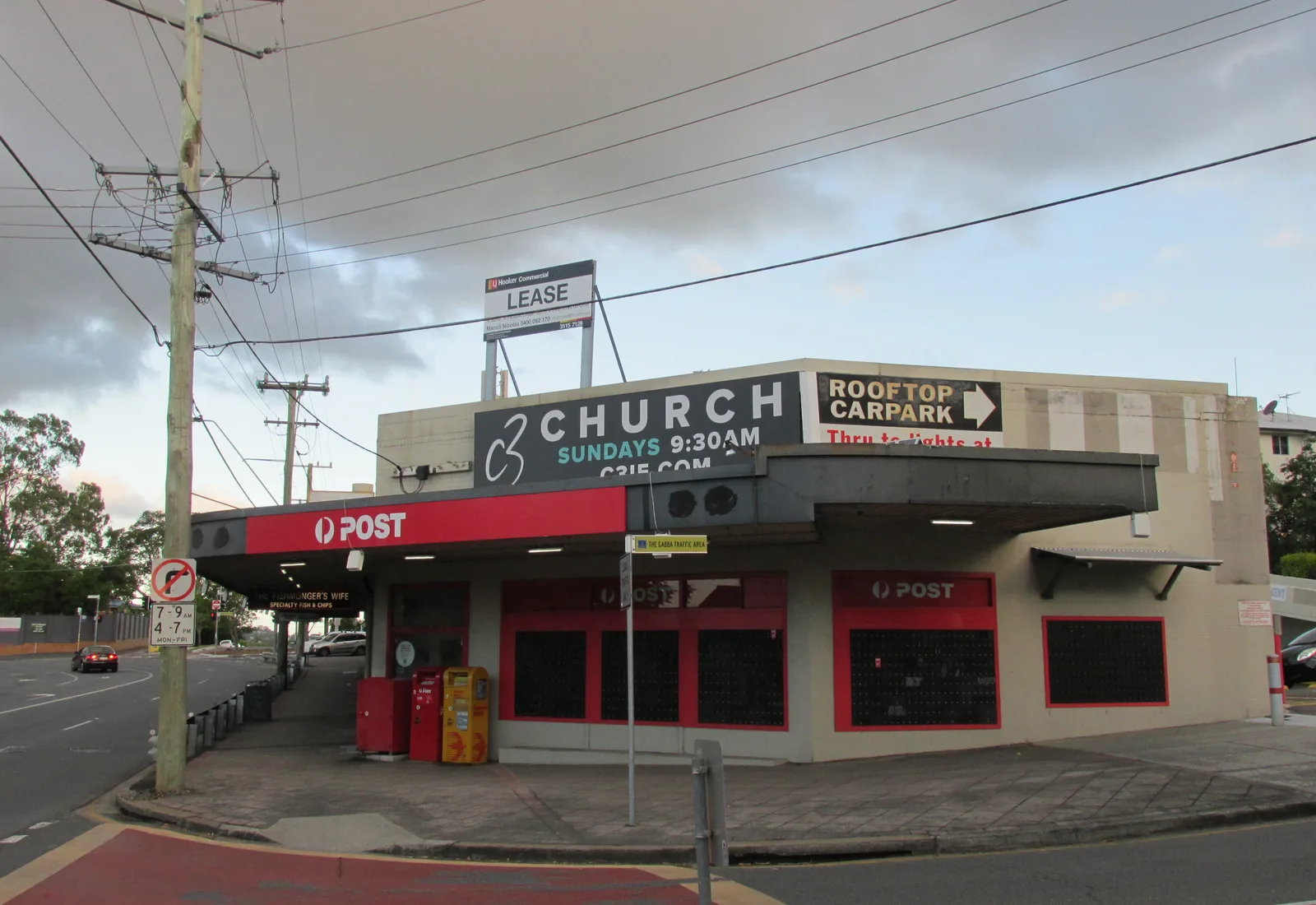
Data provenance & limitations. Demographic figures are from the ABS 2021 Census for the East Brisbane (Qld) suburb (SAL30919), with Greater Brisbane (3GBRI) as benchmark; the 2021 Census is the most recent available. Renting (56.1%) and family-household (54.4%) shares are from the published tenure and household-type data. The proximity to the CBD, Woolloongabba and the Gabba stadium (a major events venue undergoing redevelopment ahead of the 2032 Olympics) and the Lytton Road shops are from Wikipedia and general knowledge of the suburb. The seasonality and tourism scores reflect a young inner-city residential demand pattern with an event-day (rather than steady tourism) layer from the Gabba. The photograph dates from 2017. Rent bands are indicative envelopes, not achieved rents — informed by East Brisbane's gentrifying inner-city positioning; verify comps for the specific tenancy. Factor scores are relative estimates calibrated across all Locatalyze suburbs, not guarantees of outcome.
How to read these scores
Composite 63/100; Café 68/100. Use this as a screening verdict before lease diligence.
Source
Locatalyze engine plus suburb-level evidence
Freshness
Engine scores current; no competitor cache for this suburb
Confidence
Medium - suburb-level scoring only
Limitation
East Brisbane scores screen the suburb, not the lease. The paid report tests frontage, rent, nearest competitors, and break-even at your exact address.
Evidence freshness
Scores
Engine-scored suburb model
Competition
No cached competitor snapshot — walk the block
Rent
No sourced asking-rent series — obtain current listings
Demographics
ABS Census 2021 baseline with operator interpretation
Mini location report — East Brisbane
Café opportunity snapshot
VERIFY band for café operators in East Brisbane.
Also scored: Restaurant 62 · Retail 57
Café opportunity score
68/100
Demand strength
7/10
Rent pressure
Moderate (5/10)
Competition density
5/10
Financial model — unlock at your address
Suburb-level estimates only. Your full report models P&L from your lease address, rent, and format.
🔒Est. monthly revenue range
Modelled at your address from rent, ticket and demand — not a suburb average
🔒Break-even customers per day
Calculated from your rent, staffing, and average ticket at your exact address
🔒Payback period on fit-out
Months to recover setup costs at base-case revenue
🔒Rent-to-revenue ratio
Whether the lease is sustainable at modelled trade levels
See if the numbers work at your rent
Run a free analysis at your East Brisbane address. Unlock modelled P&L, break-even, and scenarios from $29.
Demand, rent, competition, seasonality, and tourism — scored and weighted for Australian commercial operators.
7/10
Demand
5/10
Rent cost
5/10
Competition
2/10
Seasonality
2/10
Tourism dep
Business-Type Scores
How each format performs
Café / Specialty Coffee68
Full-Service Restaurant62
Independent Retail57
Scores use engine-derived weights: cafés weight demand and rent most heavily; restaurants factor tourism; retail factors tourism and demand equally.
Analyst Notes — East Brisbane
What the data says about this location
1
Demand 7/10: a young, gentrifying inner-city suburb beside the Gabba — a youthful (median age 33), renter-leaning (56.1%), diverse (35.7% born overseas), above-median-income ($2,056/week) base of 6,186 a short hop from the CBD, with a stadium-and-Olympic redevelopment layer.
2
Competition 5/10: the strong CBD, Woolloongabba and South Brisbane precincts compete a short hop away — keep the everyday trade local.
3
Rent 5/10: moderate gentrifying inner-city rents (median residential $400/week, above the metropolitan median but below the prime CBD-edge precincts).
4
Seasonality 2/10: a young inner-city base trades steadily year-round; the Gabba adds an event-day (rather than steady) footfall.
Local insight — East Brisbane
On-the-ground read for operators
Editorial notes layered on top of the scored model — same scores and benchmarks above; this section translates strip mechanics into decisions.
Local reality check
Demand 7/10: a young, gentrifying inner-city suburb beside the Gabba — a youthful (median age 33), renter-leaning (56.1%), diverse (35.7% born overseas), above-median-income ($2,056/week) base of 6,186 a short hop from the CBD, with a stadium-and-Olympic redevelopment layer.
Competition 5/10: the strong CBD, Woolloongabba and South Brisbane precincts compete a short hop away — keep the everyday trade local.
Rent 5/10: moderate gentrifying inner-city rents (median residential $400/week, above the metropolitan median but below the prime CBD-edge precincts).
Engine factors for East Brisbane: demand 7/10, rent pressure 5/10, competition 5/10, seasonality risk 2/10, tourism dependency 2/10 — line scores café 68/100, restaurant 62/100, retail 57/100.
Competition is moderate — you are buying into share-of-wallet, not automatic overflow.
Micro-location breakdown
East Brisbane main strip / highest visibility
What tends to work: Service-led and neighbourhood concepts with repeat local trade.
What struggles: Formats needing highway visibility or large-format parking ratios.
Rent vs foot traffic: Prime band often near $4,503–$5,483/mo — Rent pressure 5/10 — treat agent ranges as opening positions; model $/sqm and outgoings before emotional commitment.
Secondary street / side pocket
What tends to work: Operators who accept lower passer-by counts but fund discovery through product, hours, or events.
What struggles: Walk-in-only models with no marketing budget or brand recognition.
Rent vs foot traffic: Secondary band often near $3,768–$4,503/mo — savings must fund signage and fit-out amortisation, not disappear into rent alone.
Budget / upstairs / off-strip
What tends to work: Studios, appointment services, niche retail with owned traffic.
What struggles: Full-service dining depending on spontaneous footfall without a booking channel.
Rent vs foot traffic: Lower band near $2,449–$3,768/mo — viable only when customers arrive by intent, not accident.
Real business scenarios
If prime rent clears near $4,503–$5,483/mo, model daily covers at your real average ticket — the engine verdict is VERIFY at 63/100, not a guarantee at your address.
Tourism dependency 2/10: when elevated, January and shoulder weeks need explicit planning, not December extrapolation.
Run competitors within 500m before offer — Competition is moderate — you are buying into share-of-wallet, not automatic overflow.
Competitive reality
East Brisbane (VERIFY, 63/100) is a modelled read across demand, rent, competition, and seasonality — validate on-site at quiet and peak dayparts, then reconcile with your accountant before lease execution.
Sharp verdict
East Brisbane pays off when rent sits inside $4,503–$5,483/mo at conservative revenue — do not sign on suburb hype; sign on covers you can defend on a Tuesday.
Methodology: Scores are engine-derived from five observable inputs (demand strength, rent pressure, competition density, seasonality risk, tourism dependency — each 1–10). These feed into business-type-specific weighted composites via a single scoring engine used across all markets. Scores are relative estimates calibrated across all Brisbane suburbs — a score of 80 indicates materially better conditions than 65; it is not a success probability or guarantee.
More questions about opening in East Brisbane
Have a specific address in East Brisbane?
Run a full competitor map, rent benchmark, and location score, data confidence, and proceed / verify / avoid screening recommendation for any East Brisbane address. Free.