
Melbourne Suburb Intelligence
Why Locatalyze says PROCEED for Box Hill
I'd invest — Café category score 7.5/10. Location composite 70/100.
Location score
Recommendation
PROCEED
Promising fit, subject to normal due diligence
Box Hill in 30 seconds
Box Hill is PROCEED at 70/100: the default independent screen clears, but format scores and named streets still decide the lease. Treat PROCEED as a shortlist, then prove the shopfront.
Café 75/100 · Restaurant 68/100 · Retail 64/100 — pick the branch that matches your concept before you sign rent.
Café or bakery that captures interchange hours without pretending the centre is empty — Café scores 75. The Penny Drop, CAFE FADUCCI and Oski already sit in the 800 m snapshot (27 June 2026). The gap is a named daypart and a shopfront that converts station flow — not “Box Hill needs coffee.”
MODEL: rent 3 is suburb-relative occupancy pressure. ANALYSIS: Box Hill Central internals can still be the dearest local class. Obtain the quote. Do not use this page’s old invented $/m² bands — they are withdrawn.
The lease only works on suburb-average foot traffic, weekend trade is unproven at the door, or your concept cannot name a clear reason customers switch from incumbents.
ANALYSIS: destination dining and centre internals typically peak here — confirm at the door, not from this label
PROCEED Box Hill as a café-led screen. Do not treat Chinese ancestry as a ticket forecast, and do not treat rent 3 as cheap centre internals.
Recommendation
I'd invest
Café category score
7.5/10
Structural risk
Medium
Competition
High (6/10) — Dumpling King, Sushi Jiro, The Penny Drop already sit in the snapshot
Differentiation required
Required
Location composite 70/100 measures overall suburb fit across all factors. Café category score is the format this page recommends. Scores screen the suburb, not the individual lease; the address report checks nearest competitors, rent-to-revenue, and break-even for the exact tenancy.
Should I open a café or restaurant in Box Hill?
Yes — café-led, on a named street, not because Census income is high. Best-fit café scores 75/100 with composite 70 — just above PROCEED (69). Demand is 8/10. Rent pressure is only 3/10. Competition 6 is the cost. Café 75 is GO; restaurant 68 and retail 64 remain VERIFY. Census 2021 household income sat below Victoria. Chinese ancestry 46.6% is FACT — it is not a ticket-size forecast.
What surprised me
The mall feels like a high-income Chinese professional market. Census 2021 personal income was $627/week versus $803 Victoria. The useful investigation is café or bakery that captures interchange hours without pretending the centre is empty.
How to read these scores
Composite 70/100; Café 75/100. Use this as a screening verdict before lease diligence.
Source
Locatalyze engine v7.3.0 plus cached local competitor evidence
Freshness
Competitor cache refreshed 27 June 2026
Confidence
Medium - 30 businesses sampled
Limitation
Box Hill scores screen the suburb, not the lease. The paid report tests frontage, rent, nearest competitors, and break-even at your exact address.
Evidence freshness
Scores
Engine v7.3.0; suburb-level model
Competition
Google Places cache refreshed 27 June 2026
Rent
No sourced asking-rent series — obtain current listings
Demographics
ABS Census 2021 baseline with operator interpretation
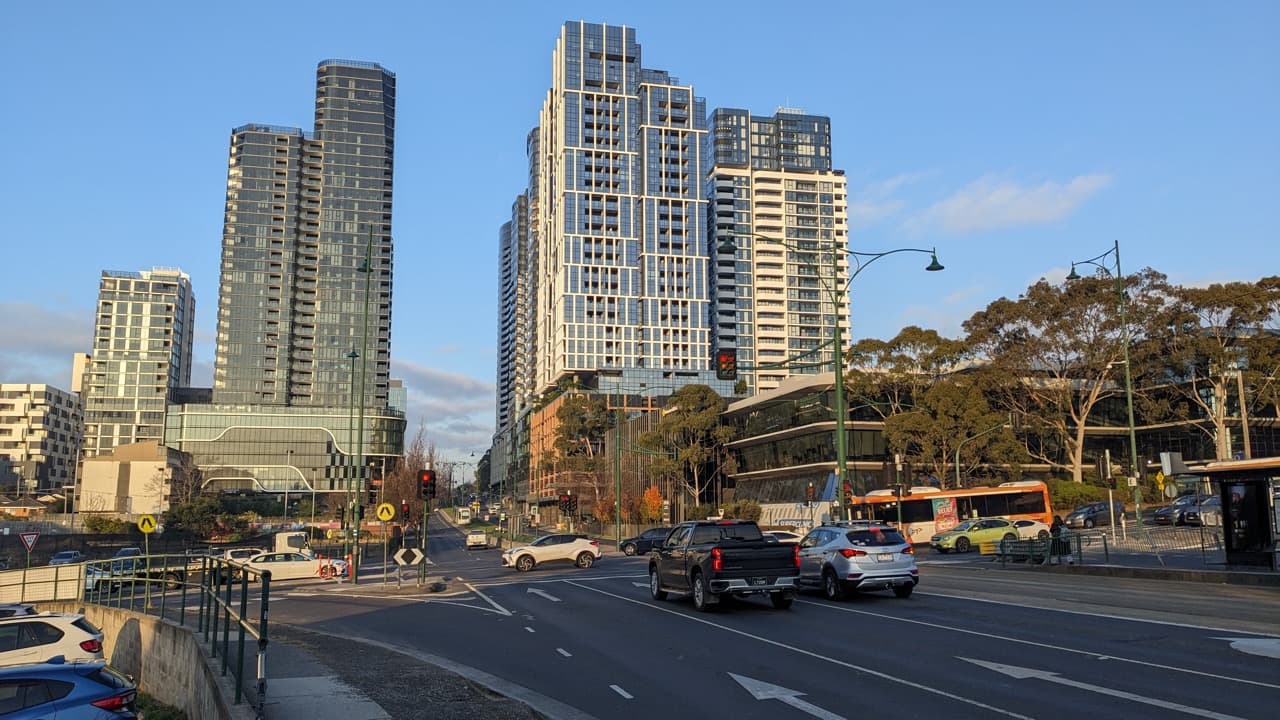
Precinct map
Centre throughput versus Carrington Road dining versus the hospital weekday — pick the P&L first
Box Hill Central
Highest local occupancy class — verify listings
Station throughput · food-court competition
Best for: High-volume cuisine-aligned food
Whitehorse Road
Street class — price in SRL works
East–west visibility · construction
Best for: Destination dining that can survive hoardings
Carrington Road
Destination street — verify listings
Deliberate-visit cuisine cluster
Best for: Rooms with product against incumbents
Station Street
Secondary — do not pay mall premiums
Interchange-edge mix
Best for: Speed, bakery, convenience
Hospital edge
Lower relative — weekday labour
Shift-change · appointments
Best for: Café, takeaway, allied health
Engine PROCEED is suburb-level and café-led. These blocks are different P&Ls. Confirm asking rent; this map does not invent $/m².
Operator fit warning
Who should not open in Box Hill
Restaurant or retail operators treating composite 70 as format-blind PROCEED — restaurant 68 and retail 64 are VERIFY
Anyone modelling Census income as Camberwell or Toorak, or inventing a prestige Chinese-professional ticket
Operators booking 2035 SRL patronage as 2026 base-case covers
Decision path
What are you opening?
Pick your format — the guide shows only the branch that applies to your concept.
No dedicated section for this format in the suburb guide — run an address-level analysis for restaurant, retail, or bar economics.
Why do successful venues survive here?
They match product to a discerning local catchment and they do not confuse ancestry tables with prestige tickets. Cached restaurants within 1 km (27 June 2026) include Sushi Jiro Box Hill, Dumpling King, VegieHut 老地方, Tien Dat and Indochine. ANALYSIS: destination dining and centre internals typically peak here — confirm at the door, not from this label. Where I would still look: café or bakery that captures interchange hours without pretending the centre is empty.
Local competition
Who wins in Box Hill — and where to differentiate
Ranked from cached Google Places data near the suburb centre. Validate at your lease address before signing.
Who wins in Box Hill — Cafés
Ranked by success score (rating, review depth, centrality) within ~800m of the suburb centre.
What winners have in common
- ·6 of 10 top venues sit at 4.3★+ — customers reward consistent execution, not novelty alone.
- ·Review depth averages 325 — operators with under 150 reviews read as unproven next to incumbents.
- ·Typical positioning is $$ (4 venues report Google price tiers).
- ·Most winners sit within 400m of the suburb centre — frontage on the walkable strip matters.
- 75 · Established
★★★★☆ 4.0 (714 reviews) · $$ · 182m from centre
- ·4.0★ rating beats the typical café baseline in this catchment.
- ·Rating sits below the 4.3★ peer average — volume or convenience may be doing the work.
- ·Review volume 153% above peer average (282).
If you are opening nearby: The Penny Drop is the benchmark café here — $$ positioning is validated by review depth in this catchment — 182m from centre — frontage on the walkable strip matters.
- 74 · Established
2. CAFE FADUCCI
★★★★☆ 4.3 (307 reviews) · $$ · 122m from centre
- ·4.3★ and 307 reviews — customers actively recommend this café.
- ·Mid-range positioning with strong review depth — balanced offer, not discount-led.
- ·Central location (122m from suburb centre) captures pass-by and destination traffic.
If you are opening nearby: 4.3★ with 307 reviews signals repeat custom, not novelty traffic — $$ positioning is validated by review depth in this catchment — 122m from centre — frontage on the walkable strip matters.
- 79 · Dominant
3. Oski soufflé
★★★★½ 4.5 (209 reviews) · 207m from centre
- ·4.5★ with 209 reviews — repeat local demand, not one-off visits.
- ·0.3★ above the 4.2★ average among top local peers.
- ·Central location (207m from suburb centre) captures pass-by and destination traffic.
If you are opening nearby: Oski soufflé (Dominant) shows what execution looks like at this score tier — 4.5★ with 209 reviews signals repeat custom, not novelty traffic — 207m from centre — frontage on the walkable strip matters.
- 78 · Dominant
4. Una Una
★★★★½ 4.9 (116 reviews) · 248m from centre
- ·4.9★ and 116 reviews — customers actively recommend this café.
- ·0.7★ above the 4.2★ average among top local peers.
- ·Central location (248m from suburb centre) captures pass-by and destination traffic.
If you are opening nearby: Una Una (Dominant) shows what execution looks like at this score tier — 4.9★ with 116 reviews signals repeat custom, not novelty traffic — 248m from centre — frontage on the walkable strip matters.
- 58 · Growing
5. ae Melbourne
★★★½☆ 3.9 (362 reviews) · 389m from centre
- ·362 reviews place it on the local shortlist even where ratings are mixed.
- ·Rating sits below the 4.3★ peer average — volume or convenience may be doing the work.
If you are opening nearby: 389m from centre — frontage on the walkable strip matters — For new entrants: ae Melbourne is beatable on pastry-forward with a limited hot menu — avoid matching incumbents' full menu breadth.
Who wins in Box Hill — Restaurants
Ranked by success score (rating, review depth, centrality) within ~1000m of the suburb centre.
What winners have in common
- ·3 of 10 top venues sit at 4.3★+ — customers reward consistent execution, not novelty alone.
- ·Review depth averages 718 — operators with under 150 reviews read as unproven next to incumbents.
- ·Typical positioning is $$ (8 venues report Google price tiers).
- ·Most winners sit within 400m of the suburb centre — frontage on the walkable strip matters.
- 83 · Dominant
★★★★☆ 4.3 (1,056 reviews) · $ · 117m from centre
- ·4.3★ and 1,056 reviews — customers actively recommend this restaurant.
- ·0.3★ above the 4.0★ average among top local peers.
- ·Review volume 55% above peer average (680).
If you are opening nearby: Sushi Jiro Box Hill is the benchmark restaurant here — their 4.3★ and 1,056 reviews beat the 680-review peer average — $ positioning is validated by review depth in this catchment — 117m from centre — frontage on the walkable strip matters.
- 81 · Dominant
★★★★☆ 4.3 (783 reviews) · $$ · 111m from centre
- ·4.3★ and 783 reviews — customers actively recommend this restaurant.
- ·0.3★ above the 4.0★ average among top local peers.
- ·Mid-range positioning with strong review depth — balanced offer, not discount-led.
If you are opening nearby: Dumpling King (Dominant) shows what execution looks like at this score tier — 4.3★ with 783 reviews signals repeat custom, not novelty traffic — $$ positioning is validated by review depth in this catchment — 111m from centre — frontage on the walkable strip matters.
- 86 · Dominant
3. VegieHut 老地方
★★★★½ 4.5 (571 reviews) · $$ · 120m from centre
- ·4.5★ with 571 reviews — repeat local demand, not one-off visits.
- ·0.6★ above the 3.9★ average among top local peers.
- ·Mid-range positioning with strong review depth — balanced offer, not discount-led.
If you are opening nearby: VegieHut 老地方 (Dominant) shows what execution looks like at this score tier — 4.5★ with 571 reviews signals repeat custom, not novelty traffic — $$ positioning is validated by review depth in this catchment — 120m from centre — frontage on the walkable strip matters.
- 73 · Established
4. Tien Dat
★★★★☆ 4.1 (829 reviews) · $$ · 164m from centre
- ·4.1★ rating beats the typical restaurant baseline in this catchment.
- ·Mid-range positioning with strong review depth — balanced offer, not discount-led.
- ·Central location (164m from suburb centre) captures pass-by and destination traffic.
If you are opening nearby: $$ positioning is validated by review depth in this catchment — 164m from centre — frontage on the walkable strip matters — For new entrants: Focus on a specific occasion (date night, quick lunch, or group dining) that Tien Dat does not dominate.
- 70 · Established
5. Indochine Vietnamese Restaurant
★★★★☆ 4.0 (862 reviews) · $$ · 246m from centre
- ·4.0★ rating beats the typical restaurant baseline in this catchment.
- ·Mid-range positioning with strong review depth — balanced offer, not discount-led.
- ·Central location (246m from suburb centre) captures pass-by and destination traffic.
If you are opening nearby: $$ positioning is validated by review depth in this catchment — 246m from centre — frontage on the walkable strip matters — For new entrants: Indochine Vietnamese Restaurant sets expectations for this cuisine — win on speed, dietary clarity, or a narrower menu rather than a broad copy.
Who wins in Box Hill — Retail
Ranked by success score (rating, review depth, centrality) within ~1500m of the suburb centre.
What winners have in common
- ·6 of 10 top venues sit at 4.3★+ — customers reward consistent execution, not novelty alone.
- ·No single venue dominates on both rating and review depth — the category may still be contestable.
- ·Most winners sit within 400m of the suburb centre — frontage on the walkable strip matters.
- 77 · Established
1. Snazzi Alterations
★★★★★ 5.0 (79 reviews) · 1328m from centre
- ·5.0★ rating beats the typical retail baseline in this catchment.
- ·0.8★ above the 4.2★ average among top local peers.
- ·Review volume 641% above peer average (11).
If you are opening nearby: their 5.0★ and 79 reviews beat the 11-review peer average — For new entrants: A service-heavy or experiential retail concept can win where product-only formats like Snazzi Alterations look interchangeable.
- 49 · Growing
2. Costume Works
★★★★☆ 4.3 (35 reviews) · 1478m from centre
- ·4.3★ rating beats the typical retail baseline in this catchment.
- ·Review volume 125% above peer average (16).
If you are opening nearby: their 4.3★ and 35 reviews beat the 16-review peer average — For new entrants: A service-heavy or experiential retail concept can win where product-only formats like Costume Works look interchangeable.
- 59 · Growing
3. Emon
★★★★½ 4.6 (9 reviews) · 213m from centre
- ·4.6★ rating beats the typical retail baseline in this catchment.
- ·0.4★ above the 4.2★ average among top local peers.
- ·Central location (213m from suburb centre) captures pass-by and destination traffic.
If you are opening nearby: 213m from centre — frontage on the walkable strip matters — For new entrants: A service-heavy or experiential retail concept can win where product-only formats like Emon look interchangeable.
- 14 · Emerging
4. Workwear Corner Hard Yakka FXD
★★½☆☆ 2.9 (29 reviews) · 1010m from centre
- ·Rating sits below the 4.4★ peer average — volume or convenience may be doing the work.
- ·Review volume 79% above peer average (16).
If you are opening nearby: For new entrants: A service-heavy or experiential retail concept can win where product-only formats like Workwear Corner Hard Yakka FXD look interchangeable.
- 41 · Emerging
5. Pado Fashion
★★★★☆ 4.0 (7 reviews) · 214m from centre
- ·4.0★ rating beats the typical retail baseline in this catchment.
- ·Rating sits below the 4.3★ peer average — volume or convenience may be doing the work.
- ·Central location (214m from suburb centre) captures pass-by and destination traffic.
If you are opening nearby: 214m from centre — frontage on the walkable strip matters — For new entrants: A service-heavy or experiential retail concept can win where product-only formats like Pado Fashion look interchangeable.
What mistakes do new operators make?
Older copy on this page quoted unsourced centre-internal dollar-per-metre bands. Before I sign: shortlist Box Hill if your format matches a named street or centre position and you can name the incumbent you displace. Walk away from a prestige-income story, a 2035 SRL cover model, or a generic café that ignores The Penny Drop and CAFE FADUCCI already in the snapshot.
Here's what would stop me signing a lease
Restaurant or retail operators treating composite 70 as format-blind PROCEED — restaurant 68 and retail 64 are VERIFY
Would I personally invest here?
I would recommend Box Hill with moderate-to-high confidence for a café that matches a named street or centre position — café-led, not a format-blind yes, and not a 2035 SRL cover model.
I would back a named-street café with Saturday and Tuesday proof and a rent quote that matches centre versus street. I would not back a 2035 SRL story, and I would not choose Box Hill because I thought the Census was Toorak. PROCEED Box Hill as a café-led screen. Do not treat Chinese ancestry as a ticket forecast, and do not treat rent 3 as cheap centre internals.
Best-fit café 75/100 · composite 70/100 PROCEED (café 75, restaurant 68, retail 64). Demand 8 and rent 3 are already in the model — do not add unsourced centre $/m² on top.
Suburb PROCEED means Box Hill clears the default independent screen on café-weighted occupancy. It cannot see your food-court clause or nearest rival. Analyse the exact shopfront next.
Format-by-format depth, comparisons, and FAQsExpand for zones, rent bands, trading windows, format depth, comparisons, and due-diligence FAQs.
Check an address in Box Hill
Box Hill looks workable at suburb level for some formats. Your lease still needs demand, competition and rent fit at a specific frontage — not the suburb average.
Analyse a Box Hill address free