Adelaide Suburb Intelligence
Why Locatalyze says VERIFY for Adelaide CBD
VERIFY first — Restaurant category score 6.4/10. Location composite 63/100.
For the full city scan, start from the Adelaide analyse hub — this page is a suburb-deep drill-down tied to the same scoring engine.

Adelaide CBD · Score 63/100 · VERIFY
Adelaide CBD in 30 seconds
Adelaide CBD is VERIFY at 63/100 (café 63, restaurant 64, retail 62). That is a shortlist, not a yes. Prove the named street and daypart before you sign.
Café 63/100 · Restaurant 64/100 · Retail 62/100 — pick the branch that matches your concept before you sign rent.
Sharp-menu laneway rooms — Peel, Leigh and Topham can work when the menu is one idea and weekday lunch is proven without festival weeks. ANALYSIS: discovery is not a substitute for a thin August.
FACT: Adelaide Fringe and WOMADelaide happen. ANALYSIS: they are already partly in tourism 7. Adding an unsourced festival till-lift double-counts. Stress-test May.
The lease only works on suburb-average foot traffic, weekend trade is unproven at the door, or your concept cannot name a clear reason customers switch from incumbents.
ANALYSIS: load-bearing dinner
VERIFY Adelaide CBD for a named street after a non-festival month is proven. Do not treat Fringe as the base case.
Recommendation
VERIFY first
Restaurant category score
6.4/10
Structural risk
Medium
Competition
High (7/10) — densest in this Adelaide seed set; Mall chains plus independent substitution
Differentiation required
Required
Location composite 63/100 measures overall suburb fit across all factors. Restaurant category score is the format this page recommends. Scores screen the suburb, not the individual lease; the address report checks nearest competitors, rent-to-revenue, and break-even for the exact tenancy.
Should I open a café or restaurant in Adelaide CBD?
Maybe — after a non-festival month is proven. Best-fit restaurant scores 64/100 with composite 63 — inside VERIFY (60–68), below PROCEED (69). Demand is 9/10. Rent 8 and competition 7 are why the square mile is not a default yes. Adelaide Fringe and WOMADelaide are real; they are not a till series. Census 2021 counted 18,202 usual residents — not 26,000.
What surprised me
Adelaide CBD feels like the state’s hospitality yes. Resident incomes sat at or below the SA median. The useful investigation is sharp-menu laneway rooms.
How to read these scores
Composite 63/100; Restaurant 64/100. Use this as a screening verdict before lease diligence.
Source
Locatalyze engine plus suburb-level evidence
Freshness
Engine scores current; no competitor cache for this suburb
Confidence
Medium - suburb-level scoring only
Limitation
Adelaide CBD scores screen the suburb, not the lease. The paid report tests frontage, rent, nearest competitors, and break-even at your exact address.
Evidence freshness
Scores
Engine-scored suburb model
Competition
No cached competitor snapshot — walk the block
Rent
No sourced asking-rent series — obtain current listings
Demographics
ABS Census 2021 baseline with operator interpretation
Precinct map
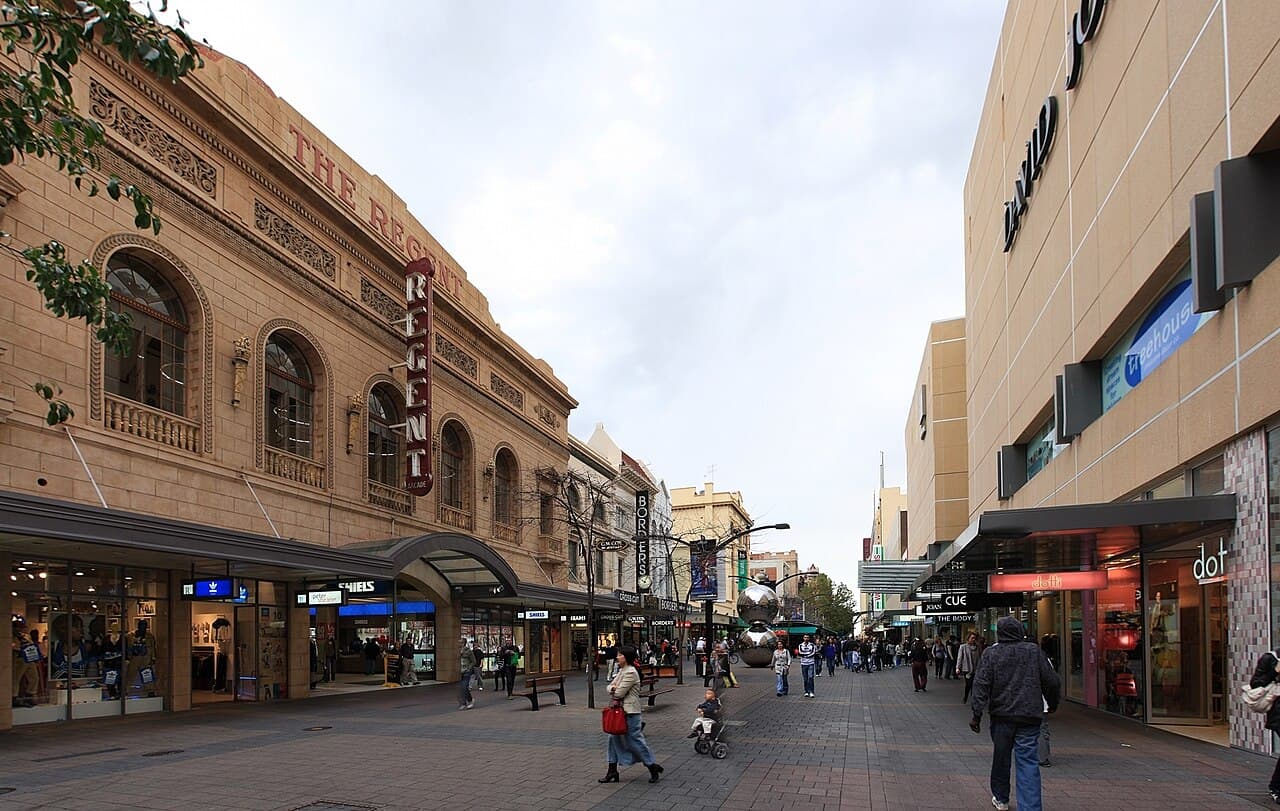
Mall throughput versus Rundle East dinner versus Gouger identity — Fringe is not a street
Rundle Street East
Highest recognition class — verify listings
Outing and dinner
Best for: Chef-led rooms, specialty with evening trade
Rundle Mall
Throughput rents — confirm the quote
Shopper flow · chains
Best for: Volume food, flagship retail
Gouger / Market
Identity street — verify listings
Cuisine destination
Best for: Rooms that belong on Gouger
Hindley Street
Below Rundle East — verify licence
Night trade · different daytime
Best for: Licensed venues with hours understood
Laneways
Typically below frontage — verify
Weekday discovery · small footprint
Best for: Tight menu, beverage-led
Engine VERIFY is suburb-level. These strips are different P&Ls. Confirm asking rent; this map does not invent $/m².
Operator fit warning
Who should not open in Adelaide CBD
Operators whose P&L only works if Fringe weeks are the average week.
Coffee-only rooms on Rundle Street East occupancy cost.
Generic café-bistros that cannot name the incumbent they displace.
Decision path
What are you opening?
Pick your format — the guide shows only the branch that applies to your concept.
No dedicated section for this format in the suburb guide — run an address-level analysis for restaurant, retail, or bar economics.
Why do successful venues survive here?
They pick one street identity and do not annualise March. Competition 7 is the densest in this Adelaide seed set. ANALYSIS: the honest test. If this window cannot carry labour, stop. Where I would still look: sharp-menu laneway rooms.
What mistakes do new operators make?
March is not May. Before I sign: shortlist Adelaide CBD if your format matches a named strip and the lease still works when Fringe is removed from the year. Walk away from a first venue that needs March to rescue November.
Here's what would stop me signing a lease
Operators whose P&L only works if Fringe weeks are the average week.
Would I personally invest here?
I would only recommend this with moderate confidence — restaurant 64/100 is VERIFY. Rent 8 still has to work in May.
I would back a named-street restaurant with a year that works without Fringe. I would not back a first venue because Adelaide is famous in March. VERIFY Adelaide CBD for a named street after a non-festival month is proven. Do not treat Fringe as the base case.
Best-fit restaurant 64/100 · composite 63/100 VERIFY (café 63, restaurant 64, retail 62). Tourism 7 is already in the model — do not add unsourced Fringe percentages.
Suburb VERIFY means Adelaide CBD is a conditional shortlist. It cannot see your rent quote or festival dependence. Analyse the exact shopfront next.
Format-by-format depth, comparisons, and FAQsExpand for zones, rent bands, trading windows, format depth, comparisons, and due-diligence FAQs.
Check an address in Adelaide CBD
Adelaide CBD looks workable at suburb level for some formats. Your lease still needs demand, competition and rent fit at a specific frontage — not the suburb average.
Analyse a Adelaide CBD address free